Sinfonia No. 1 in C major, BWV 787
Three voices, one mind - the Sinfonia as mastery test.
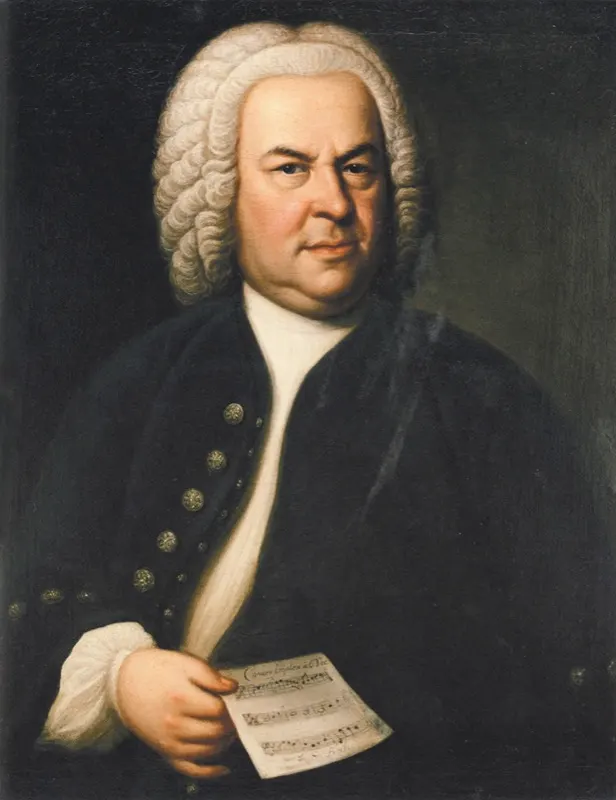
In 1723 Bach revised and expanded his Inventions into a final fair copy, adding a companion set of fifteen three-part pieces he titled Sinfonias. Where the two-voice Inventions teach independent hand coordination, the Sinfonias add an inner voice - often the most treacherous part - that must be balanced against both the soprano and the bass simultaneously. Sinfonia No. 1 in C major opens the set with characteristic clarity: the subject is simple enough to memorize on first hearing, yet the three-voice imitation that follows demands fine control of dynamics and timing across all parts.
Bach's own preface to the collection states that the Sinfonias should guide the student toward 'a cantabile style of playing' - a singing quality across all voices equally. That goal, easy to state and hard to achieve, makes the Sinfonias the most demanding short pieces in the standard keyboard teaching canon.
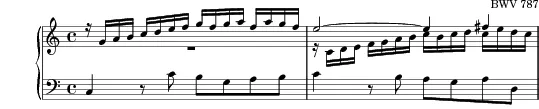
Learn each voice as a separate melody.
Before attempting hands together, play each of the three voices alone - soprano (right hand high), inner voice (right hand low or left hand), and bass - and sing along with each. When you can hear all three as distinct melodies, add them together two at a time before combining all three. This approach reveals where voices cross and prevents the inner voice from disappearing.
Before you practice.
01 How is a sinfonia different from an invention?
Bach's inventions are two-voice pieces; the sinfonias add a third independent voice. That extra voice substantially increases the cognitive load - both hands must share responsibility for multiple melodic lines simultaneously.
02 Is Sinfonia No. 1 the easiest sinfonia?
Being in C major and relatively short (21 bars), it is among the most approachable, though no sinfonia is truly easy. Most teachers assign it after a student has worked through several two-part inventions.
Bring out the subject each time it enters.
Every time the opening subject appears - in any voice - give it a slight dynamic emphasis so the listener can track the imitation. At 70% tempo you will hear exactly when each entry occurs. Loop any measure where a new subject entry is buried in the texture and practice emphasizing it until it rings through naturally at full speed.