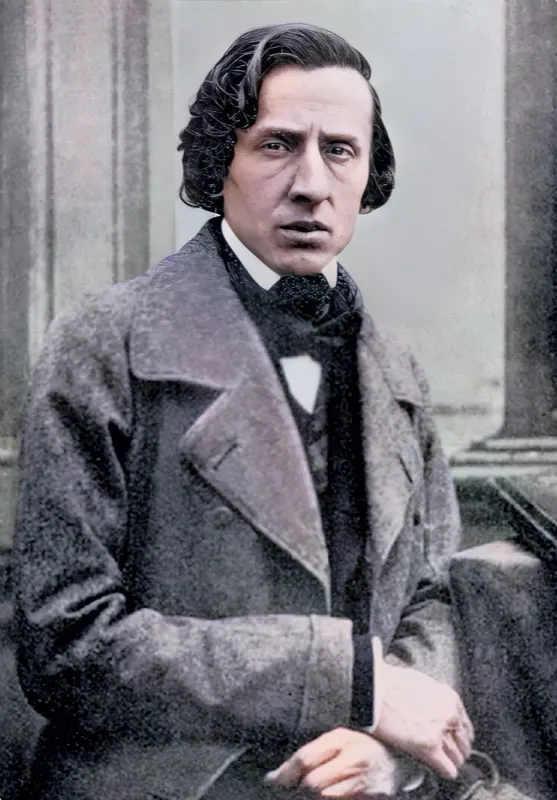
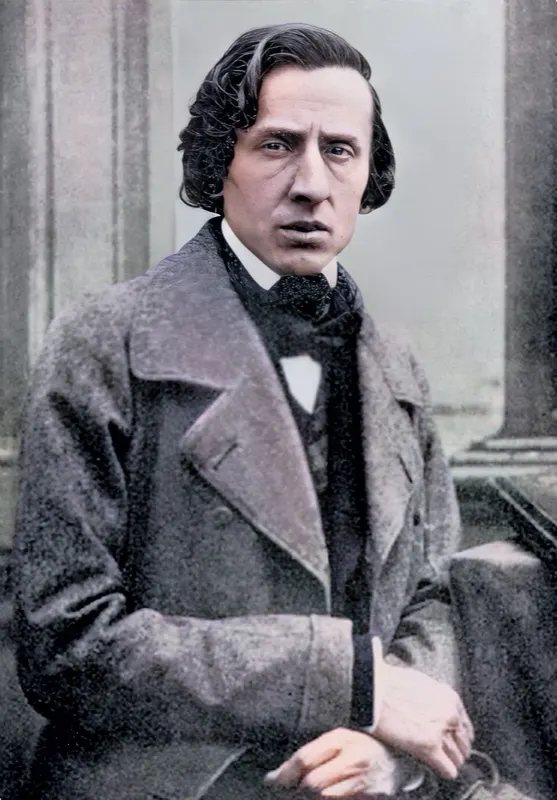
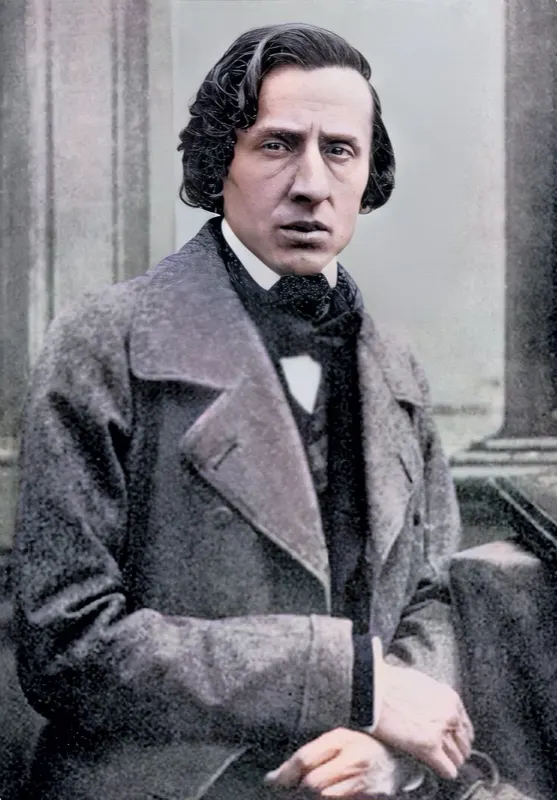
Prelude in C-sharp minor, Op. 28 No. 10
Twenty seconds of pure velocity - Chopin's shortest statement in Op. 28.
Prelude No. 10 in C-sharp minor is one of the briefest pieces in the entire Op. 28 collection, lasting barely half a minute in performance. Chopin wrote it in a driving 2/4 with continuous thirty-second-note triplets in the right hand - a tiny perpetuum mobile that flares and vanishes before the listener has fully registered it.
The prelude belongs to the cluster of short, intense pieces Chopin embedded between the longer nocturne-like preludes to create contrast and dramatic tension across the set. At the time of its composition the technique required to play it cleanly was still rare; Chopin himself was renowned for a lightness of touch that let fast passagework sing rather than merely clatter.
Build the run note-by-note before unleashing it.
The right-hand triplet runs require relaxed wrist rotation and a light arm weight - tension at any point will blur the individual notes. Start at 40% tempo with the loop on a single bar, listening for evenness of tone, before gradually raising the speed.
Engraving based on the Mutopia Project edition , licensed Creative Commons Attribution-ShareAlike 4.0.
MIDI based on the Mutopia Project edition , licensed Creative Commons Attribution-ShareAlike 4.0.
Before you practice.
01 How long is Chopin Prelude Op. 28 No. 10?
At its marked Allegro molto tempo, it is only around 30 to 40 seconds long - 18 bars that pass very quickly. This makes it a realistic goal piece for pianists building their Op. 28 repertoire one prelude at a time.
02 What is the main challenge in Chopin's Prelude No. 10?
Keeping the arpeggiated figures smooth and equal across both hands while maintaining the fast, forward-driving tempo. The C-sharp minor key also means a lot of black keys, so hand position fluency matters.
Evenness first, speed second.
At 40% tempo, loop a single bar of the right-hand run and listen for any note that is louder or quieter than its neighbours - the goal is a seamless ribbon of sound. At 70%, play hands together and use wait-for-note mode to keep the left hand from rushing. Only raise the tempo slider when the run sounds uniform at the current speed.