Interactive piano piece
Learn Goldberg Variations - Aria
The opening and closing movement of the Goldbergs - a decorated sarabande in G major with a ground bass beneath every ornament. The interactive score presents the full 32-bar Aria with looping and tempo control - linger over the ornaments, revisit the chromatic bass, and absorb the sarabande's unhurried pulse one phrase at a time.
Browser MIDI check pending
Loading score...
Press Play for the full piece, or choose Opening and switch to Wait for note for guided right-hand practice.
About the piece
The frame that holds thirty variations.
Bach published the Goldberg Variations in 1741 as the fourth part of his Clavier-Übung series, and the Aria that opens - and closes - the work is among the most quietly beautiful things he ever wrote. It is a sarabande in G major, 32 bars long, built over a stately bass line that descends by step and then gently rises. The melody above is ornate but never hurried, decorated with trills and turns that a skilled player applies as naturally as breathing.
The legend that Bach wrote the variations for the insomniac Count Keyserling, whose harpsichordist Goldberg would play them through the night, is probably apocryphal - but it captures something true about the Aria's character. It does not demand attention so much as create a space into which attention can settle. When the Aria returns at the very end of the work, after thirty variations of increasing complexity and brilliance, its simplicity lands with the force of a revelation.
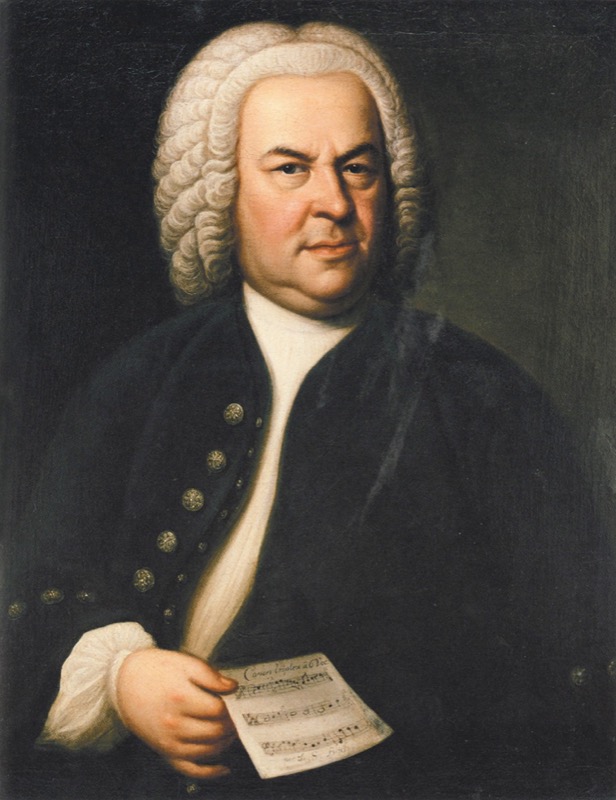

Practice path
Let the bass line guide you.
The Aria's ornate melody is supported by a bass line so well-constructed that it can stand alone as a piece. Learn the left hand first and play it slowly enough to feel its stately sarabande lilt - the slight emphasis on the second beat that defines the dance form. The right hand's ornamentation should feel spontaneous once the bass is steady; ornaments that feel forced usually indicate the left hand has not yet settled into its own tempo.
Score basis: Generated MusicXML from Mutopia MIDI. Public domain composition; CC BY-SA 3.0; MusicXML generated for Pianodemy. Attribution: Mutopia Project (https://www.mutopiaproject.org/cgibin/piece-info.cgi?id=979).
MIDI source: Mutopia Project (https://www.mutopiaproject.org/cgibin/piece-info.cgi?id=979). CC BY-SA 3.0.
Questions
Before you practice.
Short answers for learners and for searchers deciding whether this is the right version to start with.
01Is the Goldberg Aria hard to play?
The notes are within reach for an intermediate pianist, but the ornamentation and voice balance demand patience. Stripping the ornaments and playing just the structural melody is a useful starting point.
02Why does the Goldberg Variations start and end with the same piece?
Bach placed the Aria at both ends to frame the 30 variations: by the time you return to it after the full cycle, the same notes carry a different weight because the ear has traveled through every harmonic transformation of that bass line.
How to use this V1
Ornaments as breath, not decoration.
Approach each trill and turn as a natural inflection of the melody rather than a technical obligation - practice the measure without the ornament first to hear the melodic shape, then add the ornament as an elaboration of what is already there. The loop tool is ideal for the second half of the Aria, where the ornamentation grows more dense and the harmonies more chromatic.
Keep going