Interactive piano piece
Learn Gymnopédie No. 1
A quiet Satie piece that teaches spacing, pedal, and slow confidence. An interactive score with tempo control, section looping, a clickable on-screen piano, and wait-for-note mode lets you slow the left-hand waltz and feel the melody land before moving on.
Browser MIDI check pending
Loading score...
Press Play for the full piece, or choose Opening and switch to Wait for note for guided right-hand practice.
About the piece
Three minutes that changed what slow music was allowed to do.
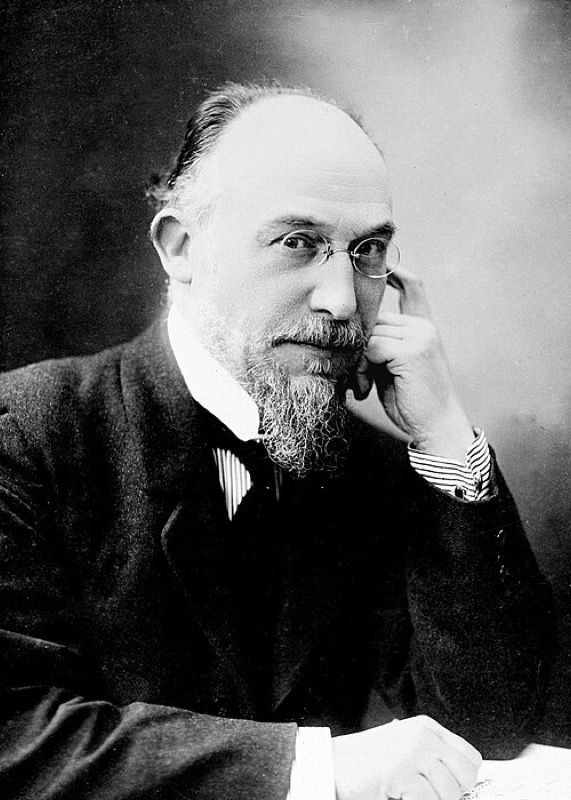
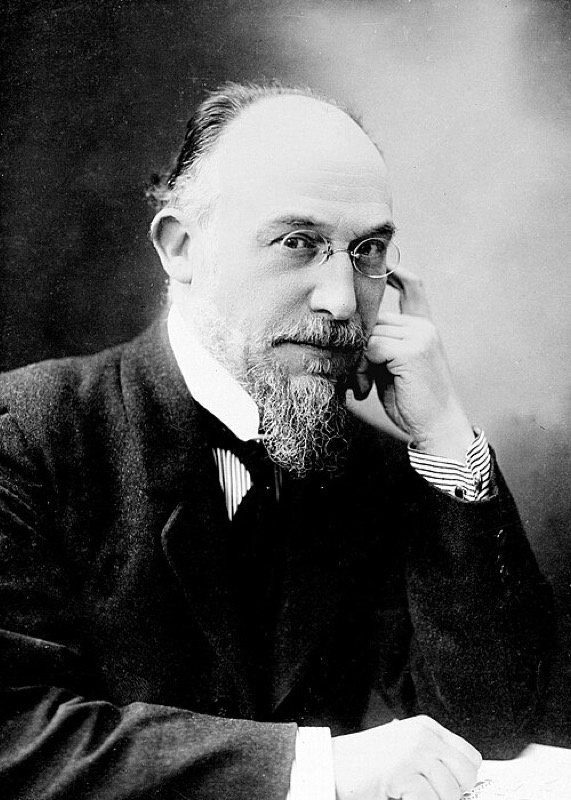
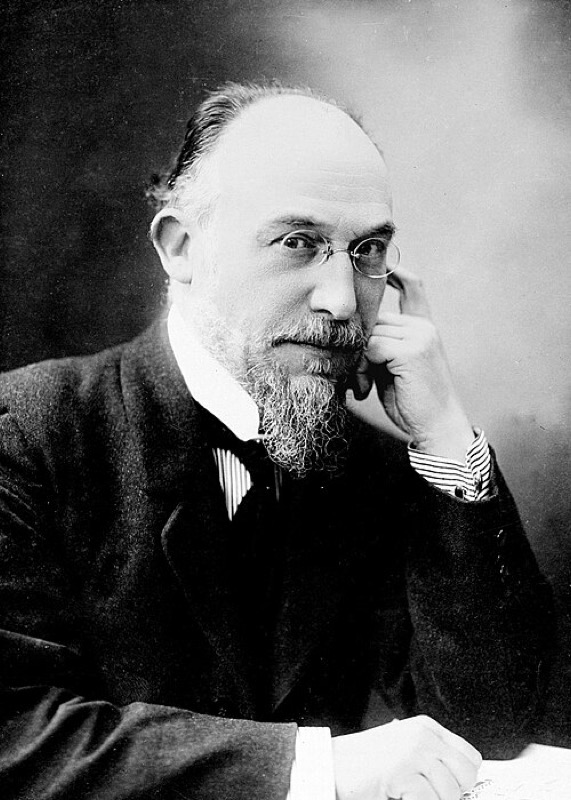
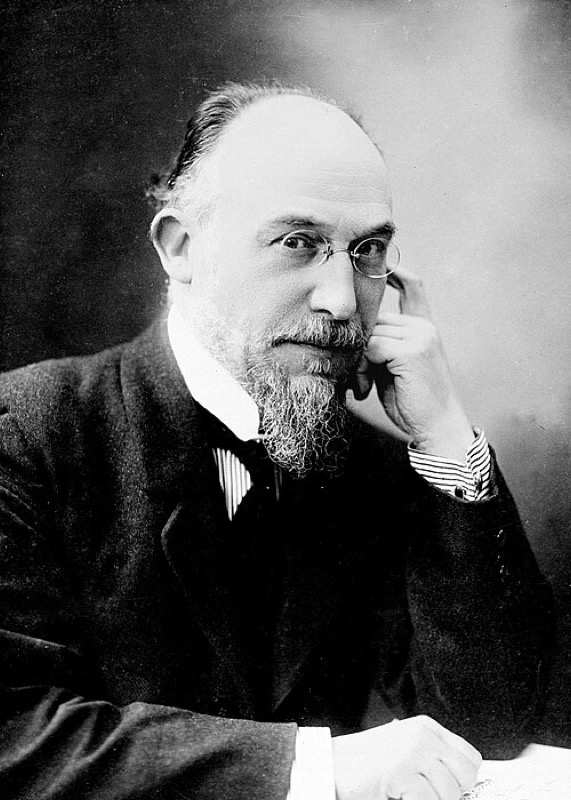
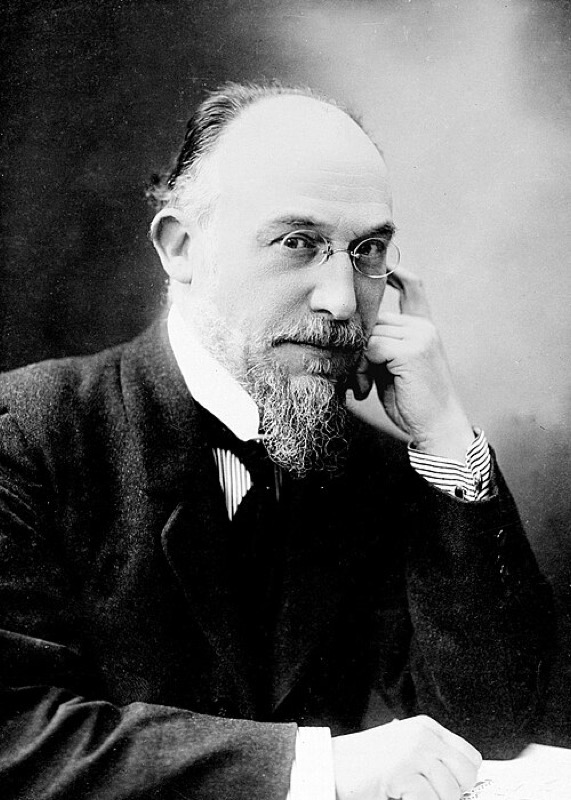
Erik Satie composed the three Gymnopédies in 1888, the year he was twenty-one and living in a small room in Montmartre. He published all three himself, in a run of copies he could barely afford to print, and played them at the Chat Noir cabaret where the Parisian avant-garde gathered. The title has never been conclusively explained: a gymnopaedia was an ancient Spartan festival of naked youths dancing in honor of Apollo, but Satie's own notes suggest he took the word from Flaubert's novel 'Salammbô', where it appears in a description of a Carthaginian ceremony. Whatever the source, the word sounds timeless and slightly alien - which is exactly how the music sounds.
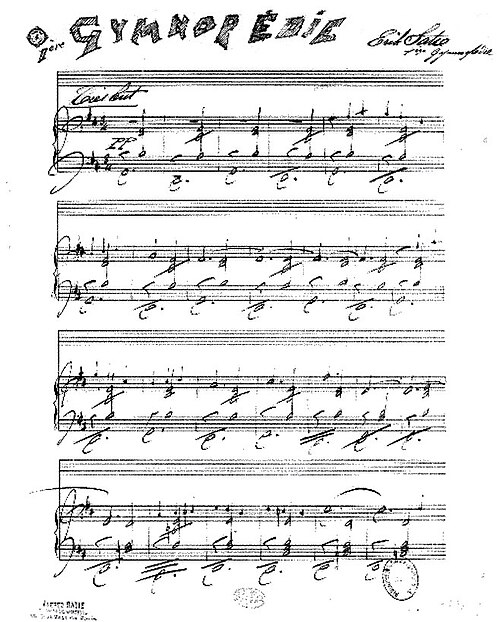
The first Gymnopédie is marked 'Lent et douloureux' - slow and painful. Its structure is almost aggressively simple: a two-bar left-hand pattern in 3/4 that oscillates between a bass note and an open fifth chord, repeated throughout, while the right hand traces a melody that never seems to begin or end but simply continues. There are no development sections, no dramatic climaxes, no transitions in the classical sense. Satie was stripping away everything that music was supposed to do in order to find out what was left. What was left turned out to be remarkably moving.
Satie's Gymnopédies went largely unnoticed until his friend Claude Debussy orchestrated the first and third of them in 1896. Debussy's arrangement, premiered at the Société Nationale de Musique, introduced the pieces to concert audiences who then went back to the piano originals. The circle of influence reversed: Debussy helped launch Satie's reputation, and Satie's stripped-back harmonic thinking had been quietly influencing Debussy's own work for years. The Gymnopédies now stand as one of the most recorded piano pieces of all time, and Gymnopédie No. 1 is by far the most-played of the three.
Practice path
A slow waltz where the bass sets everything.
The left hand carries the entire harmonic and rhythmic foundation: a low bass note on beat one, followed by an open fifth or seventh chord on beats two and three. Getting this pattern smooth and even is the first task. The tempo is very slow - typically around 60 beats per minute for a dotted half note - which means each beat is long enough to feel. Practice the left hand alone until the bass note and chord speak at exactly the same dynamic level and the rhythm is locked.
The right-hand melody sits above this pattern and needs to be played with a gentle singing tone, quieter than it feels natural to play. The dynamic marking is piano throughout most of the piece, with the melody only slightly louder than the accompaniment. Pedaling follows the harmony: change on beat one of each new chord, holding through beats two and three. Rubato is appropriate and expected - Satie's marking 'lent' implies elasticity rather than a rigid pulse - but keep any fluctuation modest and consistent rather than arbitrary.
Score basis: Generated MusicXML from Mutopia MIDI. Public domain source; prototype MusicXML generated for Pianodemy. Attribution: Mutopia Project, Mutopia-2014/12/14-37, Dover Edition.
MIDI source: Mutopia Project, Mutopia-2014/12/14-37. Public domain / Mutopia distribution.
How to use this V1
Left hand on its own until it disappears.
Practice the left-hand waltz pattern at 50% tempo until it requires no conscious effort - the melody cannot sing freely until the accompaniment is automatic. At 75% tempo, add the right hand and focus on keeping the melody no louder than a mezzo-piano. Use the loop tool to repeat the eight-bar sections separately; the piece has three distinct melodic phrases and each deserves its own attention before you chain them together. Wait-for-note mode is particularly useful for the melody notes that arrive on the offbeats - they are easy to rush.
Keep going