Interactive piano piece
Learn Gymnopédie No. 3
The third and most harmonically open of Satie's Gymnopédies, with a long, searching melody over slow waltz-time chords. Section looping, slow playback, and an on-screen keyboard let you work the A minor harmonic shifts and the quiet three-beat pulse until the gravity of 'Lent et grave' feels natural.
Browser MIDI check pending
Loading score...
Press Play for the full piece, or choose Opening and switch to Wait for note for guided right-hand practice.
About the piece
The Gymnopédie Debussy chose to orchestrate.
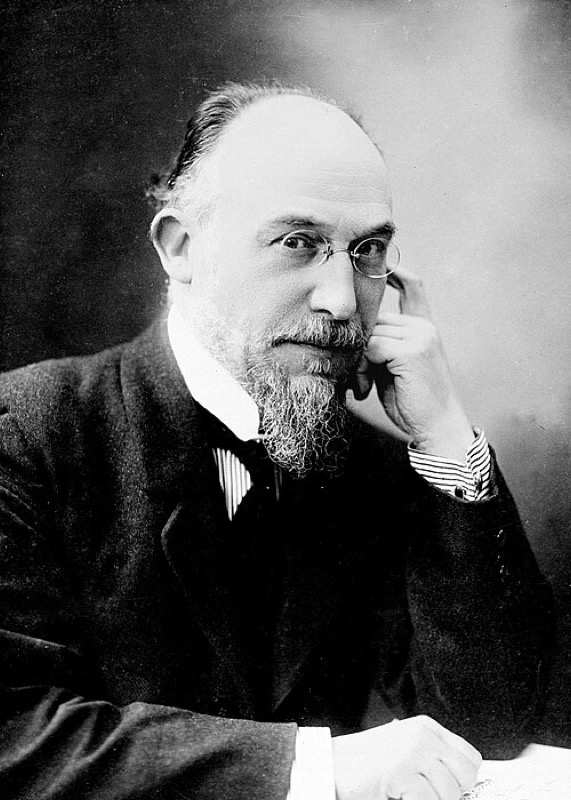
Gymnopédie No. 3 in A minor was one of the two pieces - alongside No. 1 - that Claude Debussy selected for his 1896 orchestration, premiering the arrangement at the Société Nationale de Musique. His choice of Nos. 1 and 3, and not No. 2, effectively made these the 'known' Gymnopédies for concert audiences. Debussy's orchestrations are almost as famous as Satie's originals: strings carry the waltz pattern, the flute takes the melody, and the overall texture suggests Impressionism arriving fully formed. But the piano originals have a spare, unornamented quality that the orchestra cannot quite replicate.
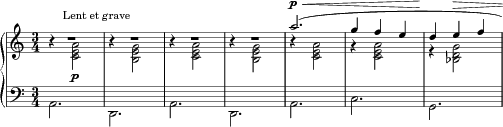
Satie marked No. 3 'Lent et grave' - slow and solemn. The A minor key gives it the weightiest character of the three: where No. 1 is painful and reflective, and No. 2 is sad and lilting, No. 3 has a measured gravity that feels ceremonial. The left-hand pattern is slightly more varied than in the other two Gymnopédies, and the melody sits lower in the right hand's register, giving it a darker, more cello-like quality. Debussy recognized in this particular combination of qualities the piece that sounded most complete as a concert work.
Practice path
Gravity without heaviness - the whole interpretive challenge.
The marking 'grave' can mislead students into playing heavily. The correct approach is measured and weighted but never sluggish - each note speaks clearly and the phrase moves forward within the slow tempo. Practice the left hand with the deliberate care that the word 'solemn' suggests: even, sustained, unhurried, but always with a sense of the next note arriving at the right moment.
The melody sits in a lower register than in No. 1, which means the right hand must project more deliberately - especially in bars where the melody shares register with the left-hand accompaniment. Listen carefully for blend versus separation: the melody must always emerge slightly above the accompaniment, even when they are close in pitch. A light half-pedal on each bass note allows the harmonies to resonate without masking the melodic line.
Score basis: Generated MusicXML from Mutopia MIDI. Public domain composition; Public Domain; MusicXML generated for Pianodemy. Attribution: Mutopia Project (https://www.mutopiaproject.org/ftp/SatieE/gymnopedie_3/).
MIDI source: Mutopia Project (https://www.mutopiaproject.org/ftp/SatieE/gymnopedie_3/). Public Domain.
Questions
Before you practice.
Short answers for learners and for searchers deciding whether this is the right version to start with.
01How is Gymnopédie No. 3 different from No. 1?
Both share the same slow waltz texture, but No. 3 is marked Lent et grave and has a more harmonically restless quality. The melody wanders further from home and the resolution arrives later, giving it a more introspective mood.
02What level is Satie's Gymnopédie No. 3?
Like the other Gymnopédies, No. 3 sits at the late-beginner level for note-reading and hand position, but producing a genuinely beautiful sound - smooth left-hand jumps, soft pedal, singing melody - is an ongoing challenge.
How to use this V1
Solemn tone does not mean slow fingers.
Practice at 60% tempo and focus entirely on tone: each note should speak with a warm, slightly weighted attack rather than a soft, passive one. Gravity comes from the choice of touch, not the speed. At 80% tempo hands together, check that the melody remains audible in the lower-register passages - if it disappears, reduce the left-hand dynamic further. Section-loop the transitions between the two main melodic phrases, where the left-hand pattern shifts; those moments of change are where tempo tends to wobble. Satie's pedaling convention applies as throughout the set: change on beat one, sustain lightly through beats two and three.
Keep going