Fantaisie-Impromptu
About this arrangement
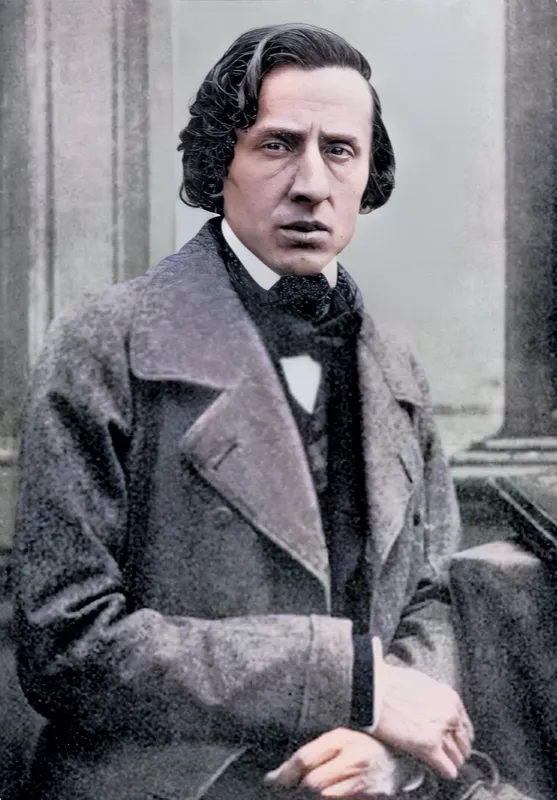
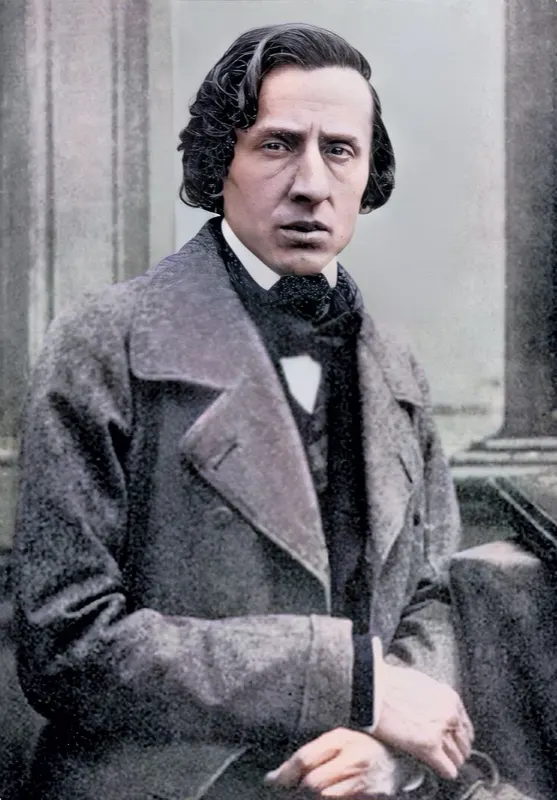
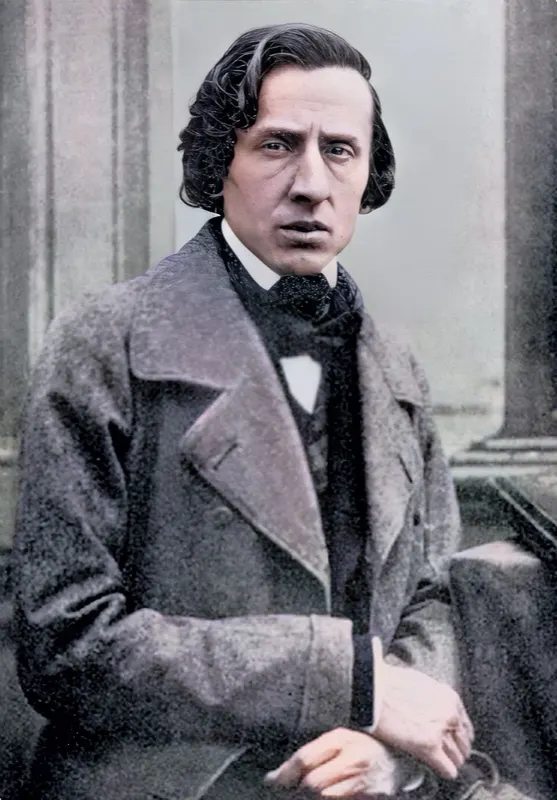
Chopin wrote it in 1834 and never published it. His friend Julian Fontana brought it out in 1855, after Chopin's death, although Chopin had asked that his unpublished manuscripts not be printed. In 1960 Arthur Rubinstein bought an album containing a copy in Chopin's hand, dated 1835 and marked as composed for the Baroness d'Este.
The core difficulty is four notes in the right hand against three in the left. Practise hands separately at a slow tempo until each is automatic, then tap the four-against-three pattern on a table before putting the hands together. The slow middle section is a rest for the fingers, not for the ear: shape the melody.
Start with short loops.
Use the section list as a practice map. Start at 50% tempo, loop one section, then return to the full piece once the hand shape feels stable.
Choose Right or Left to focus on one hand. Wait for note checks the highlighted notes as you play them on the screen or a connected MIDI keyboard.
Before you practice.
01 Is the Fantaisie-Impromptu hard?
Yes, it is advanced. Fast sixteenths in one hand against triplets in the other make it a real coordination challenge.
02 Why was it published after Chopin died?
Chopin never published it. His friend Julian Fontana released it in 1855 as one of his posthumous works.
03 What key is the Fantaisie-Impromptu in?
C-sharp minor, with four sharps. The middle section moves to D-flat major.