Prelude in C-sharp minor, Op. 45
The standalone prelude that wanders the whole tonal universe.
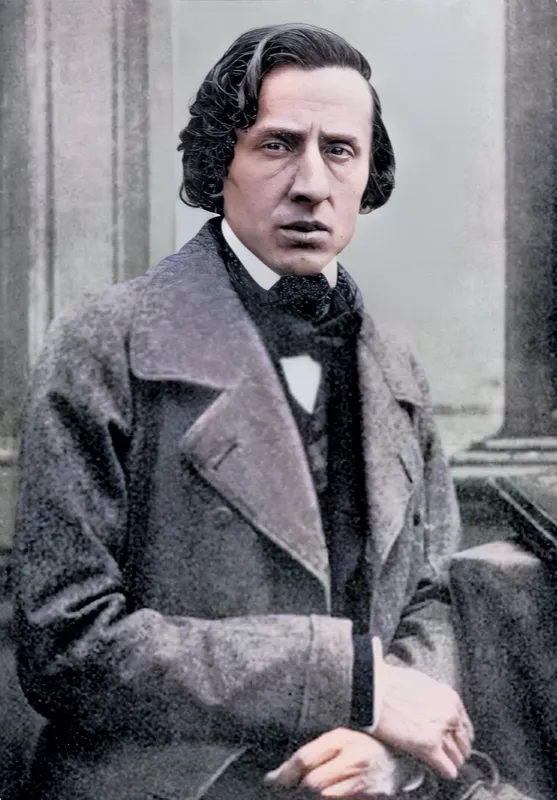
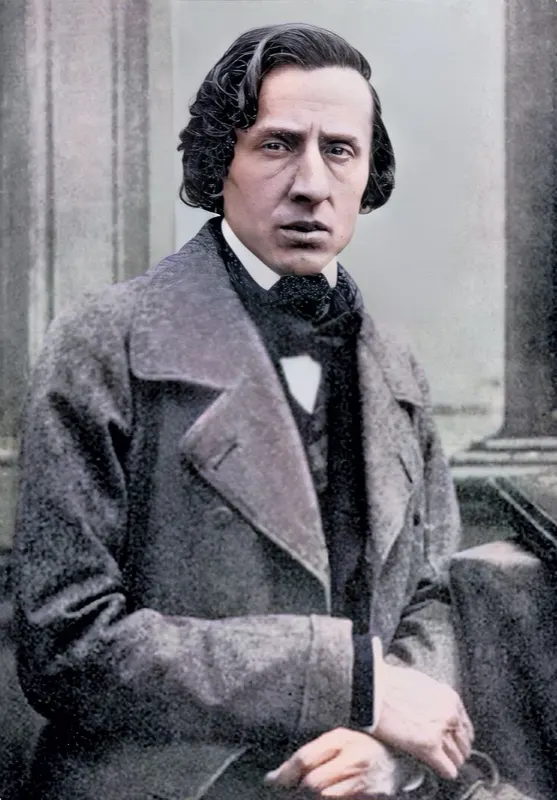
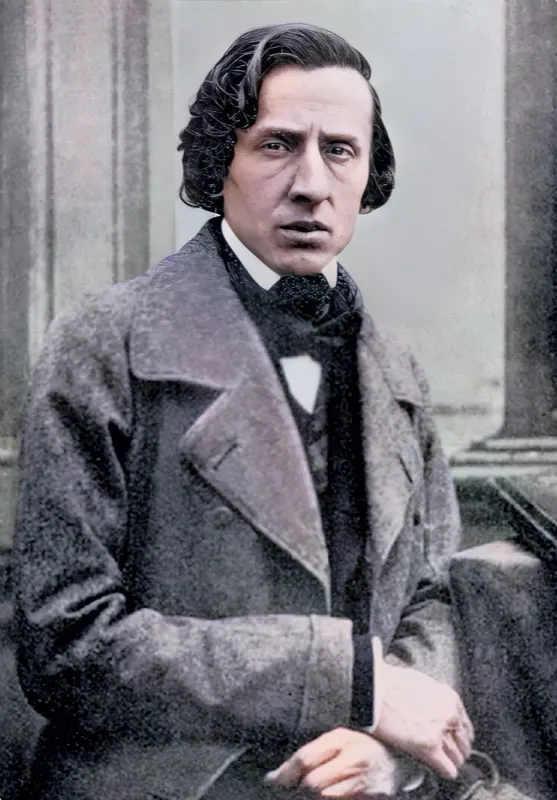
Unlike the twenty-four Preludes of Op. 28, the Prelude in C-sharp minor Op. 45 stands alone - composed in 1841 and published separately. It is Chopin's most harmonically adventurous standalone piece: starting from C-sharp minor, it passes through a series of remote modulations that touch on keys a tritone away before finding a long, meandering path back home. The journey takes five to six minutes and covers more harmonic ground than most complete Chopin sonata movements.
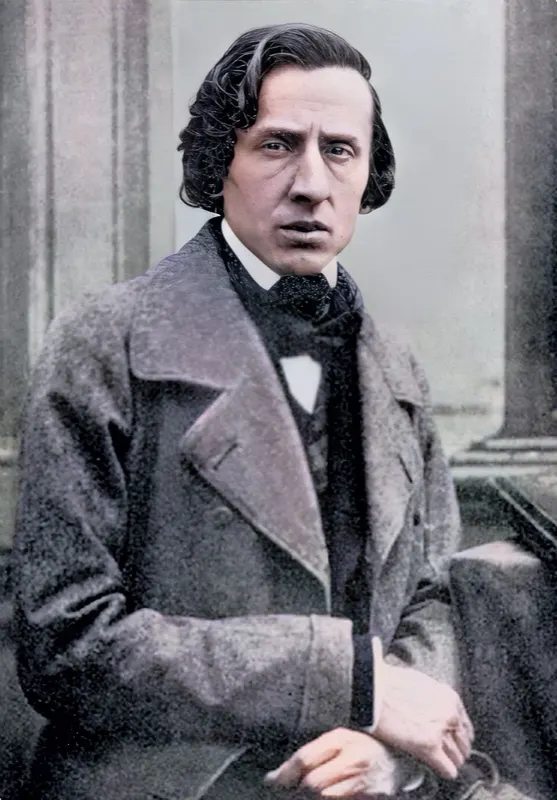
The piece was composed during Chopin's relationship with George Sand, a period of creative intensity despite his deteriorating health. He gave it to the pianist Friederike Müller-Streicher, one of his favourite students, and it was heard in relatively few performances during his lifetime. Its harmonic daring kept it from the mainstream; it is now recognised as one of the most prescient pieces of mid-century Romanticism, anticipating the chromaticism of Wagner and Liszt.
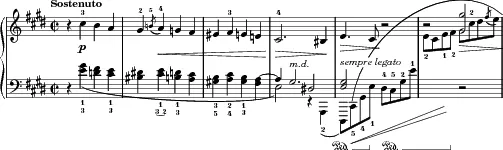
Follow the modulations with your ear before your fingers.
Before practising hands together, listen to a recording and trace the key changes on a piece of paper - name each key as you hear it arrive. Understanding the tonal map makes the learning process twice as fast, because every passage has a harmonic destination rather than just a sequence of notes.
Before you practice.
01 Is Chopin's Op. 45 Prelude one of his best piano pieces?
Many pianists consider it among his finest single works. It is deeper and more structurally adventurous than most of the Op. 28 preludes, and it rewards close study - the journey through remote harmonies and the quiet return to C-sharp minor are extraordinarily moving.
02 How difficult is the Prelude in C-sharp minor Op. 45?
It is advanced: the harmonic complexity requires an analytical mind alongside technical control, the legato voicing demands a very refined touch, and sustaining the long narrative arc across 99 bars without losing tension is a genuine interpretive challenge.
Let the harmony lead; never rush toward the resolution.
At 60% tempo, loop the central development section and listen for the moment the harmony begins to feel 'lost' - that sense of tonal suspension is the point of the piece. At 85%, use wait-for-note mode at each cadence point to ensure arrivals are unhurried. The return to C-sharp minor at the end should feel like a long-awaited homecoming, not a mechanical resolution.