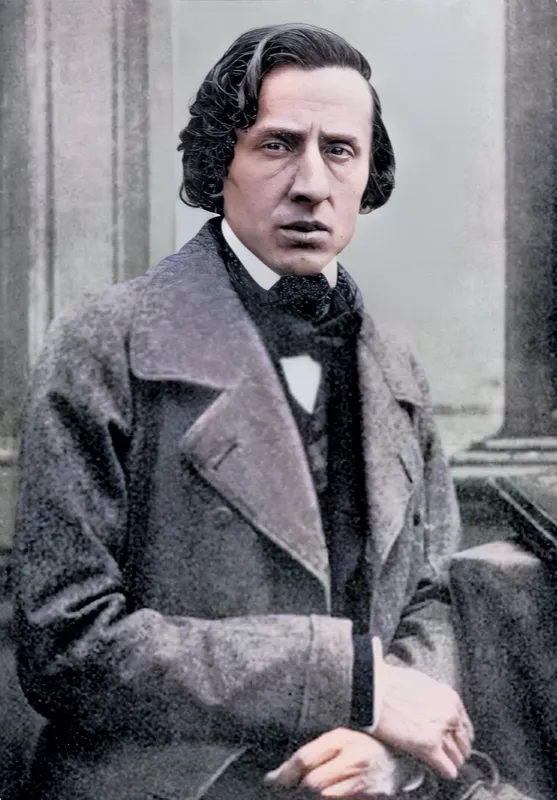
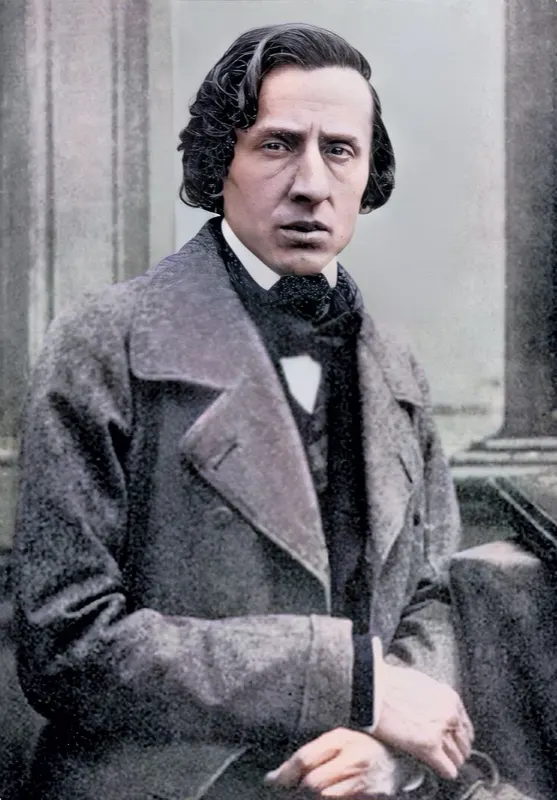
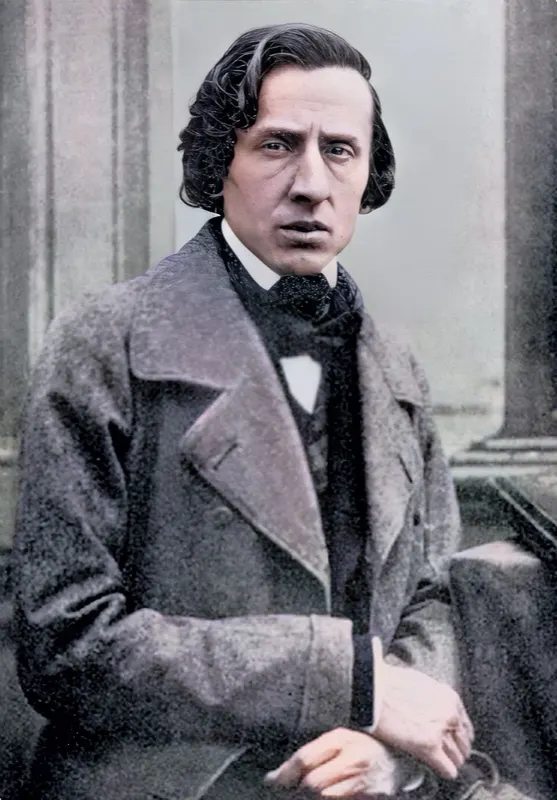
Étude Op. 10 No. 3 in E major
About this arrangement
Chopin wrote it in 1832 and published it in 1833. The nicknames 'Tristesse' and 'L'Adieu' came from others, not from Chopin, and his biographer Frederick Niecks reports that Chopin said he'd never written a more beautiful melody.
Play the top melody alone and sing it, then add the inner voices with the right hand much softer. Loop the middle section at 50% until the hand shifts are secure.
Start with short loops.
Use the section list as a practice map. Start at 50% tempo, loop one section, then return to the full piece once the hand shape feels stable.
Choose Right or Left to focus on one hand. Wait for note checks the highlighted notes as you play them on the screen or a connected MIDI keyboard.
Before you practice.
01 How hard is Chopin's Étude Op. 10 No. 3?
It's advanced. The opening is slow but needs careful voicing in one hand, and the middle section builds to a big, fast climax.
02 How long is Op. 10 No. 3?
Our edition has 78 bars in 2/4, marked Lento, ma non troppo.
03 What should I practise first?
Learn the opening melody and its inner voices slowly, hands separately. Then take the middle section in short loops.
04 Did Chopin call it 'Tristesse'?
No. 'Tristesse' (sadness) and 'L'Adieu' (farewell) were added by others. Chopin gave his études no titles.