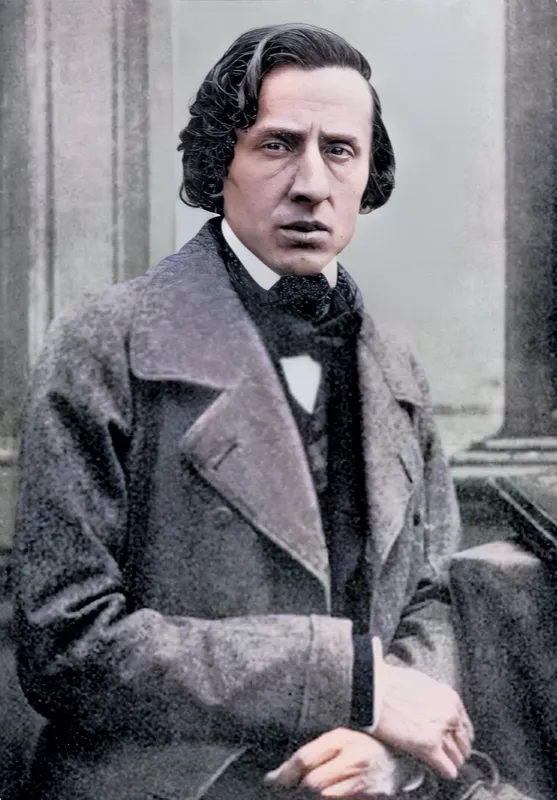
Nocturne Op. 9 No. 1 in B-flat minor
About this arrangement
It's the first of the three Nocturnes, Op. 9, published in 1832 and dedicated to Marie Pleyel. Its companion, Op. 9 No. 2 in E-flat major, became the most famous nocturne Chopin wrote.
Learn the left-hand arpeggios alone first, keeping the bass note of each group a little heavier. Then fit the long runs of 11 and 22 notes over the beat slowly, with the first and last notes landing in time.
Start with short loops.
Use the section list as a practice map. Start at 50% tempo, loop one section, then return to the full piece once the hand shape feels stable.
Choose Right or Left to focus on one hand. Wait for note checks the highlighted notes as you play them on the screen or a connected MIDI keyboard.
Before you practice.
01 How hard is Chopin's Nocturne Op. 9 No. 1?
It's advanced. The left hand covers wide arpeggios, and the right hand has long runs that must be spread evenly across the bar.
02 How long is the Nocturne in B-flat minor?
Our edition has 86 bars, counting the opening upbeat.
03 What should I practise first?
The left-hand arpeggios on their own, until the stretch feels safe and the sound stays soft.
04 Is Op. 9 No. 1 easier than Op. 9 No. 2?
No. Most players find No. 1 a little harder, mainly because of its long runs and wider left-hand pattern.