Interactive piano piece
Learn Première Arabesque
A flowing Debussy page for cross-rhythms, pedaling, and shimmer. An interactive score with tempo control, section looping, a clickable piano keyboard, and wait-for-note mode makes this page behave like a guided practice session rather than a static sheet.
Browser MIDI check pending
Loading score...
Press Play for the full piece, or choose Opening and switch to Wait for note for guided right-hand practice.
About the piece
The piece that taught Debussy to be Debussy.
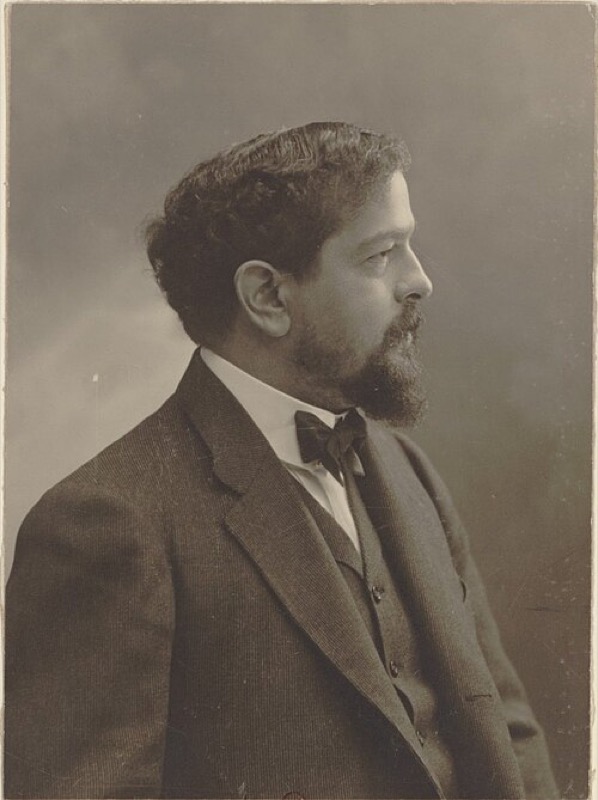
Debussy wrote the Deux Arabesques between 1888 and 1891, in his late twenties, while he was still finding the harmonic language that would define everything he wrote afterward. The Première Arabesque is the earlier of the two, and it already shows the characteristic fingerprints: parallel motion in thirds and sixths that sidestepped classical voice-leading, whole-tone inflections that blur the sense of key, and a texture that seems to float rather than stride. For all that, the piece is firmly tonal - E major - and the melody is unusually warm and singable for a composer later associated with atmosphere over tune.
The title 'arabesque' comes from the visual art term for an intricate, interlocking decorative pattern - the kind found in Islamic architectural ornament. Schumann had used the word for a piano piece before Debussy, and Debussy was reading the French Symbolist poets who drew parallels between pattern in language and pattern in music. The result is a piece that is simultaneously decorative and deeply felt: the flowing semiquaver figures in the right hand trace a continuous line that never quite repeats itself identically, always unfolding.
The Arabesques were among the first of Debussy's works to be widely played, partly because their difficulty is manageable and partly because the sound was genuinely new. They were published in 1891 by Durand and quickly found their way into conservatory programs across Europe. By the time Debussy became famous for 'Pelléas et Mélisande' and the Préludes, the Arabesques had already introduced a generation of pianists to his sound world.
Practice path
A flowing line that rewards patience.
The piece is built on three main sections plus a return: the initial E major theme with its running triplet accompaniment, a slightly more animated middle section in A major, and a reprise of the opening. The challenge is not individual notes but continuity - the right-hand melody must sing over the left-hand arpeggios without either hand dominating. Hands-separate practice for longer than feels necessary pays dividends here: the left-hand pattern needs to be automatic before the right hand can phrase freely.
Rubato is inherent to the style. The marking is 'Andantino con moto' - moving, but not driven. Let the melody breathe at the tops of phrases and press gently forward in the linking passages. Pedaling should follow the harmony rather than the beat: a single pedal per bar in the slower-moving harmonic passages, changed more frequently in the busier middle section. Keep the dynamic range wide - the piece has moments of genuine pp that contrast with the warmer mf of the main theme.
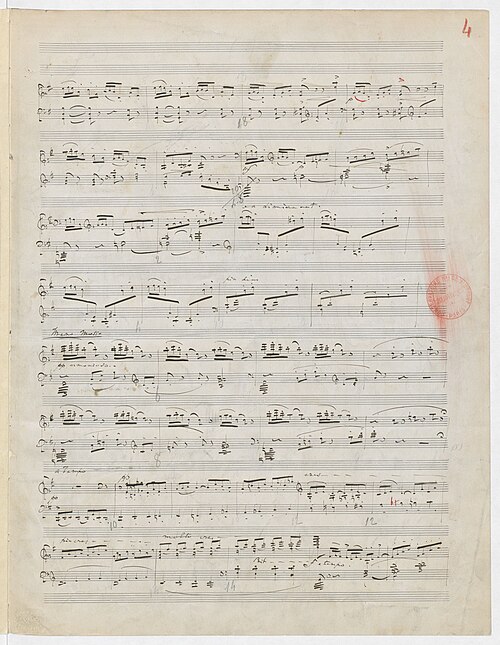
Score basis: Generated MusicXML from Mutopia MIDI. Public domain source; prototype MusicXML generated for Pianodemy. Attribution: Mutopia Project, Mutopia-2011/10/25-1777, Durand et Fils (1904).
MIDI source: Mutopia Project, Mutopia-2011/10/25-1777. Public domain / Mutopia distribution.
How to use this V1
Even triplets first, phrasing second.
Set the tempo to 50% and drill the left-hand triplet arpeggios until they are completely even - any unevenness will surface at speed and disrupt the melody above. Move to 75% once the accompaniment is stable, then add the right hand. Loop the middle-section modulation separately; it is the trickiest harmonic moment and also the place most likely to rush. Wait-for-note mode works well for the opening right-hand melody to reinforce the pitch targets before adding flow.
Keep going