Interactive piano piece
Learn The Dying Swan
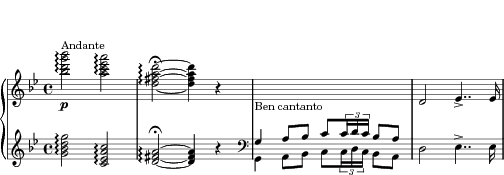
A graceful Romantic miniature by America's first internationally famous pianist - 86 measures of singing melody over a delicate rippling accompaniment that conjures Saint-Saëns without sounding borrowed. The Dying Swan is a miniature tone poem - use the Pianodemy desk's tempo control to practice the long melodic line at reduced speed before shaping its dying-fall phrase structure.
Browser MIDI check pending
Loading score...
Press Play for the full piece, or choose Opening and switch to Wait for note for guided right-hand practice.
About the piece
America's first international piano superstar, writing for the age of sentiment.
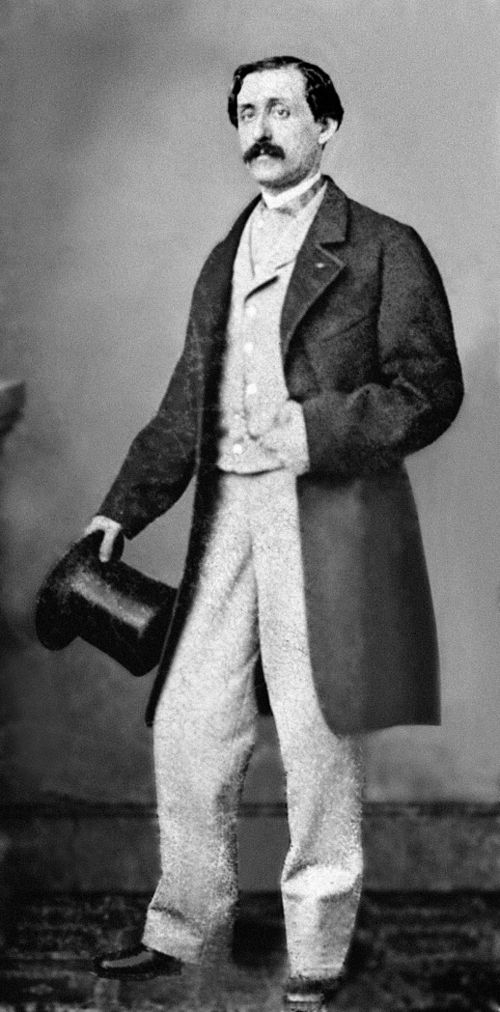
Louis Moreau Gottschalk was born in New Orleans in 1829 to a Jewish-English father and a Creole mother, and from childhood he absorbed the African, Caribbean, and European musical currents that made New Orleans unlike anywhere else in America. He was sent to Paris at age thirteen, where Chopin predicted he would become 'the king of pianists,' and by his early twenties he was one of the most celebrated piano virtuosos in the Western world - performing 1,100 concerts in the United States between 1862 and 1865 alone. The Dying Swan is one of the introspective salon pieces he composed alongside the more famous Creole-flavored works, written for an audience that prized sentiment and delicacy.
The piece belongs to the 19th-century tradition of 'character pieces' - short piano works depicting a mood, scene, or narrative. The dying swan was a well-worn Romantic image by the time Gottschalk wrote this piece, evoking natural beauty in its final moment. Gottschalk's version is notable for its extreme economy: the melody floats over a sustained accompaniment with very little harmonic motion, asking the performer to sustain interest through tone color and phrasing alone rather than through harmonic complexity. Gottschalk died in 1869 at the age of 40, collapsing at the piano mid-concert in Rio de Janeiro.
Practice path
Sustain the line, not the notes.
The Dying Swan asks for a legato so smooth that individual note changes are inaudible - the melody should feel like one continuous sound slowly changing pitch. At 60% tempo, practice the melody with full pedal and focused listening: any gap in the sound or unwanted accent is the primary technical problem to solve. The accompaniment should be felt but not heard prominently; balance is everything.
Score basis: Generated MusicXML from Mutopia MIDI. Public domain composition; Public Domain (CC0) - Mutopia; MusicXML generated for Pianodemy. Attribution: Mutopia Project (https://www.mutopiaproject.org/cgibin/piece-info.cgi?id=942).
MIDI source: Mutopia Project (https://www.mutopiaproject.org/cgibin/piece-info.cgi?id=942). Public Domain (CC0) - Mutopia.
Questions
Before you practice.
Short answers for learners and for searchers deciding whether this is the right version to start with.
01Who was Louis Moreau Gottschalk?
Louis Moreau Gottschalk (1829-1869) was an American pianist and composer from New Orleans, the first American musician to achieve international celebrity. He studied in Paris, where Chopin praised him, and toured relentlessly through the Americas and Europe, composing hundreds of character pieces for his own recitals.
02Is The Dying Swan related to Saint-Saëns or Tchaikovsky's Swan Lake?
No - all three are independent compositions with the same poetic image as their starting point. Saint-Saëns's The Swan (1886) and Tchaikovsky's Swan Lake (1876) both postdate or overlap with Gottschalk's Dying Swan, which he wrote for his own touring recitals in the 1850s-1860s.
How to use this V1
Tone color over technique.
This is one of the few pieces in the Pianodemy library where technical difficulty is almost entirely a matter of tone and phrasing rather than finger independence or coordination. Use the loop feature on the central melody to work on legato connection. The tempo should be slow enough that the dying-fall phrasing feels inevitable rather than dragged. Let the sustain pedal do its work - change it only when the harmony shifts, not on every beat.
Keep going