Interactive piano piece
Learn In the Hall of the Mountain King (piano), Op. 46 No. 4
Grieg's most recognizable orchestral theme in its piano version - a march that accelerates from a whisper to a roar over 88 bars. The practice desk lets you loop the crescendo from its quietest pizzicato opening to the frantic final bars, watching the score and hearing the dynamics build in real time.
Browser MIDI check pending
Loading score...
Press Play for the full piece, or choose Opening and switch to Wait for note for guided right-hand practice.
About the piece
A single idea that refuses to stop accelerating.
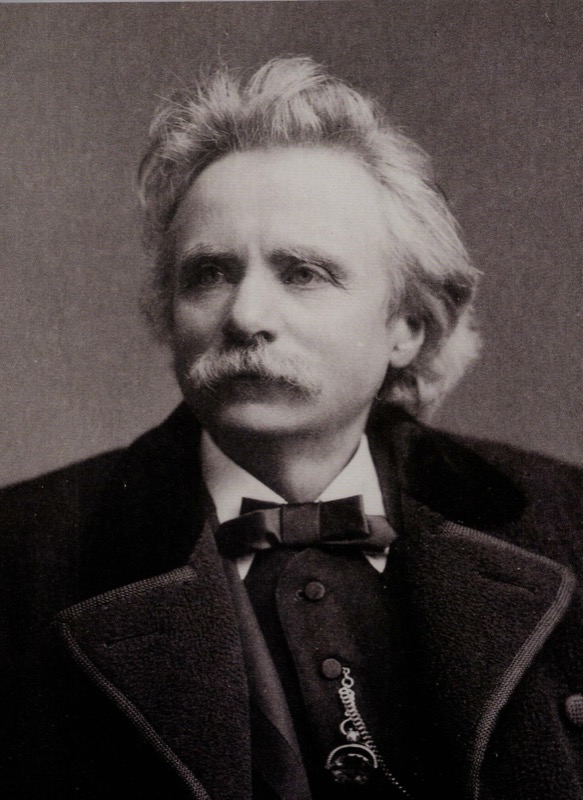
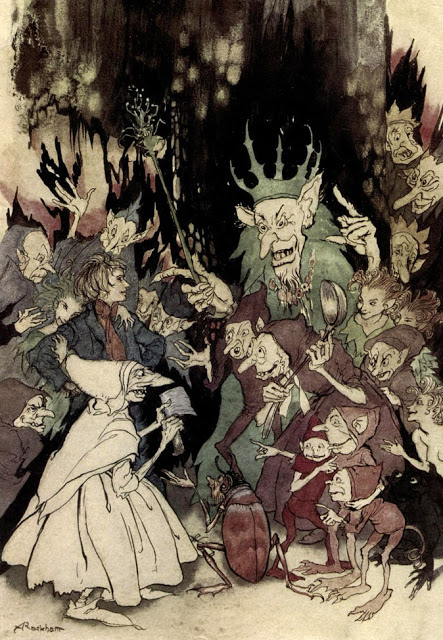
Edvard Grieg wrote the Peer Gynt incidental music in 1875 for a production of Henrik Ibsen's dramatic poem at the Christiania Theatre in Kristiania (now Oslo). In the Hall of the Mountain King appears in Act II, scene 6, when the protagonist Peer Gynt is hauled before the troll king Dovre-gubben inside a Norwegian mountain. The trolls demand he marry the king's daughter; Peer tries to escape; chaos erupts.
The music describes this scene with a single four-bar theme that begins pianissimo, almost tentatively, and then repeats and accelerates through seventeen variations, each louder and faster than the last, until the entire orchestra is playing fortissimo and the hall collapses. The formal device - a ground bass that accelerates - is as old as Baroque music; what Grieg does with it feels like something out of Norwegian folk horror.
Grieg himself was ambivalent about the piece. He later complained that the music was too crude, that it 'reeks of cow dung,' and that he had written it as a deliberate joke at the trolls' expense. But it became, along with Morning Mood, one of the two pieces from the Peer Gynt suites that the concert-going public refused to forget.
Practice path
Build the crescendo from nothing.
The piano transcription preserves the relentless accelerando structure: the same four-bar theme repeating in progressively higher dynamic levels and faster tempo markings. Begin with the opening statement at exactly the printed tempo - quietly, with almost no pedal - and use the loop to fix the finger pattern before the accelerations begin. The goal is to have the theme automatic before it gets loud.
The final section, where the tempo is effectively at a gallop and the dynamics are fortissimo, rewards separate-hands practice at 60% speed. The left-hand octave leaps in the final bars are the physical challenge; work them in isolation before combining, then use the loop to run the last eight measures repeatedly until the octaves feel placed rather than grabbed.
Score basis: Generated MusicXML from Mutopia MIDI. Public domain composition; Public Domain; MusicXML generated for Pianodemy. Attribution: Mutopia Project (https://www.mutopiaproject.org/GriegE/O46/Dans_l_antre_du_roi_de_la_montagne/).
MIDI source: Mutopia Project (https://www.mutopiaproject.org/GriegE/O46/Dans_l_antre_du_roi_de_la_montagne/). Public Domain.
Questions
Before you practice.
Short answers for learners and for searchers deciding whether this is the right version to start with.
01Is In the Hall of the Mountain King hard to play on piano?
The intermediate rating reflects the repeated ostinato pattern and the coordination required to build the dynamic arch from very soft to very loud. The notes themselves are not complex, but controlling the gradual tempo and volume increase is the real challenge.
02Is this the piano solo version or an accompaniment?
This is the solo piano arrangement of the Peer Gynt suite movement - Grieg's own transcription for solo keyboard, not an orchestral reduction or simplified teaching version.
03What key is In the Hall of the Mountain King in?
The piano arrangement opens in B minor and stays in that key through most of its 88 bars, matching the orchestral original. The final bars shift to B major for the fortissimo close.
How to use this V1
Quiet start, total commitment at the end.
Use 50% tempo to learn the theme's finger pattern cleanly - this is the hardest part because nothing feels urgent yet. At 75%, the crescendo structure starts to create its own momentum. Loop the final sixteen bars repeatedly at full tempo to build the stamina the ending demands.
Keep going