Interactive piano piece
Learn Moment Musical No. 3
Schubert's Moment Musical No. 3 in F minor is a compact, staccato-driven character piece that packs enormous emotional contrast into 78 bars. The interactive score with per-section loops and tempo control makes this piece practical to work through - especially useful for the trio's chromatic inner voices and the da capo return that must feel fresh rather than mechanical.
Browser MIDI check pending
Loading score...
Press Play for the full piece, or choose Opening and switch to Wait for note for guided right-hand practice.
About the piece
The six bars that became one of Schubert's most famous pieces.
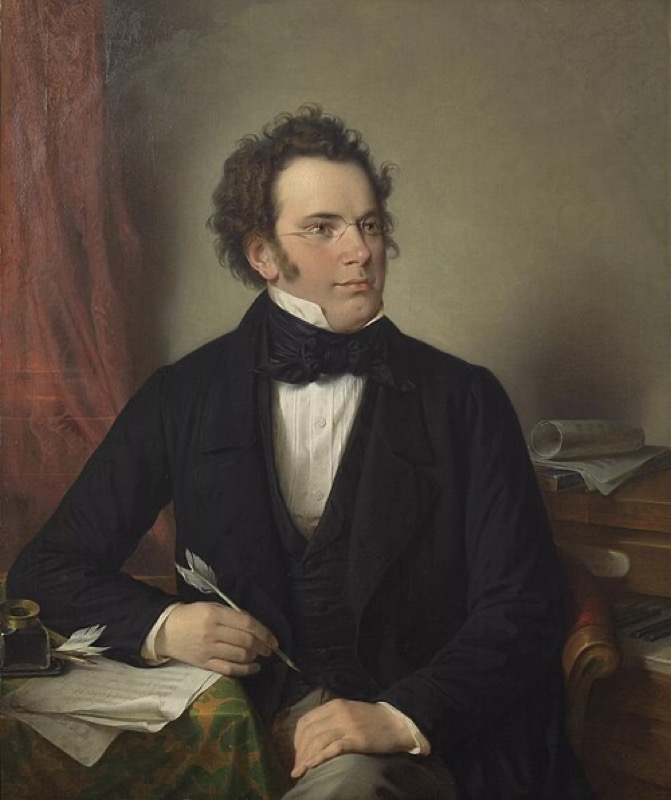
Franz Schubert composed the six Moments Musicaux, D. 780, between 1823 and 1828 - the last year of his life. No. 3 in F minor was actually the first to be published, appearing in a Vienna music journal in 1823 under the title 'Air russe' (Russian Air), a title Schubert had nothing to do with and which baffled commentators for decades. It was only later gathered with the other five pieces into the set we know as Op. 94.
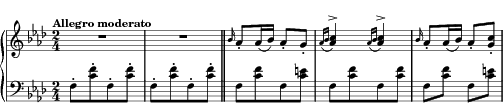
The piece is built on a six-bar melody - one of the most recognisable phrases in all piano literature - that begins in F minor and turns back on itself with the inevitability of a folk song. It is in ternary form: the opening melody, a contrasting trio section in A-flat major with chromatic inner voices, and a da capo return. The trio's harmonic richness - unexpected for a piece of this brevity - makes the return of the F minor melody feel both familiar and freshly earned.
Practice path
The six-bar opening must feel inevitable, not laboured.
The opening six-bar phrase is the emotional centre of the piece. Practice it alone, right hand only, until it feels like a single breath - not six separate bars. The trio section in A-flat major is harmonically richer and requires the inner voices of the left hand to be audible without overwhelming the melody. Loop the trio at 65% to balance the three layers before connecting it to the da capo return. The return should be slightly softer than the opening - as if the phrase is now remembered rather than announced.
Score basis: Generated MusicXML from Mutopia MIDI. Public domain composition; Public Domain (CC0) - Mutopia; MusicXML generated for Pianodemy. Attribution: Mutopia Project (https://www.mutopiaproject.org/cgibin/piece-info.cgi?id=1023).
MIDI source: Mutopia Project (https://www.mutopiaproject.org/cgibin/piece-info.cgi?id=1023). Public Domain (CC0) - Mutopia.
Questions
Before you practice.
Short answers for learners and for searchers deciding whether this is the right version to start with.
01How difficult is Schubert's Moment Musical No. 3?
It is comfortably intermediate - the staccato articulation and moderate tempo are accessible, though the contrast between the detached outer sections and the legato middle requires careful finger control.
02What is the form of Moment Musical No. 3?
It follows a simple ABA ternary form: a staccato F-minor opening section, a lyrical contrasting episode, and a return to the original staccato theme.
How to use this V1
Phrase shape over note accuracy is the priority.
At 55% tempo, the six-bar melody can easily fragment into individual notes rather than a continuous phrase. Check that each note connects to the next without a gap in sound. At 75%, add the left hand and listen for the inner-voice chromatic movement in the trio - it should give the harmony its warmth without pulling focus from the melody. The da capo is not an exact repetition: bring slightly less dynamic weight so the ending tapers naturally into silence.
Keep going