Interactive piano piece
Learn Glückes genug, Op. 15 No. 5 (Kinderszenen)
A quiet, satisfied D major song - Schumann's portrait of a moment of perfect childhood contentment, unhurried and warm from first note to last. Play through once without worrying about anything beyond the tone - this piece rewards a relaxed, ringing touch above all else.
Browser MIDI check pending
Loading score...
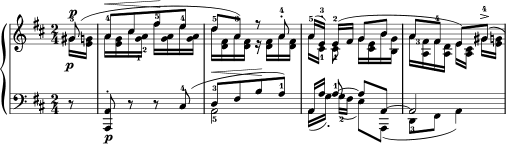
Press Play for the full piece, or choose Opening and switch to Wait for note for guided right-hand practice.
About the piece
Perfect contentment in D major.
Glückes genug - 'Perfectly Happy' or 'Happiness Enough' - is the fifth piece in Kinderszenen (Op. 15, 1838). After the urgent chasing of Hasche-Mann and the poignant pleading of Bittendes Kind, it arrives like a sigh of relief: a warm, unhurried D major that simply glows with contentment.
Schumann composed Kinderszenen during the agonising period when he was forbidden from seeing Clara Wieck by her father. Critics have noted that the happier pieces in the set - and Glückes genug is among the happiest - may reflect the happiness Schumann imagined rather than the happiness he felt. The title he chose after writing the music carries the quality of a wish.
Practice path
Warmth before everything.
Aim for the warmest, most ringing tone you can find on your instrument before working on any technical detail. Play each phrase as if you are sustaining the last note far longer than written, then let the next phrase begin just before it fades. That overlap of warmth is what makes this piece feel contented rather than merely pretty.
Score basis: Generated MusicXML from Mutopia MIDI. Public domain composition; Public Domain (CC0) - Mutopia; MusicXML generated for Pianodemy. Attribution: Mutopia Project (https://www.mutopiaproject.org/cgibin/piece-info.cgi?id=372).
MIDI source: Mutopia Project (https://www.mutopiaproject.org/cgibin/piece-info.cgi?id=372). Public Domain (CC0) - Mutopia.
Questions
Before you practice.
Short answers for learners and for searchers deciding whether this is the right version to start with.
01What does 'Glückes genug' mean?
'Glückes genug' is an old German phrase meaning 'happiness enough' or 'contentment enough' - a quiet satisfaction rather than an ecstatic joy. The music reflects this perfectly: warm, unhurried, and gently sustained, with nothing forced or dramatic.
02How does Glückes genug compare to other beginner Kinderszenen movements?
It is one of the more accessible movements alongside Von fremden Ländern (No. 1) and Bittendes Kind (No. 4). At 25 measures with a moderate tempo and simple harmonic language, it is well suited to late beginners. The main skill it develops is consistent legato touch and gentle dynamic control.
How to use this V1
Sustain and glow.
In slow-tempo mode, listen for the tone to remain warm and round even at the softest dynamic. Use wait-for-note mode to pause on the long notes and feel the resonance of the instrument under your hands. Loop the opening eight bars until the tone is consistent throughout, then carry that sound into the rest of the piece.
Keep going