Interactive piano piece
Learn Hunting Song
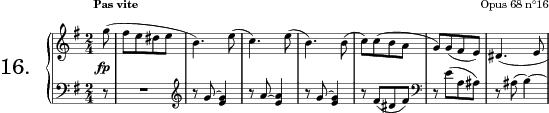
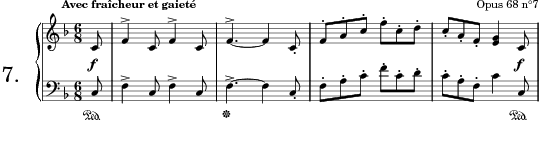
A rollicking F major chase with horn-call echoes in the bass - Schumann's most exuberant outdoor scene in the Album for the Young. Use loop mode on the galloping left-hand pattern so the accompaniment becomes reliable before adding the right-hand fanfare above it.
Browser MIDI check pending
Loading score...
Press Play for the full piece, or choose Opening and switch to Wait for note for guided right-hand practice.
About the piece
Into the forest at dawn.
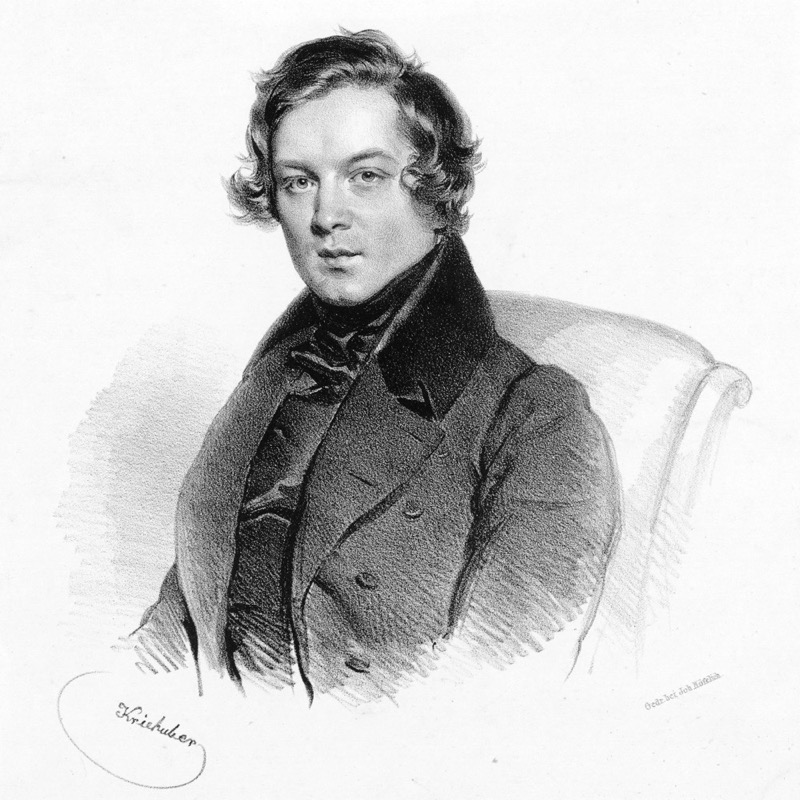
Schumann's Album for the Young (Op. 68) appeared in 1848, a collection of forty-three pieces divided between younger and older players. The first half draws on the domestic world of children - marches, songs, little dances - and Hunting Song is the album's first real outdoor adventure. The forest is just outside the window, and the music opens the door.
Hunting Song (Jägerliedchen) is in A major and propelled by a galloping compound-meter rhythm in the left hand that never stops moving. Above it the right hand plays a bold, horn-call melody in parallel sixths - the sound of huntsmen calling across a clearing. The technical challenge is keeping the left hand light and even while the right hand projects the fanfare with confidence.
Practice path
Gallop first, then sing.
Drill the left-hand galloping accompaniment alone until it runs easily at tempo. Then add the right-hand melody and resist the urge to accent the left hand - it must stay in the background so the horn calls ring clearly above.
Score basis: Generated MusicXML from Mutopia MIDI. Public domain composition; CC BY-SA 3.0; MusicXML generated for Pianodemy. Attribution: Mutopia Project (https://www.mutopiaproject.org/cgibin/piece-info.cgi?id=691).
MIDI source: Mutopia Project (https://www.mutopiaproject.org/cgibin/piece-info.cgi?id=691). CC BY-SA 3.0.
Questions
Before you practice.
Short answers for learners and for searchers deciding whether this is the right version to start with.
01How hard is Schumann's Hunting Song Op. 68 No. 7?
It sits at a late-beginner level - more demanding than the first few pieces in Op. 68 because the left-hand accompaniment is active throughout and must stay rhythmically steady while the right hand carries a busy melody.
02What does Hunting Song Op. 68 No. 7 develop in a pianist?
Left-hand independence, steady rhythmic drive in compound patterns, and the ability to project a clear melody over a busy accompaniment - all important stepping stones toward intermediate Romantic repertoire.
How to use this V1
Keep the gallop light.
At 60% tempo the left-hand compound rhythm reveals any unevenness. Use loop mode to stabilize the accompaniment before adding the right hand. Once both hands are together, listen from a distance: the melody should sound like something carried on open air, and the left hand should feel like hoofbeats, not thunder.
Keep going