Melody, Op. 68 No. 1
A diary written for his daughters - and the piece that opens it.
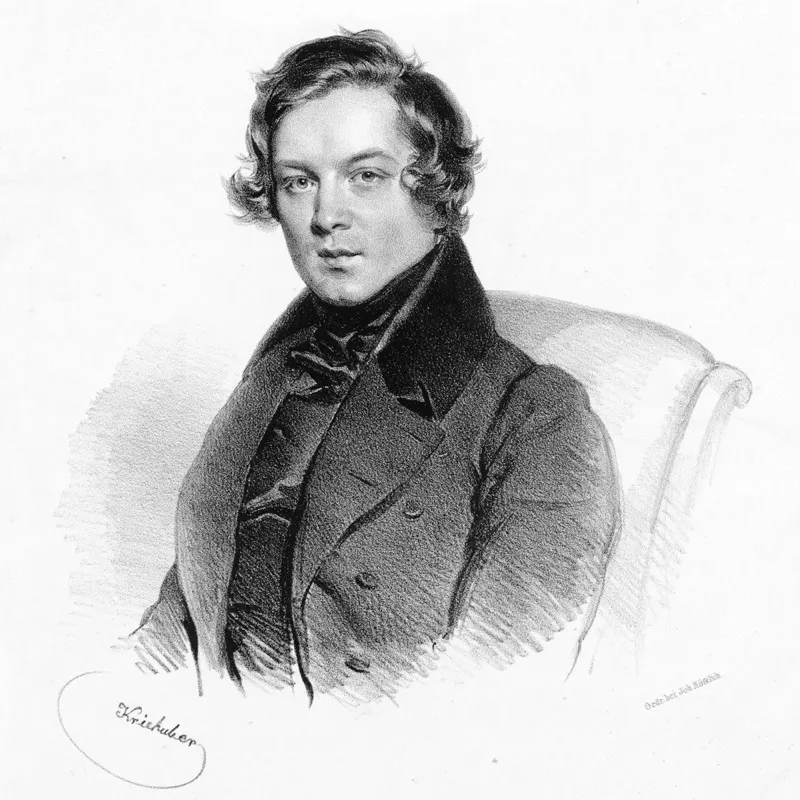
Schumann composed Album for the Young (Op. 68) in the summer of 1848 as birthday music for his eldest daughter Marie, who had just turned seven. He wrote the forty-three pieces in a matter of weeks, drawing on folk songs, old dances, and his own invention. The collection is split into two halves: the first eighteen pieces for younger players, the remainder for older and more advanced students. Together they trace a journey from the simplest song to pieces that challenge even accomplished pianists.
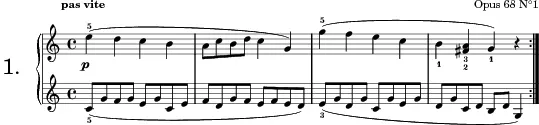
Melody opens the album - and it opens with a question. The right hand sings a long, flowing line in C major while the left hand provides a gentle, walking accompaniment. There is no ornament, no complication: only the instruction to make the piano sing. It is the clearest possible statement of what Schumann believed good piano playing was about.
Learn to make the piano sing.
Isolate the right-hand melody at 60% tempo and focus on connecting each note without a gap or a bump. Once the line feels continuous, add the left hand and listen for the balance: the melody should float above the accompaniment at all times.
MIDI based on the Mutopia Project edition , licensed CC BY-SA 2.5.
Before you practice.
01 Is Schumann Melody Op. 68 No. 1 suitable for absolute beginners?
Yes. It is one of the first pieces in Schumann's Album for the Young and is specifically designed for young or early-stage students. The right-hand melody fits naturally under the fingers and the left-hand accompaniment is straightforward.
02 What does this piece teach?
Melody No. 1 focuses on legato touch - connecting notes smoothly to create a singing, vocal quality. It also introduces simple two-hand coordination and basic phrase shaping.
03 How long does it take to learn Schumann Melody Op. 68 No. 1?
Most beginners can play through the piece within one to two weeks, though achieving a truly musical, connected sound may take a bit longer. Practicing hands separately at a slow tempo is the fastest route.
Legato from the first note.
Use the slow-tempo mode to establish a true legato before speeding up. In wait-for-note mode the piece becomes an ear-training exercise: listen to how each pitch resolves before moving on. The four-bar phrases make natural loop sections - work one phrase at a time.