The Merry Farmer
Coming home from the fields with a song.
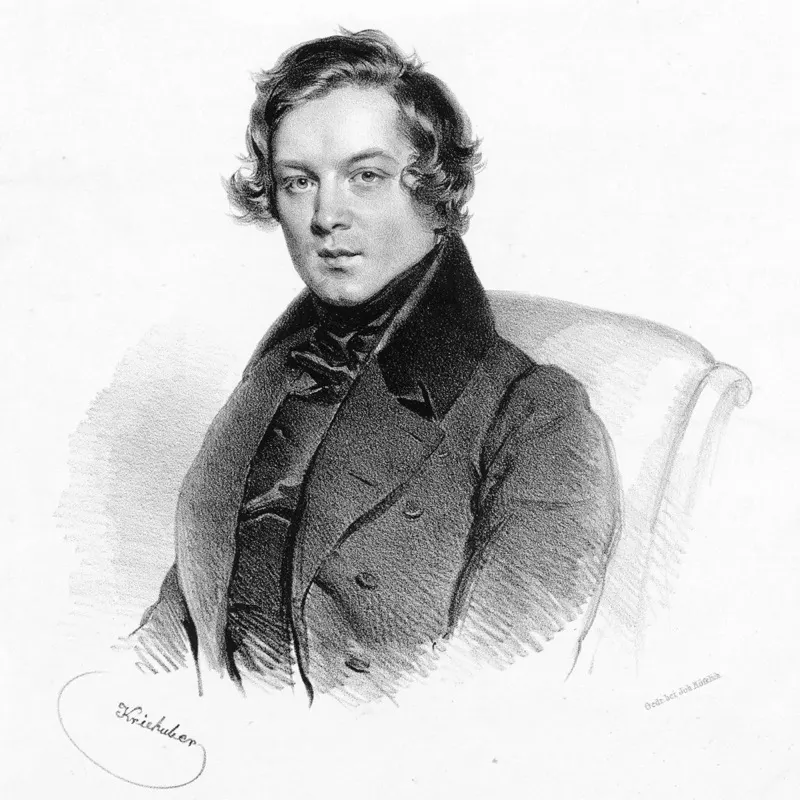
Schumann's Album for the Young (Op. 68) was written in 1848 as birthday music for his daughter Marie. The forty-three pieces divide into two halves - simpler pieces for younger players first, more demanding works for older students second. Throughout, Schumann populated the collection with vivid characters, and the Merry Farmer is one of the most recognizable.
Merry Farmer, Returning from Work (Fröhlicher Landmann, von der Arbeit zurückkehrend) is in F major, broad and stride-like, with a confident chord-based accompaniment that sounds like someone walking with satisfaction. The melody is bold and uncomplicated, the harmony direct. This is music that does not hesitate - it knows where it is going and arrives there on the beat.

Walk in, head high.
Establish the left-hand stride pattern first, keeping the wrist loose so the bass notes and chords alternate comfortably. Then bring in the right hand and work on projecting the melody above the accompaniment - the farmer should sound confident, not busy.
MIDI based on the Mutopia Project edition , licensed CC BY-SA 2.5.
Before you practice.
01 Why is the melody in the left hand in The Merry Farmer?
Schumann deliberately placed the tune in the left hand to strengthen the weaker hand early in a student's training. It also prepares learners for later repertoire where the melody shifts between hands.
02 What tempo should I practice The Merry Farmer at?
Start at around half the performance tempo - roughly 50 BPM - so you can listen to the left-hand melody clearly. Increase to full tempo only once both hands feel steady and balanced.
03 Is The Merry Farmer good for a first recital?
Yes. Its energetic character and clear ending make it memorable and crowd-pleasing. It is short enough for early students to feel confident performing it from memory.
Project the melody with ease.
At 70% tempo the stride accompaniment reveals any tension in the wrist - the alternation should feel like a natural swing, not a jump. Use loop mode on the second phrase, which moves through a slightly unexpected harmony on the way home. Once the hands are balanced, full tempo should feel inevitable rather than rushed.