The D Major Piano Scale: Two Sharps, One New Habit
The D major piano scale adds a second sharp on top of G major's one. Here's why C sharp trips students up more than F sharp ever did, and the fix.
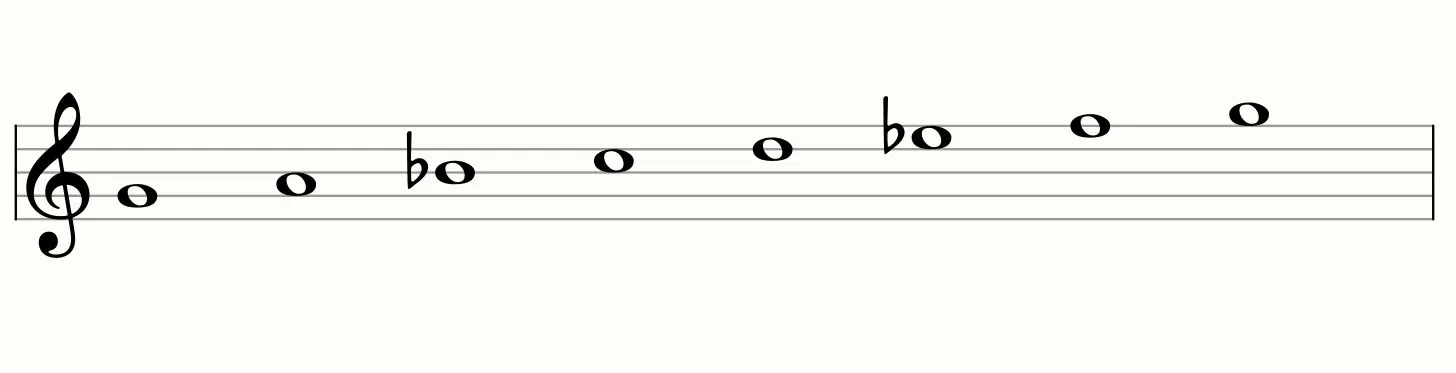
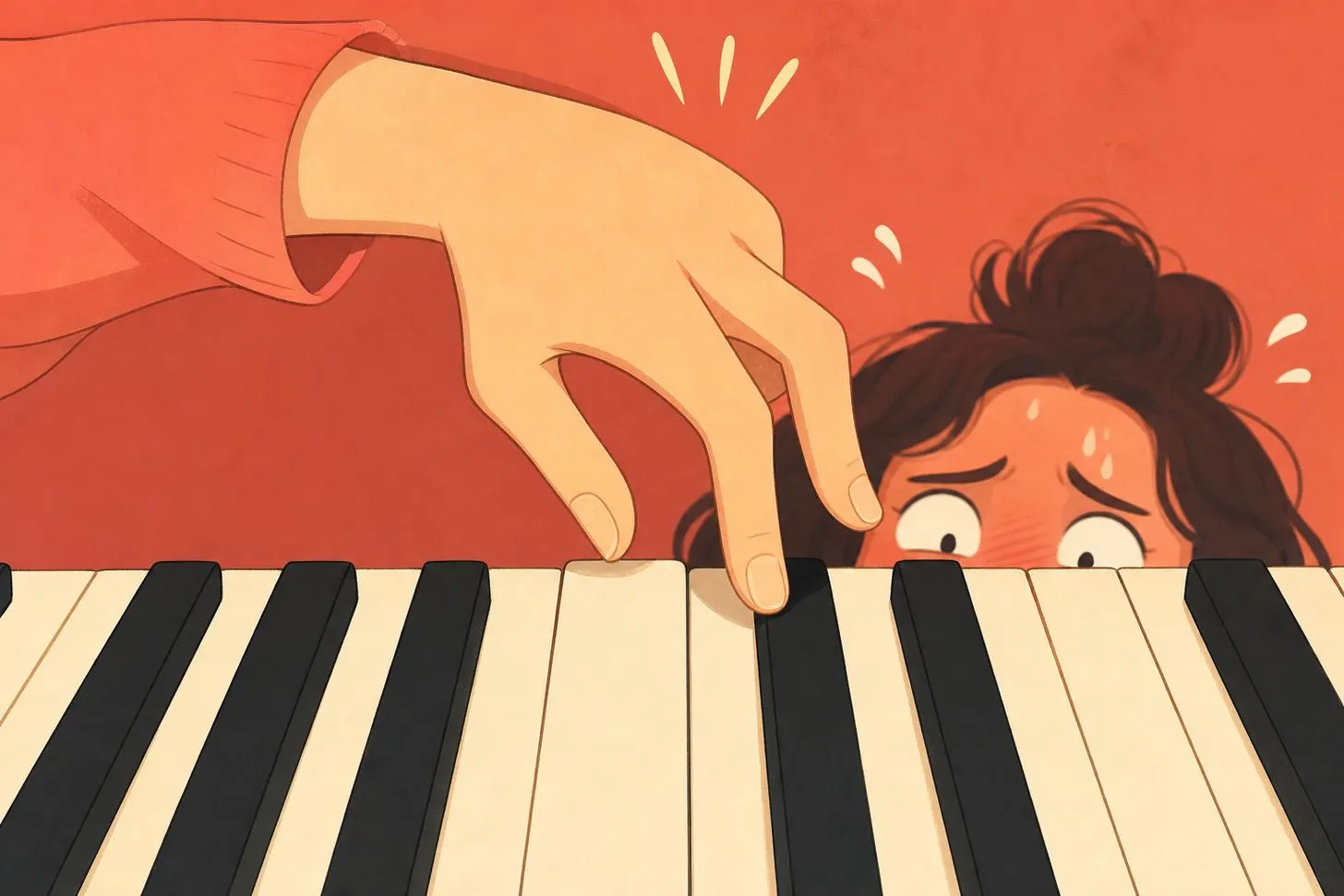
A common stumble: G major is solid, one sharp, no hesitation, and D major comes next. The F sharp on the way up goes fine, same note the hand already expects, and then the hand lands on C natural instead of C sharp near the top of the scale. Often more than once. It isn’t guessing. The hand has simply decided one sharp was the whole assignment and stopped there.
That’s the real difficulty in D major. It isn’t a harder scale. It’s a scale with a second new habit stacked on top of a first one you just finished learning, and the second habit is the one that gets skipped.
What actually changes
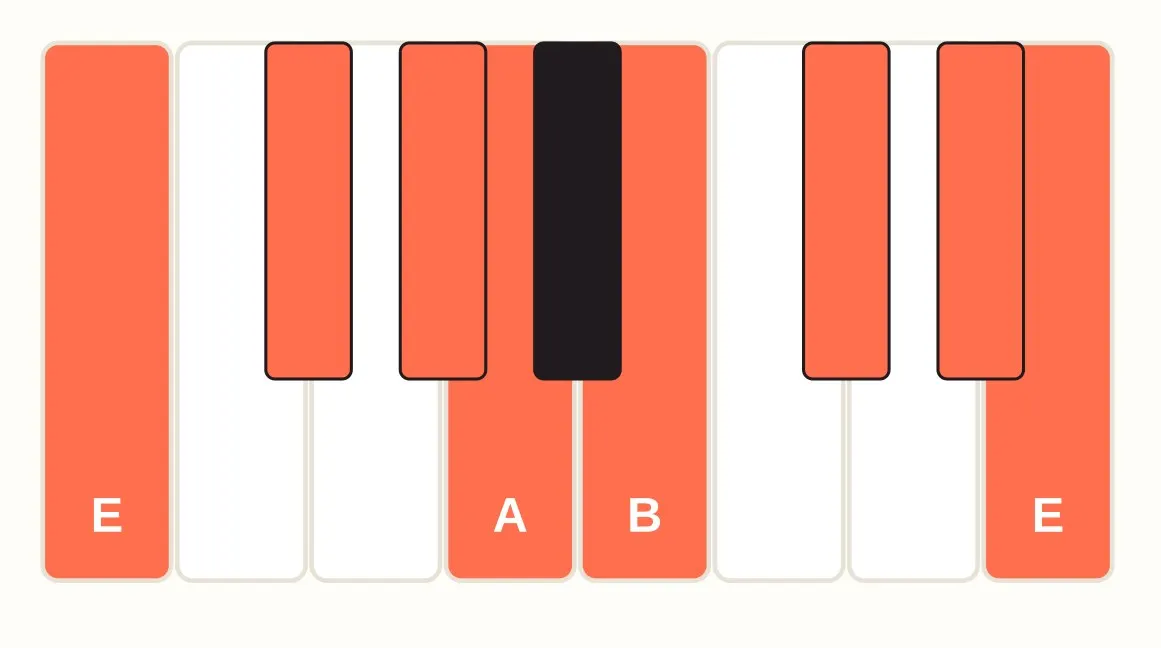
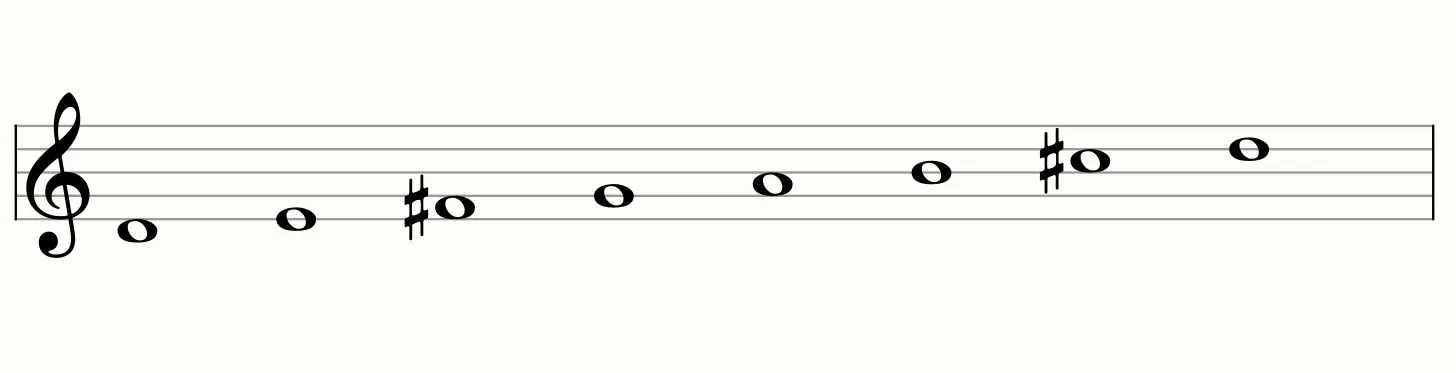
D major, ascending: D E F# G A B C# D. Two black keys this time, F sharp and C sharp, out of seven notes. If you already play G major, you already know F sharp, so D major only asks you to learn one truly new note: C sharp.
Sharps don’t appear in random keys. They stack in a fixed order, F, C, G, D, A, E, B, and each new major key with sharps just adds the next one in that list. G major introduces F sharp. D major keeps F sharp and adds C sharp. A major will keep both and add G sharp. Once that order is in your head, you stop memorizing key signatures one at a time and start predicting them.

The fingering is the easy part
Here’s what doesn’t change: the fingering. Right hand, one octave ascending: 1-2-3 on D, E, F sharp, tuck the thumb under, then 1-2-3-4-5 on G, A, B, C sharp, D. Left hand: 5-4-3-2-1 on D, E, F sharp, G, A, cross the third finger over for 3-2-1 on B, C sharp, D. It’s the exact same shape you used for G major and C major before that, just shifted two keys over. Piano scale fingering works the same way across most of these keys precisely because the black key always lands in the same spot relative to the thumb tuck.
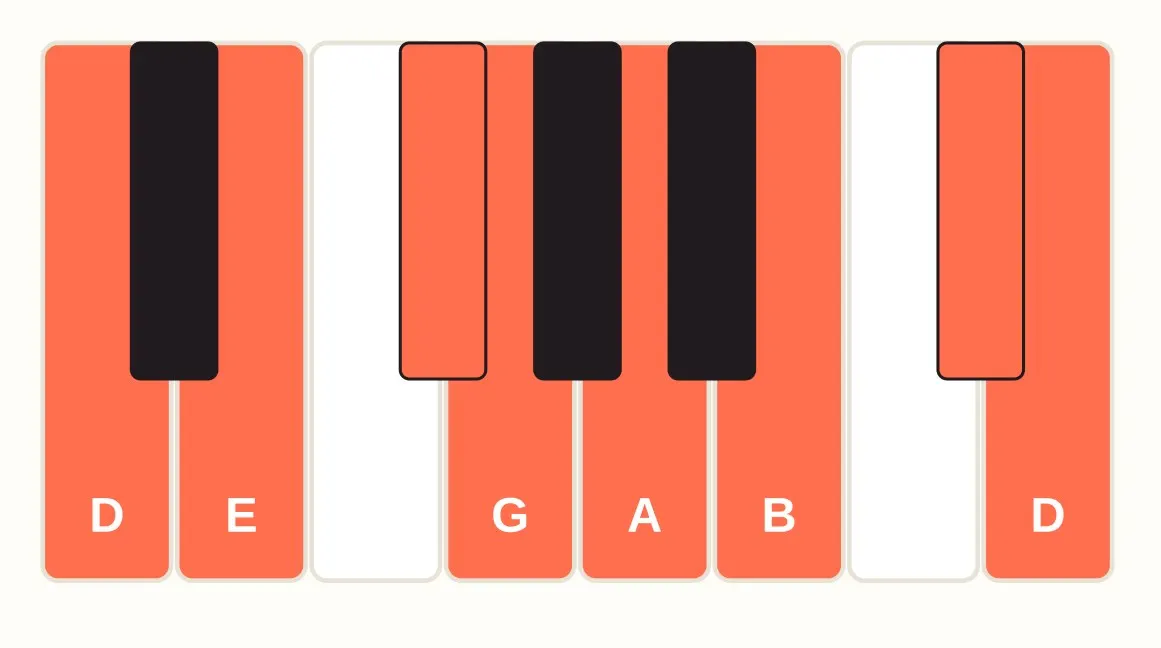
This matters because students often brace for a harder scale and then relax the moment their fingers recognize the pattern. That relaxation is exactly when the second sharp gets dropped.
Where it actually falls apart
Not the F sharp. Almost never the F sharp, because it’s a repeat of something already learned. The slip is at C sharp, specifically on the way up, in that B-C#-D stretch near the top of the scale where a hand running on autopilot reaches for the white key it’s used seven years longer. Isolate that exact stretch on its own, slowly, away from the rest of the scale, before you try the whole run at tempo. Playing the full scale over and over and hoping the second sharp sorts itself out doesn’t work, because the mistake lives in one specific spot, not the whole pattern.
Something method books tend to gloss over: a student can recite “D major has two sharps” correctly and still play three C naturals in a row the moment they stop thinking about it consciously. The scale isn’t actually learned until the correction happens automatically, and that usually takes longer than the one week most beginner books budget for a new key.
A real piece to test it on
Pachelbel’s Canon in D sits almost entirely inside this scale, and simplified beginner arrangements exist specifically because the piece is so recognizable that a wrong C jumps out immediately, even to someone who’s never studied theory. If the G major scale was your first key signature beyond C, D major is the natural next stop, and playing them back to back is a fast way to hear what one extra sharp actually does to a scale’s color.
 Photo by
Want to catch the exact spot where C sharp keeps slipping? The D major scale page plays every exercise with you, one hand at a time, at the speed you set.
Play it here
Hear the scale, slow it down, practice one hand at a time, and play along on the clickable piano.
Frequently asked questions
What notes are in the D major piano scale?
D, E, F sharp, G, A, B, C sharp, and back to D. Two black keys, F sharp and C sharp, out of the seven notes.
Is D major harder than G major?
Not technically, since the fingering is identical to G and C major. It's harder in practice because there are two sharps to remember instead of one, and the second one, C sharp, is easy to skip out of habit.
What's the fingering for the D major scale?
Right hand ascending, one octave: 1-2-3 on D, E, F sharp, tuck the thumb under for 1-2-3-4-5 on G, A, B, C sharp, D. Left hand: 5-4-3-2-1 on D, E, F sharp, G, A, then cross the third finger over for 3-2-1 on B, C sharp, D. Same shape as C and G major, just moved over.
How do the sharps in D major relate to G major?
Sharps stack in a fixed order: F, C, G, D, A, E, B. G major uses the first one, F sharp. D major keeps that F sharp and adds the next one in line, C sharp. Once you know that order, you can predict any major key's sharps without memorizing each one separately.