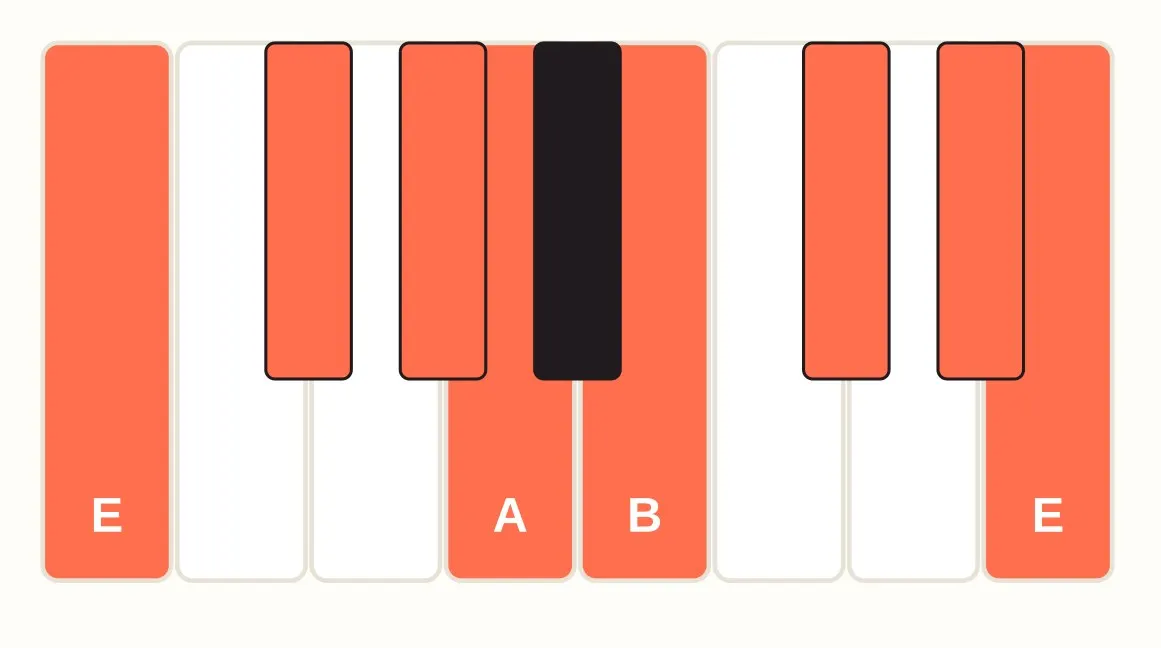
The G Minor Piano Scale: Two Flats, One Relative Major
The G minor piano scale takes two flats, Bb and Eb, and shares every note with Bb major. Here's the fingering, the chords, and where beginners slip.
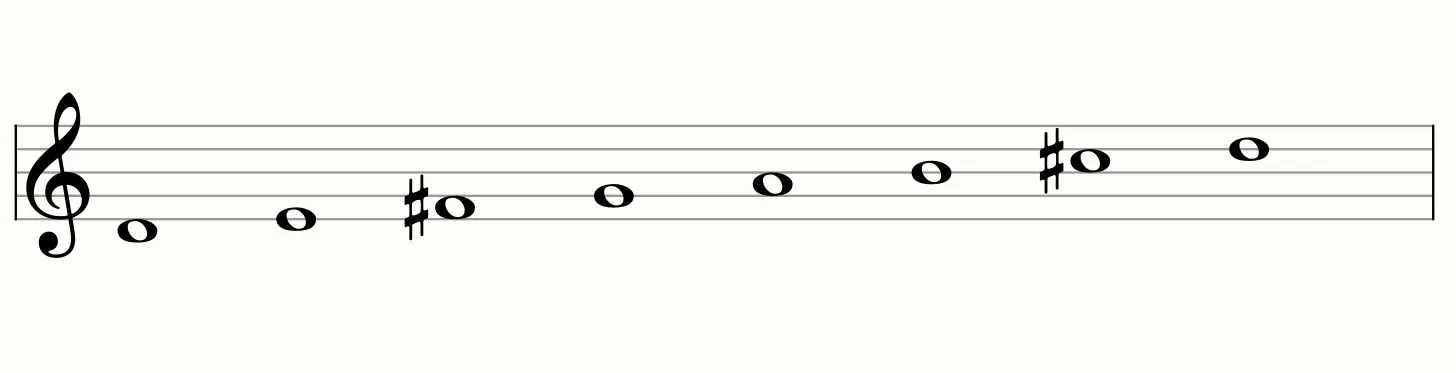
A common surprise: a student plays what they call “the G minor scale” and every seventh note is F sharp. Not a mistake, exactly. Many students learn harmonic minor first, the way a lot of method books teach it, and nobody tells them that’s a specific choice rather than the only option. Asked to play F natural instead, they can react as if it were a wrong note played on purpose.
It isn’t. Natural minor is a real scale with its own uses, and G minor is a good place to notice the difference, because the note in question sits right at the top of the octave where you’d notice it most.
What actually changes
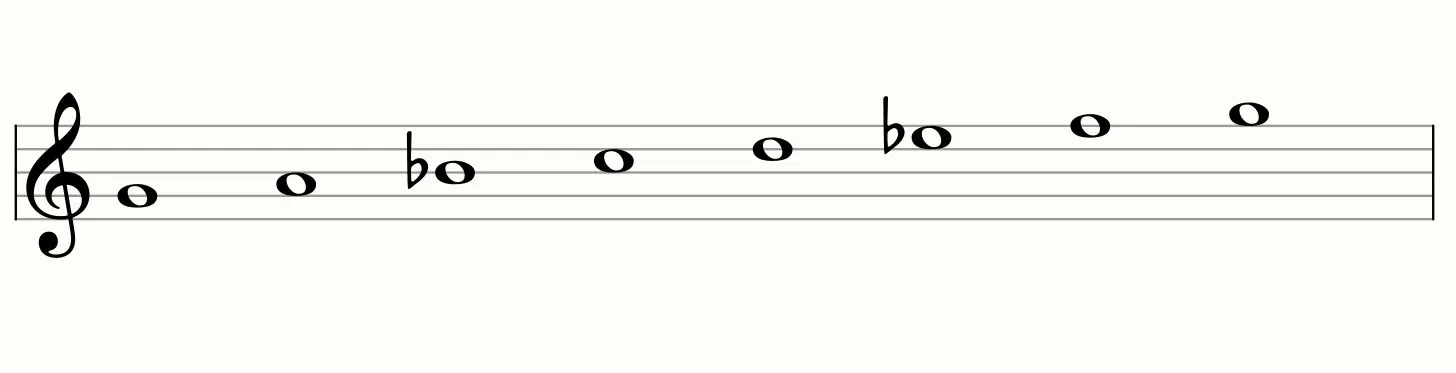
G natural minor, ascending: G A Bb C D Eb F G. Two black keys, B flat and E flat, out of seven notes. That’s it for accidentals in the natural form. Everything else is white keys, same as it was.
Here’s the shortcut worth knowing: G minor shares those exact two flats with B flat major, and it shares every single note too. B flat major is G minor’s relative major. Play a B flat major scale starting and ending on G instead of B flat, and you’ve played G natural minor without learning a single new note. It’s the same relationship Aeolian has to its parent major, just applied to a two-flat key instead of a no-sharps-no-flats one.
The fingering, and where it differs from a major scale
Right hand, one octave ascending: 1-2-3 on G, A, B flat, tuck the thumb under, then 1-2-3-4-5 on C, D, E flat, F, G. Left hand: 5-4-3-2-1 on G, A, B flat, C, D, cross the third finger over for 3-2-1 on E flat, F, G.
Notice where the thumb crosses. It’s after the third note, not the fourth, because B flat falls early in the scale and the hand has to tuck before it gets there. That’s a different crossing point than C major or G major use, where the black keys, if there are any, sit later in the run. If your hand keeps hesitating at the same spot, that’s usually why: the crossing lands one note sooner than the major-scale habit expects.
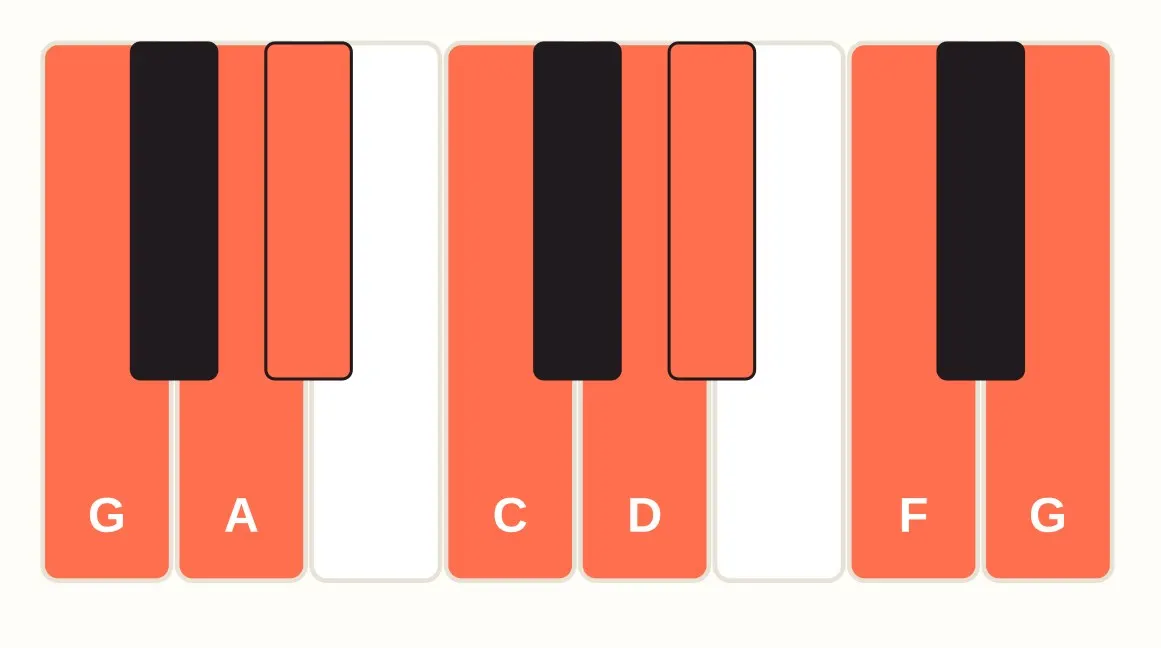
Where the natural-versus-harmonic mix-up happens
Almost never at B flat or E flat. Those get learned early and stay put. The slip is at the 7th degree, F, right at the top of the scale on the way up. A student who’s absorbed “minor scale” as a single fixed shape, usually from harmonic minor because it’s the version most beginner books introduce first, reaches for F sharp out of habit even when the piece in front of them calls for F natural.
Harmonic minor exists for a reason. Raising that 7th degree, F to F sharp, creates a leading tone that pulls hard into the tonic, which is exactly the sound a lot of classical cadences want. Natural minor leaves it flat, so the pull isn’t there, and the scale reads calmer, less resolved. Neither one is the “correct” minor scale. They’re two different tools, and mixing them up by accident, rather than choosing on purpose, is the actual problem.
The chords built on it
This is where G minor earns its keep beyond scale drills. Stack a third on each degree of the natural minor scale and you get seven diatonic triads: i is G minor (G, B flat, D), ii diminished is A diminished (A, C, E flat), III is B flat major (B flat, D, F), iv is C minor (C, E flat, G), v is D minor (D, F, A), VI is E flat major (E flat, G, B flat), and VII is F major (F, A, C).
That v chord staying minor, not major, is the natural-minor signature. If you’ve heard a G minor progression that resolves harder, with a D major chord pulling into the G minor tonic instead of D minor, that’s harmonic minor’s raised F sharp doing the work, turning v into V. Same key, borrowed note, different pull.
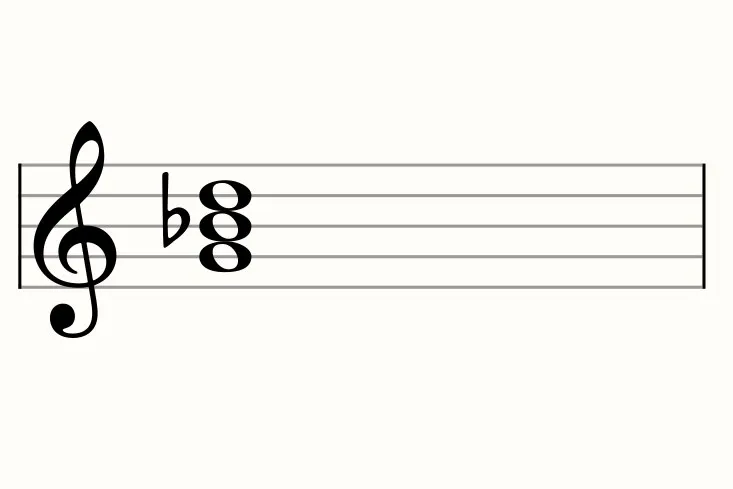
Worth noticing too: G minor’s III chord is B flat major, the full triad built on its relative major’s tonic. That’s not a coincidence, it’s the same relationship playing out in chord form that we already saw in the scale itself. If basic triads still feel like a lot to hold in your hands, starting from a scale you already know and building chords on top of it, one degree at a time, is a more forgiving way in than memorizing shapes cold.

Composers reached for it on purpose
G minor shows up a lot in music with real weight to it, Mozart’s Symphony No. 40 and his Piano Quartet No. 1 among the better known examples. That’s not proof of anything mystical about the key. It’s more that G minor sits in a comfortable range for strings and voices while carrying that flatted, unresolved color natural minor gives it, and composers who wanted drama without needing an unusual key signature kept landing on it. You don’t need to buy into “key characteristics” as a fixed rulebook to notice the pattern.
Here’s the part method books tend to skip: it helps to learn natural minor first, on its own, before harmonic minor gets introduced as a variation. Students who meet harmonic minor first tend to treat it as the default and then get confused when a piece or a scale drill asks for the plain, unraised 7th. Meeting the natural form first makes the raised 7th read as an addition instead of a correction.
Want to check exactly where that thumb crosses, or which 7th degree you just played? The G minor scale page plays every exercise with you, one hand at a time, at the speed you set.
Play it here
Hear the scale, slow it down, practice one hand at a time, and play along on the clickable piano.
Frequently asked questions
What notes are in the G minor piano scale?
G, A, B flat, C, D, E flat, F, and back to G. That's the natural minor form. Two black keys, B flat and E flat, out of the seven notes.
What's the relative major of G minor?
B flat major. Both keys share the exact same two flats, B flat and E flat, and the exact same seven notes. G minor just starts and ends on G instead of B flat.
What's the fingering for the G natural minor scale?
Right hand ascending, one octave: 1-2-3 on G, A, B flat, tuck the thumb under for 1-2-3-4-5 on C, D, E flat, F, G. Left hand: 5-4-3-2-1 on G, A, B flat, C, D, then cross the third finger over for 3-2-1 on E flat, F, G.
What chords are in the key of G minor?
Seven diatonic triads: i is G minor, ii diminished is A diminished, III is B flat major, iv is C minor, v is D minor, VI is E flat major, and VII is F major. The v chord stays minor in natural minor; it only becomes a major V chord if you borrow the raised 7th from harmonic minor.
What's the difference between G natural minor and G harmonic minor?
One note. Natural minor keeps F natural as the 7th degree. Harmonic minor raises it to F sharp, which creates a leading tone that pulls into the tonic. Everything else in the scale is identical.