Interactive piano piece
Learn Ode to Joy
One of the most instantly recognizable melodies in Western music, arranged here as a hands-together beginner piano piece in D major. A full interactive score with playback, section loops, tempo control, a clickable piano, and wait-for-note mode makes this page feel like a practice desk built around the theme Beethoven saved for his greatest work.
Browser MIDI check pending
Loading score...
Press Play for the full piece, or choose Opening and switch to Wait for note for guided right-hand practice.
About the piece
The melody Beethoven kept in reserve for thirty years.
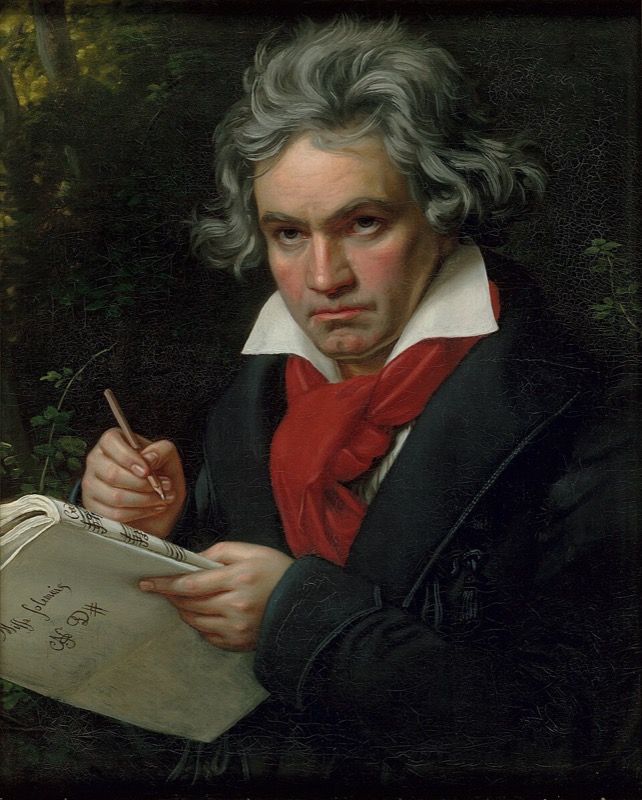
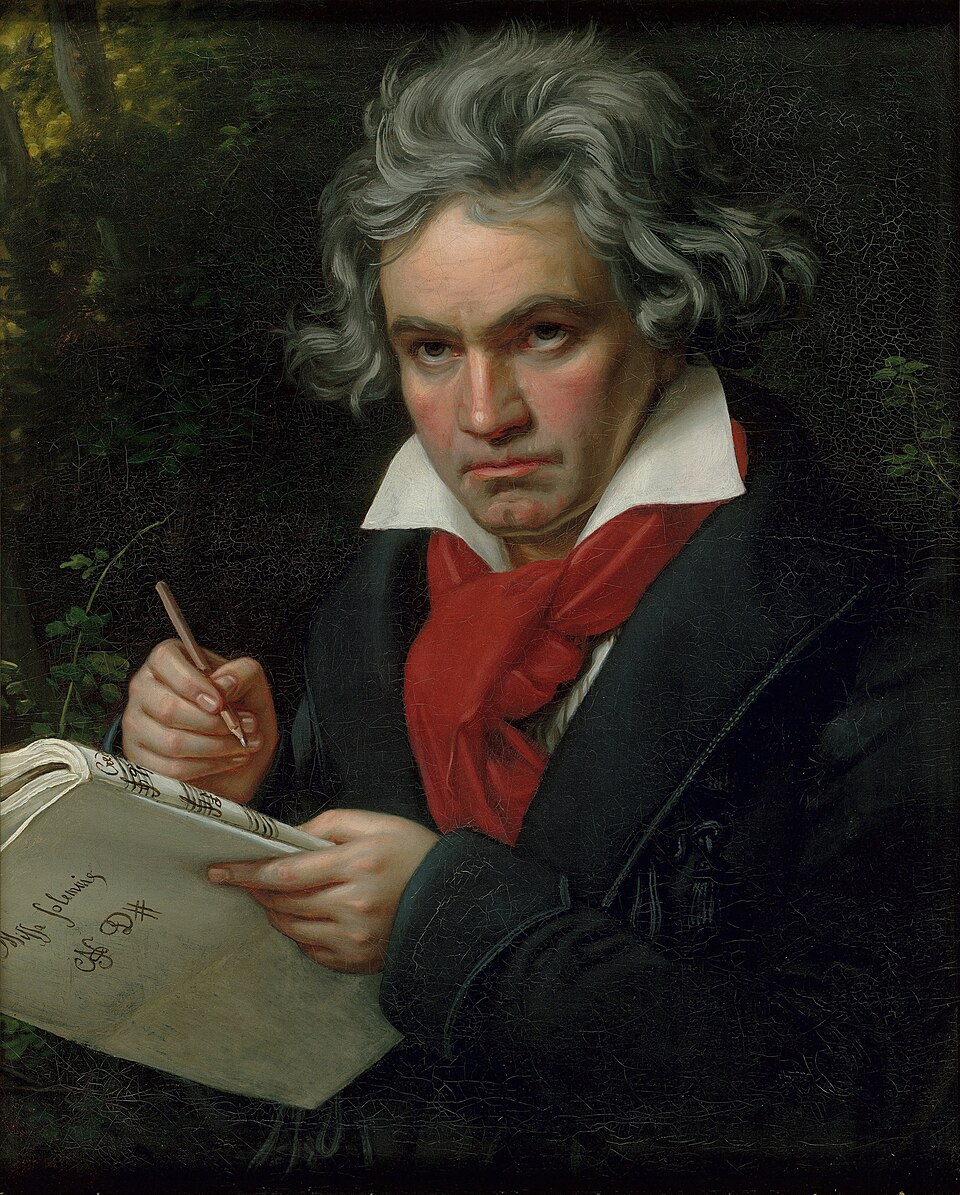
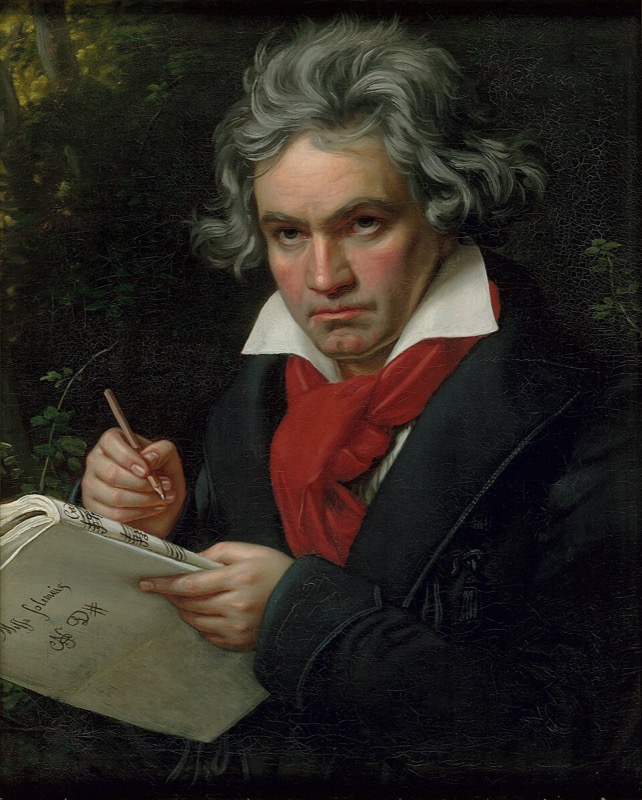
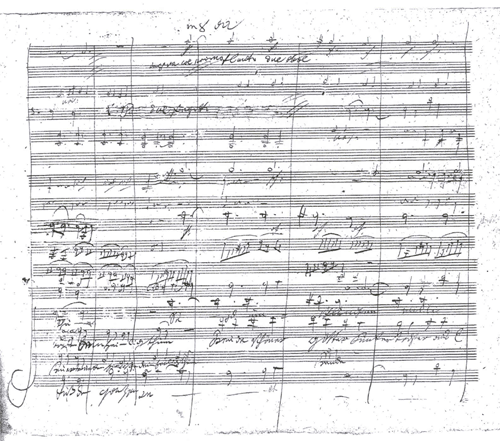
Beethoven sketched the main theme of the Ode to Joy as early as 1793, when he first read Schiller's poem 'An die Freude'. He set the idea aside, returned to it in fragments across three decades, and finally built the entire finale of the Ninth Symphony around it in 1824. The symphony was first performed at the Kärntnertor Theatre in Vienna on 7 May 1824. By then Beethoven was completely deaf. He stood at the conductor's side beating time for the players, but could hear nothing. After the final chord the contralto soloist Caroline Unger turned him around to face the hall so he could see the audience's reaction - they were standing and applauding so loudly that the police were called.
The piano arrangement of the Ode to Joy theme strips away the orchestra, the soloists, and the chorus that surround it in the symphony, leaving just the melody and its harmony in the hands. What remains is remarkably unassuming: a stepwise tune in D major, moving mostly by step, using only notes that any beginner has already learned. Beethoven chose this deliberately. In the symphony, the theme appears first in the low strings - plain, without ornament - before slowly drawing every section of the orchestra and every voice in the choir into its orbit. The simplicity is the point. It is a theme that anyone can hum, and that turns out to contain within itself one of the most complex and ecstatic pieces of music ever written.
The Ninth Symphony was the last complete symphony Beethoven finished. He died in 1827, three years after its premiere, leaving a tenth symphony in fragments. The Ode to Joy theme was later adopted as the anthem of the Council of Europe in 1972 and the European Union in 1985 - making it one of very few pieces of absolute music to have acquired formal political significance.
Practice path
A stepwise melody that earns its grandeur.
The piano arrangement follows the original orchestral structure: the theme stated plainly, then developed through variations in harmony, register, and texture. Begin with the opening statement in D major, which uses a narrow range and moves almost entirely by step - this is intentionally accessible. The challenge is not the notes but the phrasing: every four-bar group should feel like a sentence, arriving at its cadence with a sense of completion before the next begins.
Once the right hand has the melody shape clearly in memory, add the left-hand chords and focus on keeping the harmony light under the tune. The final climactic section asks for a fuller, more sustained tone. Use the section loop to drill the transition from the quiet opening statement to the forte conclusion, where both hands need to coordinate without the right hand losing its melodic line.
Score basis: Generated MusicXML from Mutopia MIDI. Public domain composition; Public Domain (CC0) - Mutopia; MusicXML generated for Pianodemy. Attribution: Mutopia Project (https://www.mutopiaproject.org/cgibin/piece-info.cgi?id=528).
MIDI source: Mutopia Project (https://www.mutopiaproject.org/cgibin/piece-info.cgi?id=528). Public Domain (CC0) - Mutopia.
Questions
Before you practice.
Short answers for learners and for searchers deciding whether this is the right version to start with.
01Is Ode to Joy a good first hands-together piece?
Yes - it is one of the most recommended early hands-together milestones because the melody is simple, the rhythm is steady, and the left hand moves slowly enough for beginners to coordinate without rushing.
02What key is this arrangement of Ode to Joy in?
This arrangement is in D major, which is standard for beginner piano arrangements of the theme and keeps the melody in a comfortable range.
03How long does it take to learn Ode to Joy on piano?
Most beginners can play through the melody hands-separately within a few sessions. A clean, confident hands-together version typically takes one to three weeks of daily short practice, depending on prior experience.
How to use this V1
Keep the melody singing through the harmony.
Practice the melody alone at 50% tempo, counting in four so each phrase lands cleanly on its cadence note. At 75%, add left-hand chords and listen for balance: the melody should be louder than the accompaniment at all times. Wait-for-note mode is useful for the bars where the melody doubles back on itself; loop the final forte section separately at 70% until both hands can arrive on the downbeat together without rushing.
Keep going