Interactive piano piece
Learn 160 Eight-Measure Exercises No. 4, Op. 821
A Vivace in 6/8 that immediately challenges the student to feel compound metre at speed, grouping eighth notes in flowing pairs-of-three rather than counting six. Use the tempo slider to slow the Vivace to a pace where you can feel two broad beats per bar before raising toward performance tempo - compound metre locks in the body before it locks in the fingers.
Browser MIDI check pending
Loading score...
Press Play for the full piece, or choose Opening and switch to Wait for note for guided right-hand practice.
About the piece
Czerny's first leap into compound time.
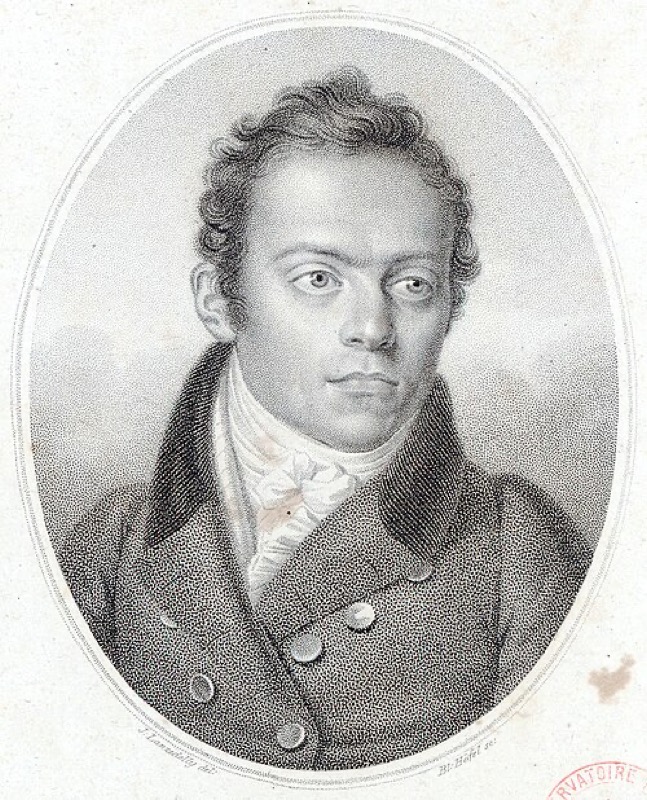
Carl Czerny structured the 160 Eight-Measure Exercises, Op. 821, as a systematic tour through the metres, keys, and articulation types a developing pianist will encounter in the broader repertoire. Trained by Beethoven and later the teacher of Liszt, Czerny understood that technique without rhythmic literacy is incomplete - and so by No. 4 he has already moved through 4/4 and 3/4 and now introduces 6/8 compound duple at a Vivace tempo.
The shift to compound time is the exercise's entire challenge. In 6/8 at Vivace, there is no time to count six individual eighth notes - the groupings must be felt as two broad beats, each internally subdivided into three. This is a different cognitive and physical experience from simple metre, and No. 4 compresses the adjustment into eight measures so the student confronts it without any escape route.
Practice path
Two beats, three subdivisions each - feel it before you play it.
Tap two broad pulses per bar on your knee before touching the keys, letting the three-note subdivision happen naturally inside each beat. Only begin playing when the two-beat framework is steady in your body. As tempo increases, resist the urge to revert to counting six - the lilt of 6/8 depends entirely on feeling two strong beats.
Score basis: Generated MusicXML from Mutopia MIDI. Public domain composition; Public Domain (CC0) - Mutopia; MusicXML generated for Pianodemy. Attribution: Mutopia Project (https://www.mutopiaproject.org/cgibin/piece-info.cgi?id=2063).
MIDI source: Mutopia Project (https://www.mutopiaproject.org/cgibin/piece-info.cgi?id=2063). Public Domain (CC0) - Mutopia.
Questions
Before you practice.
Short answers for learners and for searchers deciding whether this is the right version to start with.
01What rhythmic skill does Czerny Op. 821 No. 4 develop?
It ingrains compound duple metre (6/8) at a fast Vivace tempo, training the player to feel two broad beats subdivided in three rather than counting each eighth note individually.
02Is Czerny Op. 821 No. 4 harder than the first three exercises?
The jump to 6/8 at Vivace makes it rhythmically more demanding. The note count is similar but the compound grouping requires a different mental framework that many beginners find challenging at first.
How to use this V1
Compound time is felt, not counted.
If the piece sounds plodding or uneven at any tempo, you have reverted to counting six. Stop, return to the two-tap exercise, then re-enter the piece. At Vivace, the triplet groupings must be automatic - which means they need to be drilled at a slow two-beat feel first, then the tempo can rise without losing the lilt. Use the section loop on the most rhythmically unstable bar.
Keep going