Von fremden Ländern und Menschen, Op. 15 No. 1 (Kinderszenen)
Of foreign lands and people - the opening of Kinderszenen.
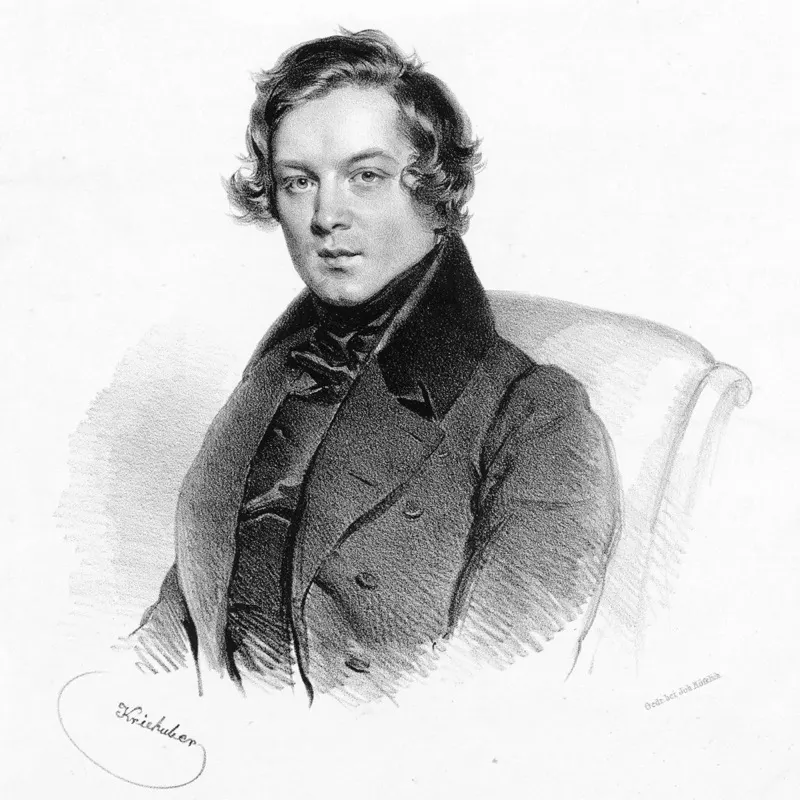
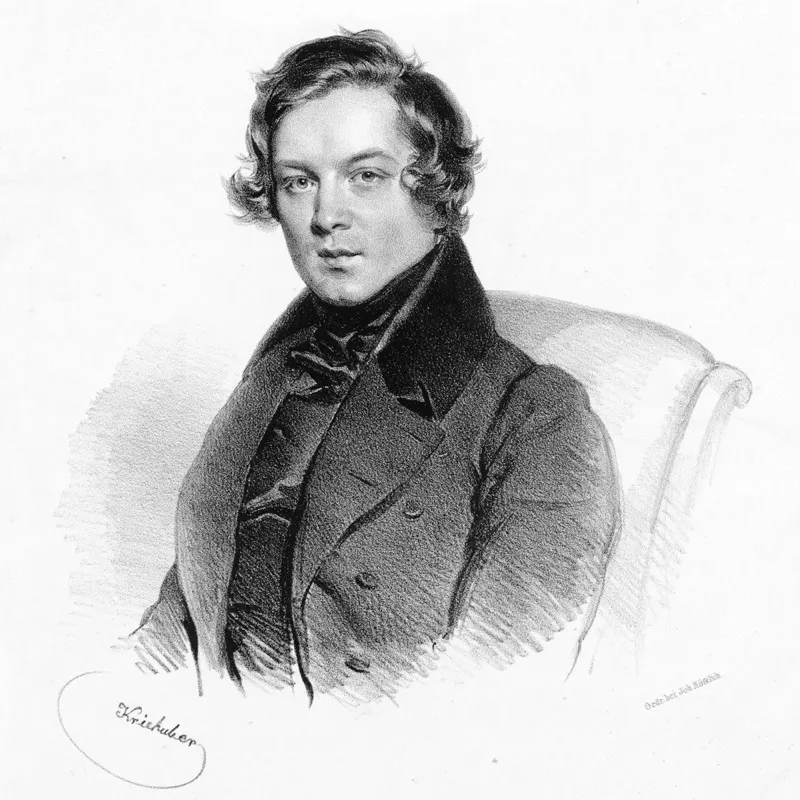
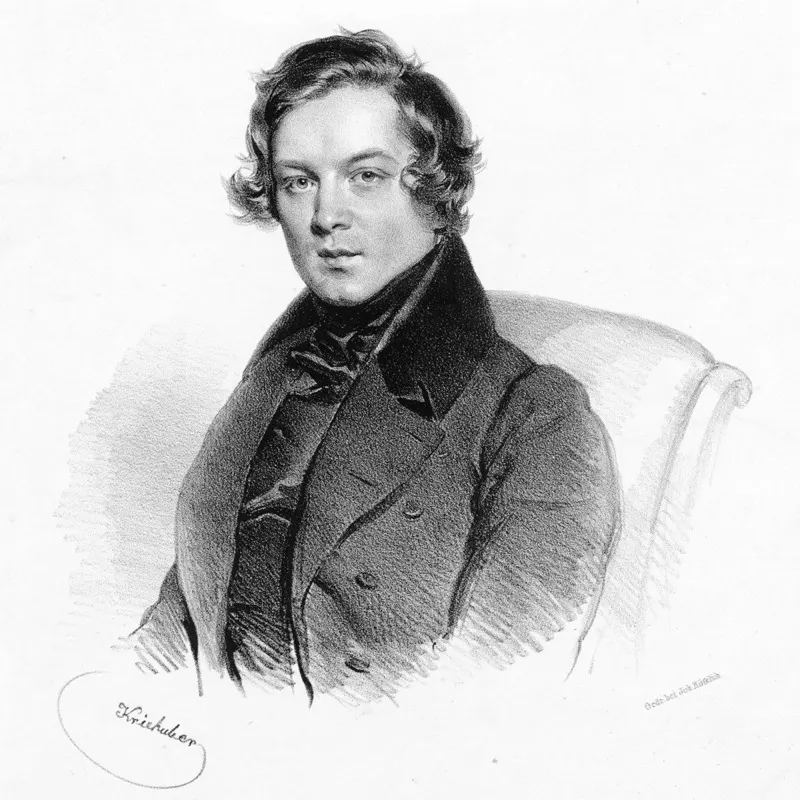
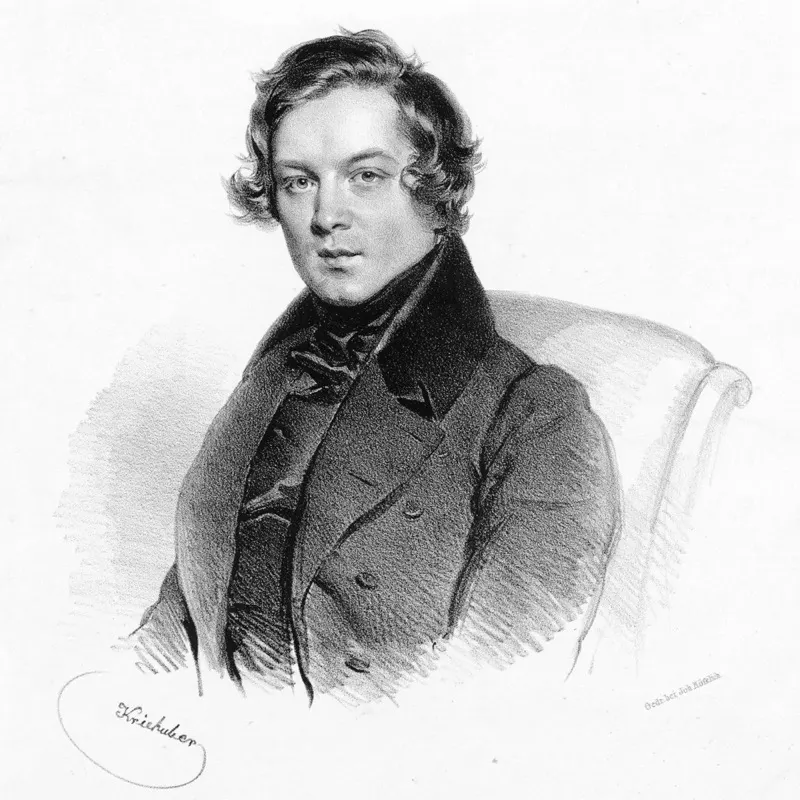
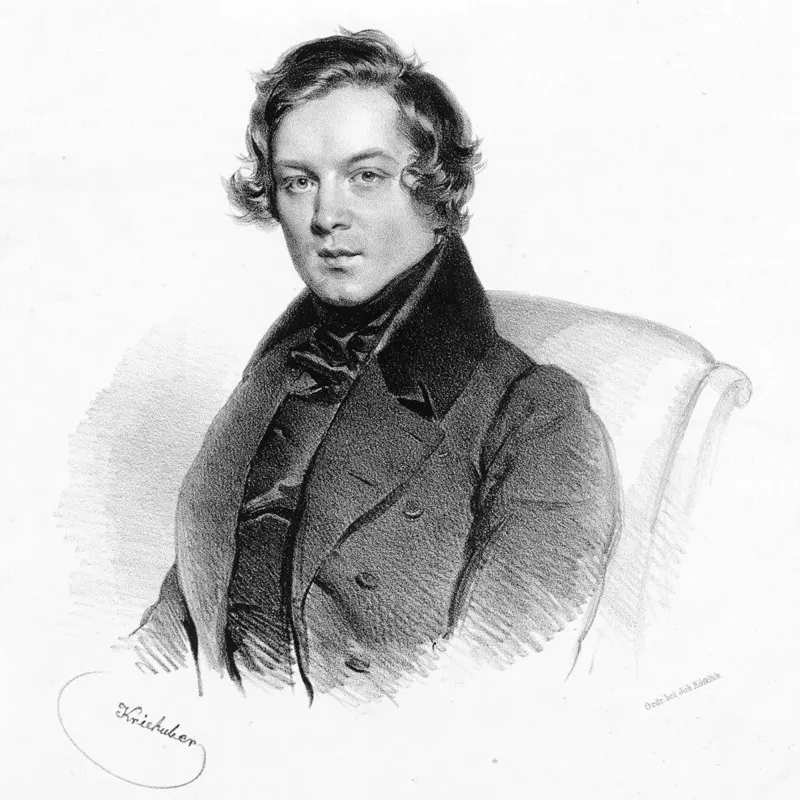
Schumann composed Kinderszenen (Scenes from Childhood, Op. 15) in 1838, the year before his famous portrait was painted. The thirteen pieces are not children's music; they are an adult looking back at childhood through a haze of tenderness. Clara Wieck - his future wife, who was still forbidden from seeing him - received the manuscript as a declaration of love as much as a musical gift.
'Von fremden Ländern und Menschen' ('Of Foreign Lands and People') opens the set with a dreaming, far-off quality. The melody sits in the middle register of the right hand, accompanied above and below, so that it seems to float - a child's imagination drifting to places it has never seen. It is one of the most beloved and most technically subtle openings in the piano repertoire.
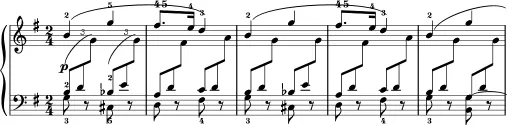
Find the hidden melody first.
The melody is carried by the thumb of the right hand while the fingers play the upper accompaniment - an unusual texture. Practise the right hand alone, exaggerating the melody thumb until it clearly sings above the inner voices. Only then add the left hand, and keep checking that the melody never disappears into the texture.
Before you practice.
01 What does 'Von fremden Ländern und Menschen' mean?
The title translates as 'Of Foreign Lands and Peoples' - it evokes the childhood feeling of hearing about distant, exotic places and imagining them vividly. The music has a soft, daydreaming quality that fits this sense of innocent wonder about the wider world.
02 Is Schumann Op. 15 No. 1 suitable for beginners?
Yes, though it requires some attention to inner voices that many beginners have not yet encountered. The melody and bass are straightforward, but there is a quiet middle voice in the right hand that needs to stay subordinate - a small but important skill to learn early.
Three layers, one voice.
Use slow-tempo mode to hear whether the thumb melody projects above the accompaniment at all times. In wait-for-note mode, notice how the harmony changes beneath a melody note that stays the same - those suspended moments are what gives the piece its dreaming quality. Loop any four bars where the texture feels murky and isolate the three voices by playing each layer separately.