The Wild Horseman
The most famous thirty seconds in beginner piano.
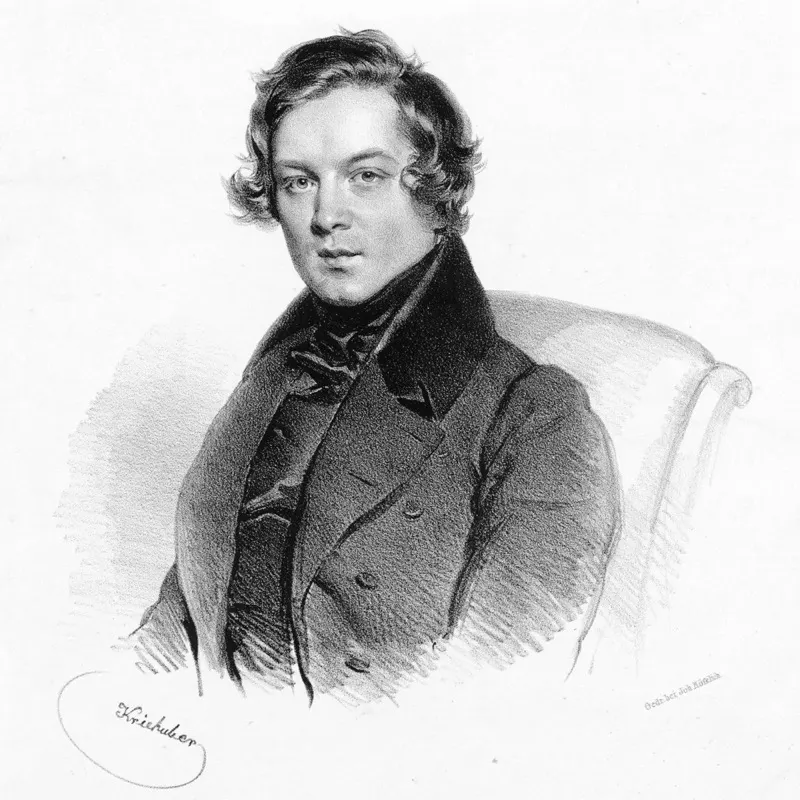
Schumann assembled Album for the Young (Op. 68) in 1848 as birthday music for his daughter Marie. The forty-three pieces range from the simplest beginner exercises to pieces that challenge advanced students. The Wild Horseman sits at the beginner end - but it is so immediately recognizable that it has become one of the most iconic short pieces in the entire piano repertoire.
The Wild Horseman (Wilder Reiter) is in A minor and built on a hard, driving rhythm that sounds like a horse at a full gallop. Both hands play together in forceful chords - no melody and accompaniment, just a single unified force moving forward. The accents on the off-beats give the piece its wild, uncontrolled energy. It sounds dangerous, and a young student playing it for the first time almost always grins.
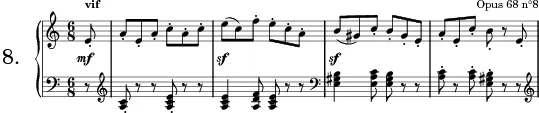
Hands together from the start.
This is one of the rare pieces where hands-together practice makes more sense from the beginning, since the hands move in near-unison. Start slowly to align the off-beat accents, then gradually bring the tempo up until the energy and recklessness of the piece come through.
MIDI based on the Mutopia Project edition , licensed CC BY-SA 2.5.
Before you practice.
01 Is The Wild Horseman Op. 68 No. 8 a beginner piece?
Yes - despite sounding fierce, the notes are well within beginner range. Both hands follow simple patterns and the piece is only 32 measures. The challenge is maintaining steady accents without rushing.
02 What makes The Wild Horseman distinctive among Schumann's Op. 68 pieces?
It is the most rhythmically aggressive piece in the early section of the album. Its strong sforzando accents and relentless forward momentum make it one of the most memorable and motivating pieces for young piano students.
Accent the off-beats, not just the bar-line.
At 60% tempo the sforzando accents become easier to hear and control - they should land like a stamp, not a blow. Use loop mode on the middle section in A major, which offers a brief moment of brightness before the minor-key wildness returns. Full tempo is the goal: the piece only truly works when the speed is slightly uncomfortable.