Interactive piano piece
Learn The St. Louis Rag
A brisk, confident rag by the man who put St. Louis on the ragtime map - 72 well-drilled measures from one of the genre's least-known major figures. St. Louis Rag is one of the earliest published piano rags - use the Pianodemy desk to loop the opening strain and feel how Turpin's bass is heavier and more march-like than Joplin's later refinements.
Browser MIDI check pending
Loading score...
Press Play for the full piece, or choose Opening and switch to Wait for note for guided right-hand practice.
About the piece
The first St. Louis rag, by the man who owned the city's ragtime scene.
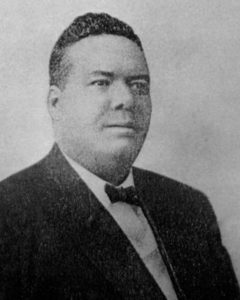
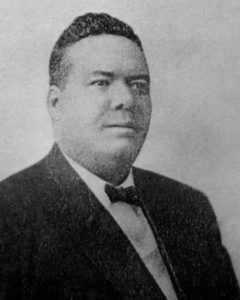
Tom Turpin published St. Louis Rag in 1903, but he had been playing ragtime in the saloons of St. Louis for years before that. Turpin was the son of a Georgia freedman who moved the family north after Reconstruction, and by the 1890s he was running the Rosebud Cafe on Market Street - a venue that became the informal headquarters of the St. Louis ragtime community and a stopping point for nearly every important figure in the genre, including the young Scott Joplin. Turpin was not a prolific composer, but he was a central social and entrepreneurial force in establishing ragtime as a serious commercial art form.
St. Louis Rag has a rougher, more percussive character than the polished parlor rags Joplin was publishing through John Stark at the same time - Turpin's style reflects the honky-tonk saloon environment where he performed rather than the genteel parlor tradition. The bass figures are heavier, the harmonic language more direct, and the overall effect is of music built for a noisy room. For historians of ragtime, the piece is essential documentation of what the genre sounded like before Joplin's influence smoothed out its edges.
Practice path
Embrace the rougher, heavier character.
St. Louis Rag calls for a more percussive approach than most Joplin rags - the left-hand bass should be firmly weighted and the right-hand melody played with a slight edge. Loop the opening strain at 70% tempo and focus on making the bass-chord pattern feel like a physical pulse before adding right-hand nuance. The piece rewards a player who leans into the rougher character rather than trying to smooth it into Joplin's more refined style.
Score basis: Generated MusicXML from Mutopia MIDI. Public domain composition; Public Domain (CC0) - Mutopia; MusicXML generated for Pianodemy. Attribution: Mutopia Project (https://www.mutopiaproject.org/cgibin/piece-info.cgi?id=369).
MIDI source: Mutopia Project (https://www.mutopiaproject.org/cgibin/piece-info.cgi?id=369). Public Domain (CC0) - Mutopia.
Questions
Before you practice.
Short answers for learners and for searchers deciding whether this is the right version to start with.
01Who was Tom Turpin and why does he matter in ragtime history?
Tom Turpin (1873-1922) was a pianist and saloon owner in St. Louis who published the first ragtime rag by a Black composer in 1897. His Rosebud Bar was a gathering place for ragtime pianists, and he mentored several musicians before Joplin's Maple Leaf Rag shifted the centre of gravity to Sedalia.
02Is The St. Louis Rag harder than The Entertainer?
Roughly the same level. The St. Louis Rag has a slightly more assertive character and some busier left-hand passages, but it is shorter and the syncopation is well within reach of a solid intermediate player who knows The Entertainer.
How to use this V1
Saloon energy, not parlor delicacy.
Turpin's rag was built for a loud room. Play with more attack than you would use for Joplin - the melodic lines should cut through clearly. Use the loop feature on any section where the syncopation feels hesitant; this is music that should feel inevitable once up to tempo, not cautious. The heavier bass style will feel unfamiliar at first but becomes natural after repetition.
Keep going