Interactive piano piece
Learn Douce Plainte
A quietly mournful Allegro moderato in G minor that teaches a singing, cantabile tone and the art of shaping a long melodic phrase with gentle dynamics. Slow the tempo and give each phrase a tiny tenuto on its peak note - that single gesture unlocks the singing quality the piece demands.
Browser MIDI check pending
Loading score...
Press Play for the full piece, or choose Opening and switch to Wait for note for guided right-hand practice.
About the piece
A sweet complaint in minor.
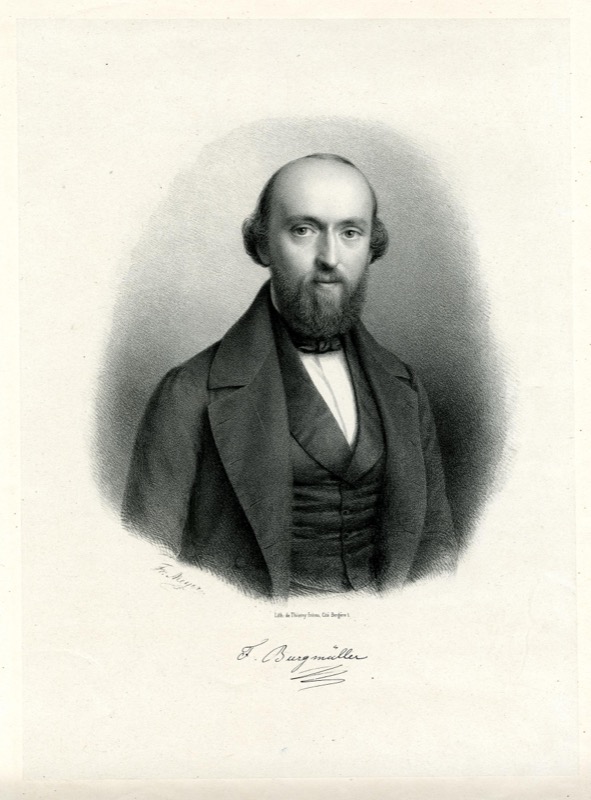
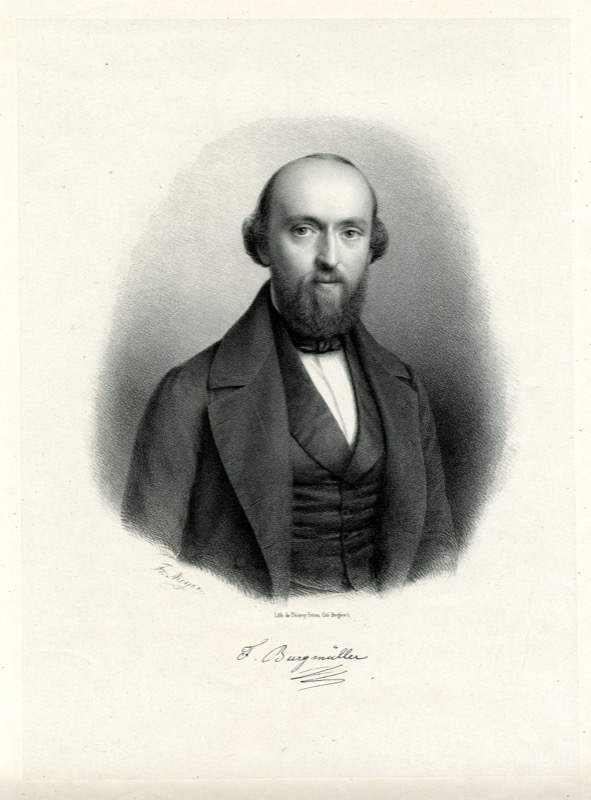
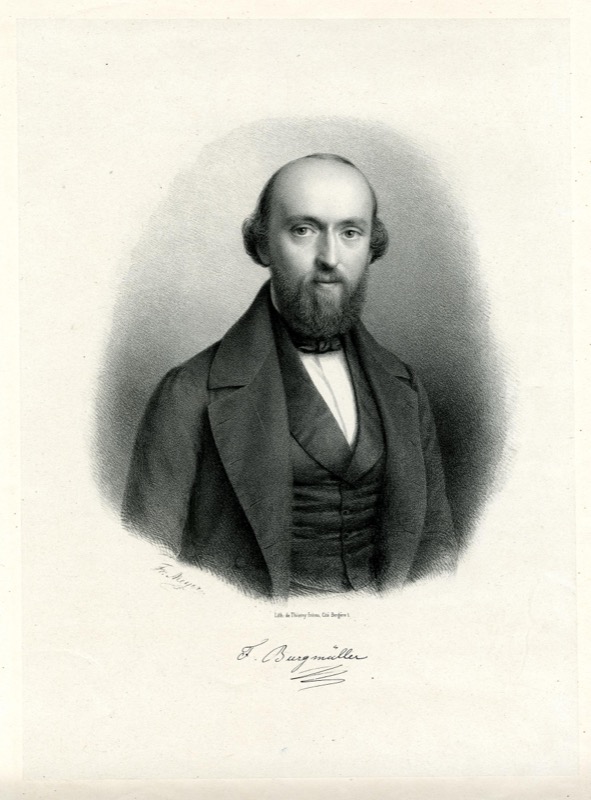
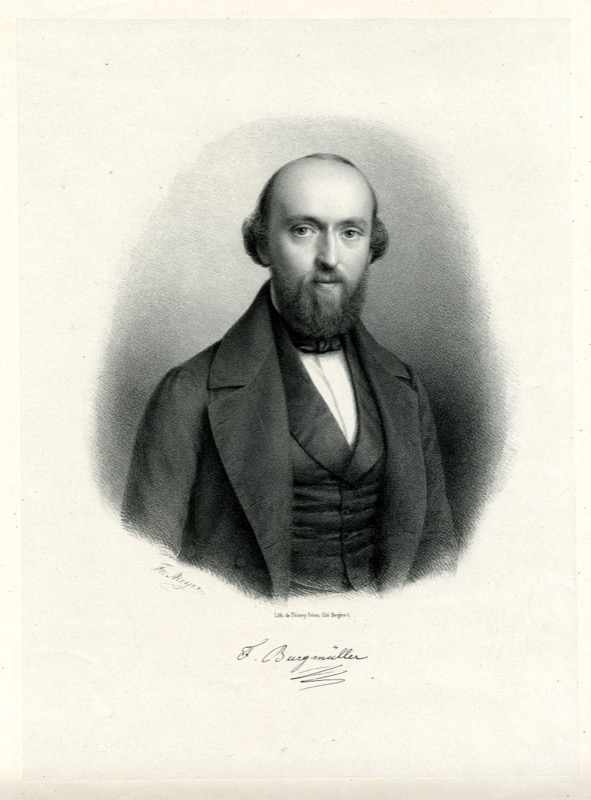
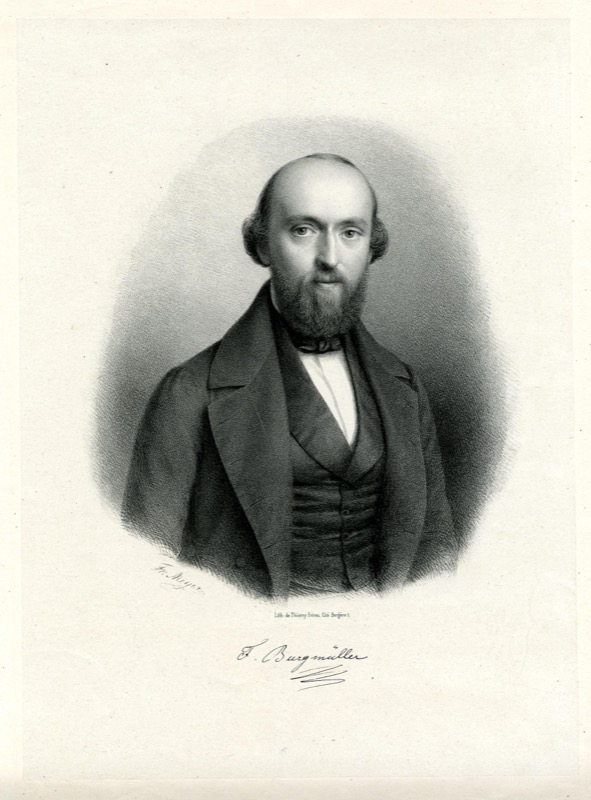
Friedrich Burgmüller published his 25 Progressive Studies, Op. 100 around 1850, and they became one of the most successful teaching collections in the nineteenth century. Douce plainte ('Sweet Complaint'), No. 16, is the first minor-key study in the set and the first to demand a genuinely expressive, vocal tone from the student.
By No. 16 the études have moved well past mechanical finger exercises. Burgmüller conceived Op. 100 as a journey from simplicity to expressiveness, and Douce plainte is the point where that expressiveness becomes the primary technical challenge. The minor key, the lyrical right-hand melody, and the sighing accompaniment in the left hand all require the student to make music rather than merely play notes.

Practice path
Sing first, play second.
Hum the right-hand melody before touching the keyboard, and let your voice naturally lean into the expressive peak of each phrase. Then play the melody alone at 60% tempo, imitating that vocal lean with arm weight. Only add the left hand once the melody is already singing on its own.
Score basis: Generated MusicXML from Mutopia MIDI. Public domain composition; Public Domain; MusicXML generated for Pianodemy. Attribution: Mutopia Project (https://www.mutopiaproject.org/ftp/BurgmullerJFF/O100/25EF-16/).
MIDI source: Mutopia Project (https://www.mutopiaproject.org/ftp/BurgmullerJFF/O100/25EF-16/). Public Domain.
Questions
Before you practice.
Short answers for learners and for searchers deciding whether this is the right version to start with.
01What does 'Douce Plainte' mean, and what mood should I aim for?
'Douce Plainte' is French for 'sweet lament' or 'gentle complaint.' The mood is quietly sad rather than dramatic - think of a soft sigh rather than a sob. Aim for a smooth legato and keep the dynamic range mostly soft, with subtle swells on the longer phrases.
02What technique does Burgmüller's Douce Plainte develop?
The étude trains cantabile tone production - drawing a singing sound from the piano without banging. It also develops balance between hands, as the right hand's melody must always float above a steady but unobtrusive left-hand accompaniment.
How to use this V1
The melody must sing above the sighs.
Use slow-tempo mode to check that the right-hand melody always projects above the left-hand accompaniment. In wait-for-note mode, pause at the expressive peak of each phrase to feel the weight that makes it sing. Loop any four-bar phrase where the melody disappears into the accompaniment texture - balance is the core skill here.
Keep going