Interactive piano piece
Learn Arabesque, Op. 100 No. 2
A brisk Allegro scherzando étude in A minor that trains light, nimble finger work across both hands. The interactive desk streams the score with bar-by-bar highlighting, lets you loop either hand at 50% tempo, and shows both staves on-screen so you can watch the alternating pattern before attempting it.
Browser MIDI check pending
Loading score...
Press Play for the full piece, or choose Opening and switch to Wait for note for guided right-hand practice.
About the piece
The étude that every beginner pianist remembers.
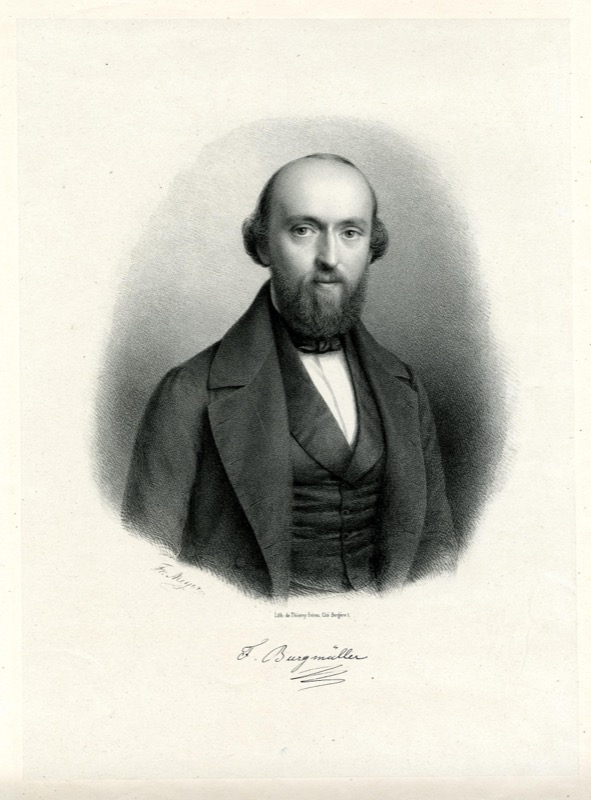
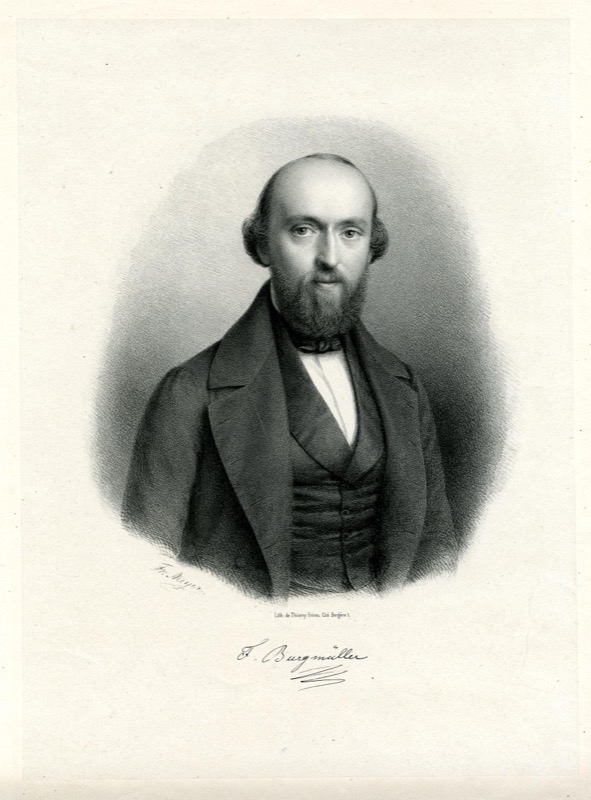
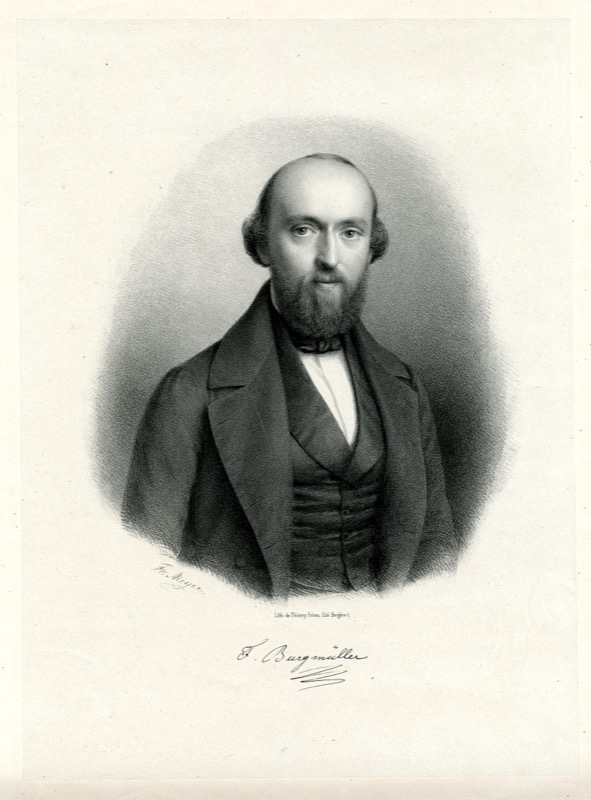
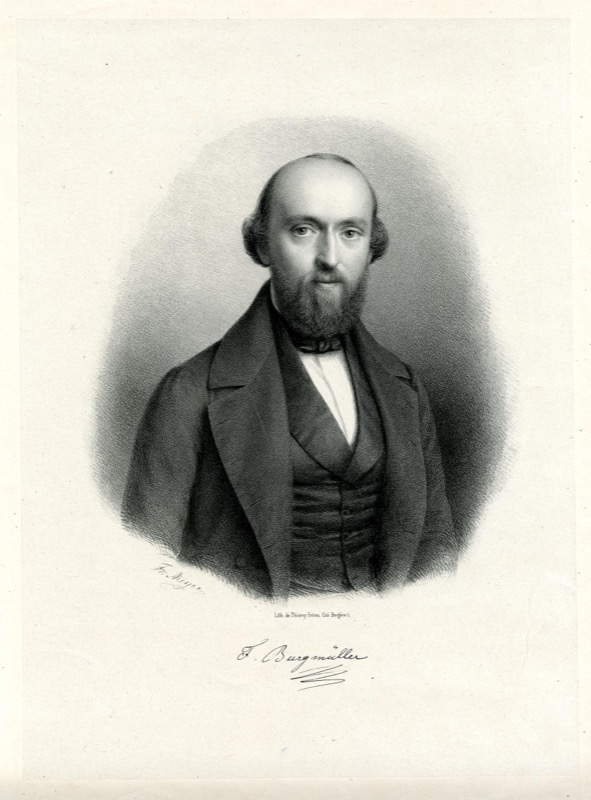
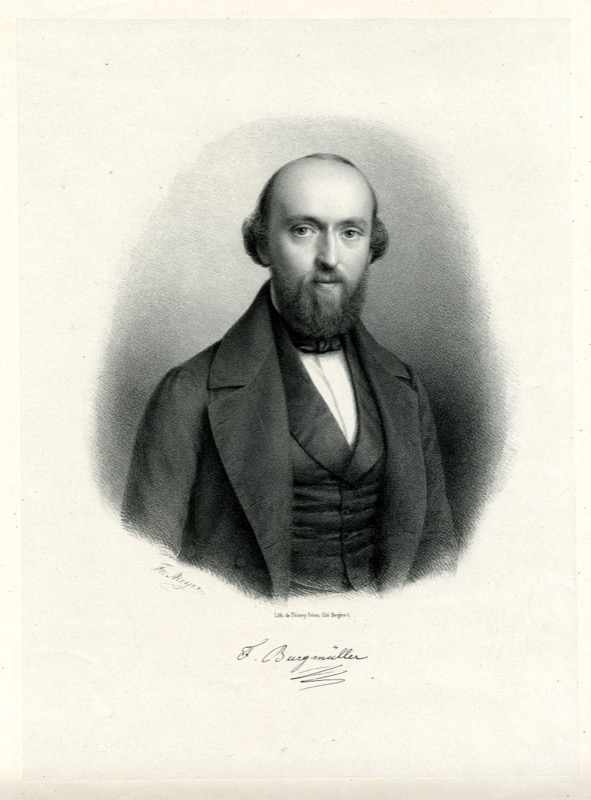
Burgmüller's 25 Études faciles Op. 100 - published in Paris around 1838 - gave the world the first étude set designed to sound like real music rather than exercises. Each of the 25 pieces carries a French title and teaches a single, clear technique. The set has been assigned in first and second-year lessons on every continent for nearly two centuries, and No. 2 has become its calling-card.
An arabesque is an ornamental pattern - in visual art a flowing, interlacing design; in music a quick, decorative figure that weaves around the melody. Burgmüller's Arabesque in A minor launches with a two-bar motif that passes from right hand to left and back again in constant Allegro scherzando motion. The word scherzando means 'playfully,' which is exactly the right frame of mind: this piece should feel light and effortless, as though the fingers barely touch the keys.

Practice path
Master one hand's figure, then trade.
Learn the right-hand two-bar figure alone until it feels completely natural, then learn the left-hand version alone. The real work begins when you combine them: the figure alternates between hands with only a half-beat overlap, so the handoff must be seamless. Drill just the transition point - the one beat where the passing happens - in a short loop before running the full piece.
Score basis: Generated MusicXML from Mutopia MIDI. Public domain composition; Public Domain (CC0) - Mutopia; MusicXML generated for Pianodemy. Attribution: Mutopia Project (https://www.mutopiaproject.org/cgibin/piece-info.cgi?id=203).
MIDI source: Mutopia Project (https://www.mutopiaproject.org/cgibin/piece-info.cgi?id=203). Public Domain (CC0) - Mutopia.
Questions
Before you practice.
Short answers for learners and for searchers deciding whether this is the right version to start with.
01Is Burgmüller Arabesque good for beginners?
Yes. It is classified beginner to early intermediate. The main challenge is keeping both hands light and even at tempo - start slowly, hands separately, before putting them together.
02What technique does the Arabesque train?
It develops finger independence and hand-coordination through a rapid, alternating figure. The piece also introduces the concept of a light, detached touch at faster tempos.
How to use this V1
Light fingers, relaxed wrists.
Keep the fingers close to the keys and let the wrist stay loose - tension is the enemy of speed in this étude. Start at 50% tempo in the tempo slider and only advance when every note sounds equal in volume and timing. The piece is 32 measures; because the main figure repeats in sequences, once the first eight bars feel secure the rest comes quickly. Listen for the dynamic contrast at the forte section mid-piece - that sudden brightness is the piece's character, not just a dynamic marking.
Keep going