Interactive piano piece
Learn Progress (La Vélocité), Op. 100 No. 6
A right-hand velocity study in C major that builds the even, fast finger motion required for all classical scales. The interactive desk lets you set any playback tempo from 30% to 100% of the marked speed - the ideal tool for the methodical metronome work this velocity étude demands.
Browser MIDI check pending
Loading score...
Press Play for the full piece, or choose Opening and switch to Wait for note for guided right-hand practice.
About the piece
Speed is a by-product of evenness - and this étude proves it.
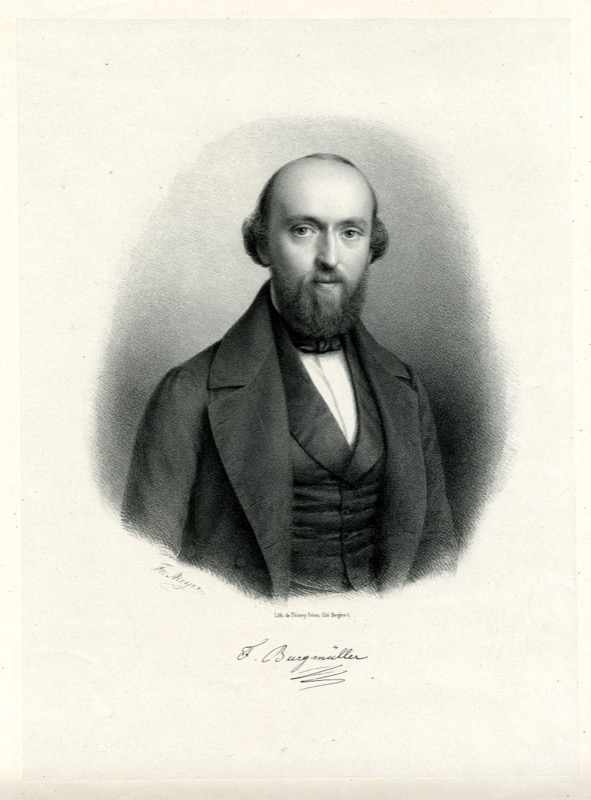
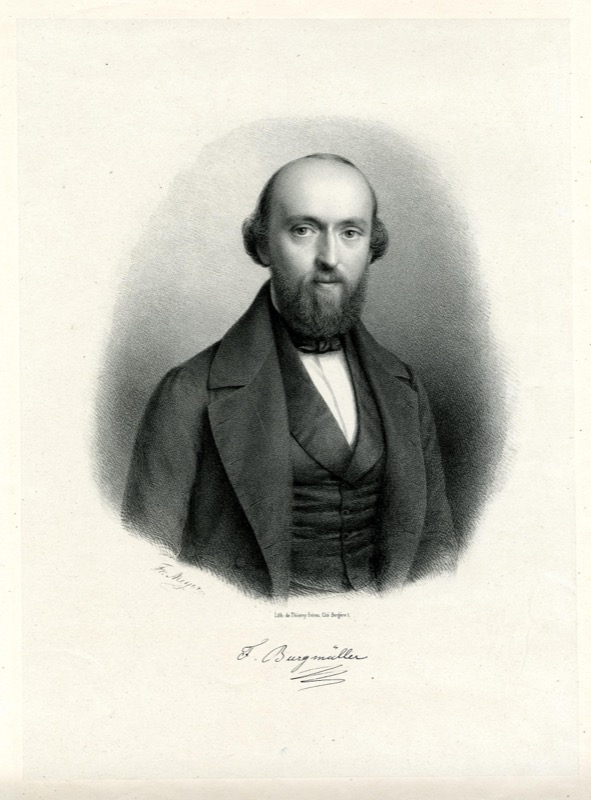
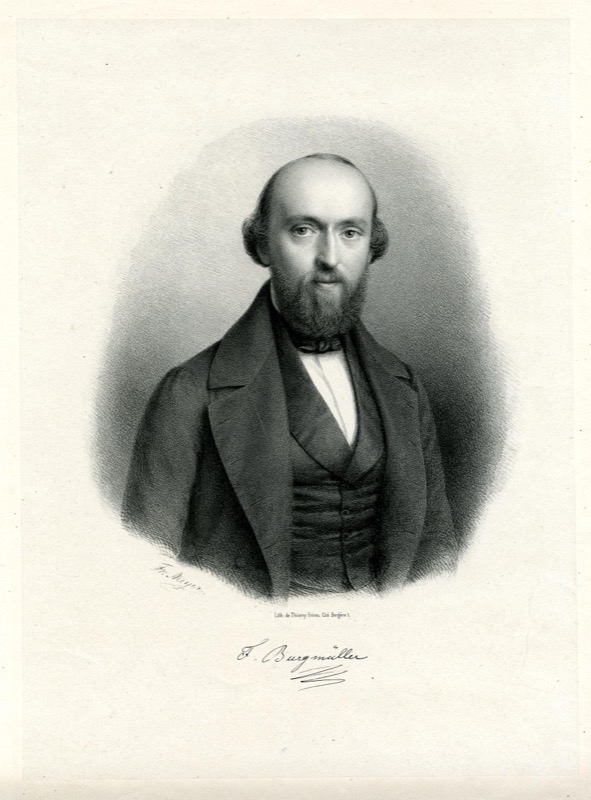
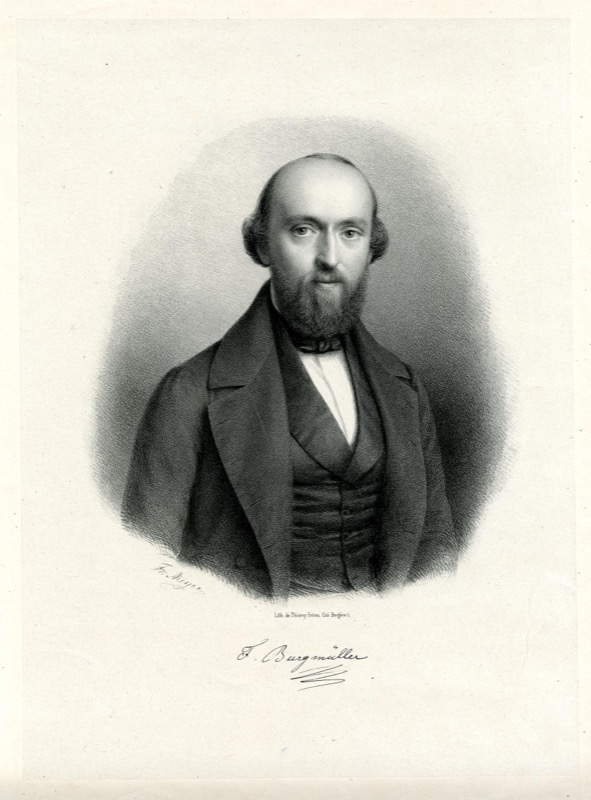
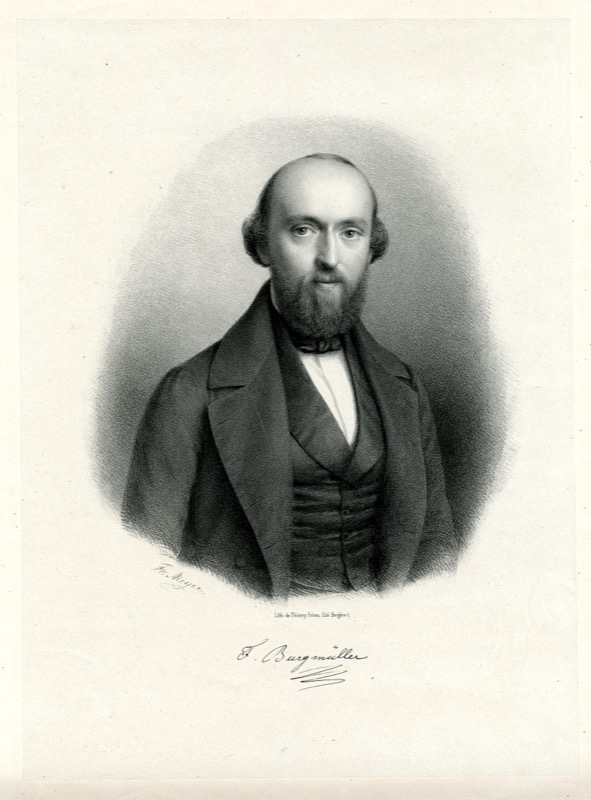
Burgmüller's 25 Études faciles Op. 100, published around 1838 and still the world's most widely taught beginner collection, gave each étude a descriptive French title. No. 6 is called La Vélocité - 'Velocity' - making its purpose unmistakable. It is the set's dedicated finger-speed étude, and Burgmüller placed it early in the sequence because fast, even scalar playing is a foundation skill for everything that follows.
The piece is in C major and 4/4 time: white keys only, no hand position shifts, no complex rhythms. Every challenge is concentrated in one demand - every sixteenth note in the right-hand runs must be exactly equal in weight and timing. There are no shortcuts. A beginner who can play La Vélocité cleanly at tempo has earned the most useful physical habit in piano technique: the reflex to slow down until evenness is achieved, then and only then raise the speed.

Practice path
Start slow enough to be bored, then get faster.
Set a metronome to a tempo where every note sounds equal and relaxed - for most beginners that is around 60 bpm per quarter note. Confirm evenness by recording yourself or listening critically: any note that stands out louder than its neighbors is a tension point. Raise the tempo by 2-3 bpm only when you pass the evenness test at the current speed. Rushing this process ingrain the very unevenness the étude is designed to correct.
Score basis: Generated MusicXML from Mutopia MIDI. Public domain composition; Public Domain (CC0) - Mutopia; MusicXML generated for Pianodemy. Attribution: Mutopia Project (https://www.mutopiaproject.org/cgibin/piece-info.cgi?id=215).
MIDI source: Mutopia Project (https://www.mutopiaproject.org/cgibin/piece-info.cgi?id=215). Public Domain (CC0) - Mutopia.
Questions
Before you practice.
Short answers for learners and for searchers deciding whether this is the right version to start with.
01What is the best way to practise Burgmüller La Vélocité?
Use a metronome and start slowly - around 60-70 bpm per quarter note. Only increase speed once each note sounds even and relaxed. Rushing the tempo before that point will cause tension.
02Is Burgmüller Progress Op. 100 No. 6 just a scale exercise?
It is built around fast scalar runs but has a musical shape. The challenge is making the velocity sound natural rather than mechanical - think of it as a melody that happens to move quickly.
How to use this V1
The tempo slider is your metronome.
Use the interactive player at 50% tempo and listen: can you hear every sixteenth note equally? Move to 65% only when the answer is yes. The étude is 20 measures of nearly continuous scalar runs; once the first eight bars are even, the pattern repeats with minor variations that feel easier because the hand position is already established. Aim to reach 80% tempo before your first performance - the final 20% will come with time and repetition.
Keep going