Interactive piano piece
Learn Pastorale, Op. 100 No. 3
A flowing 6/8 étude in G major that introduces the compound-meter lilt central to Romantic piano writing. The interactive desk loads the full Pastorale score and lets you slow the compound 6/8 to a comfortable walking pace while the bar highlighting shows exactly where each two-beat pulse lands.
Browser MIDI check pending
Loading score...
Press Play for the full piece, or choose Opening and switch to Wait for note for guided right-hand practice.
About the piece
The étude that teaches you to feel two beats instead of six.
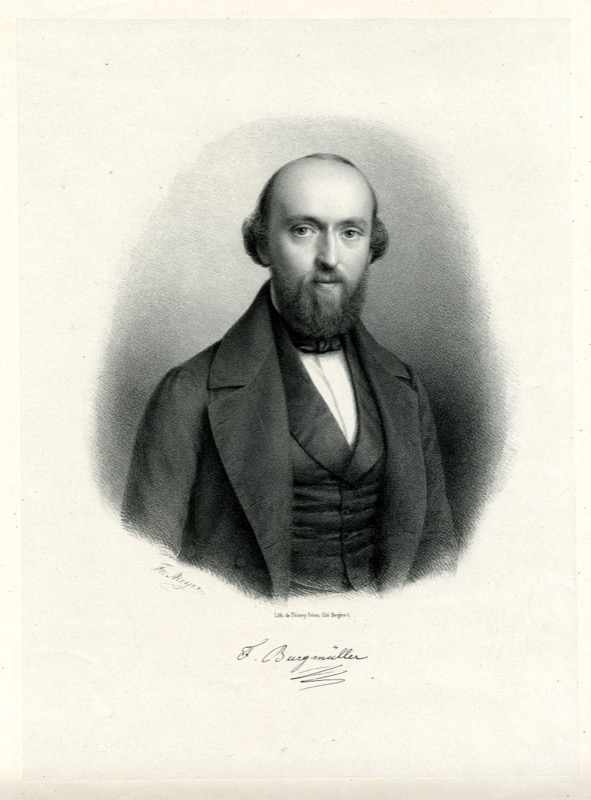
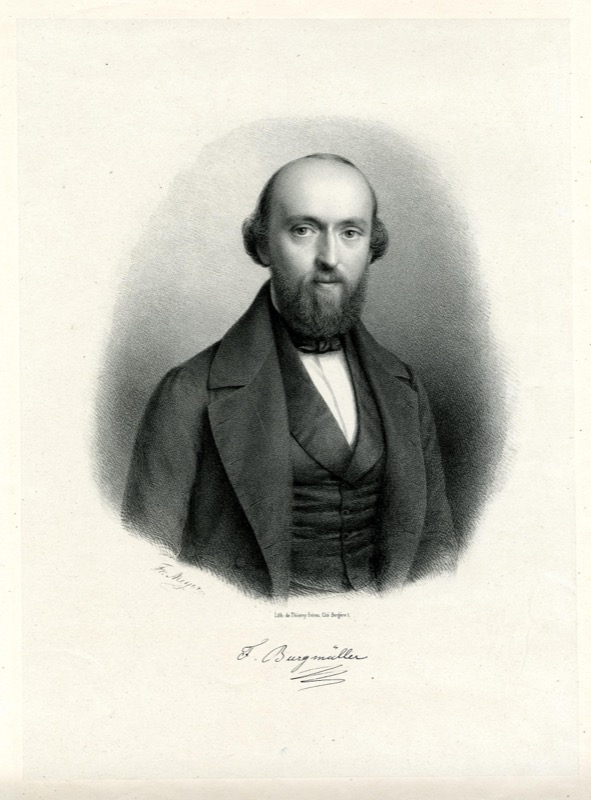
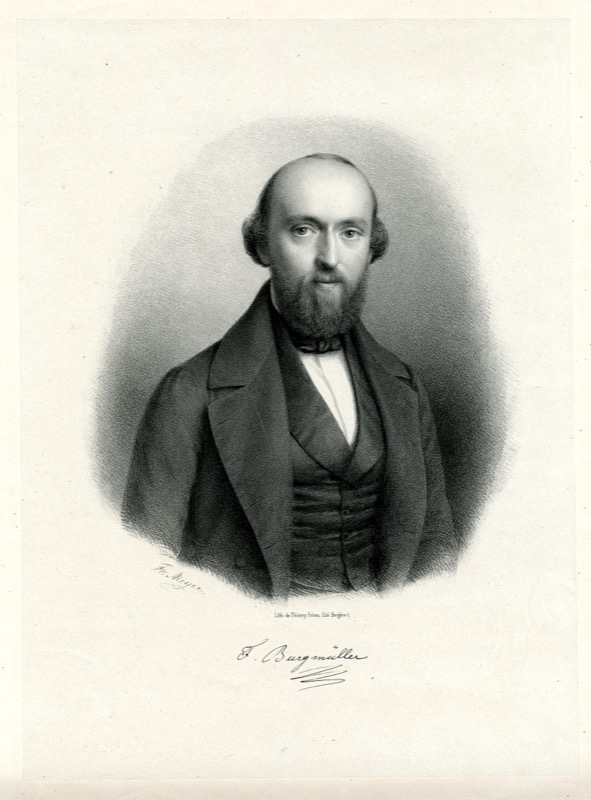
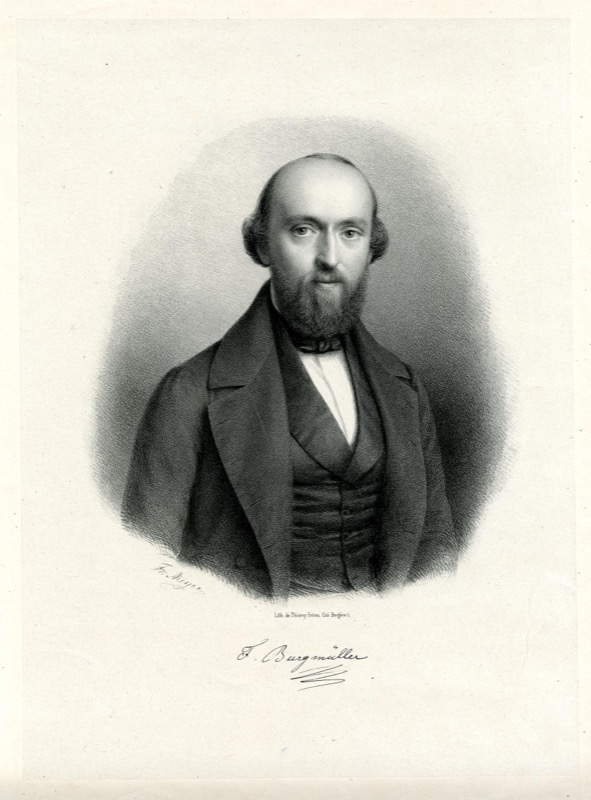
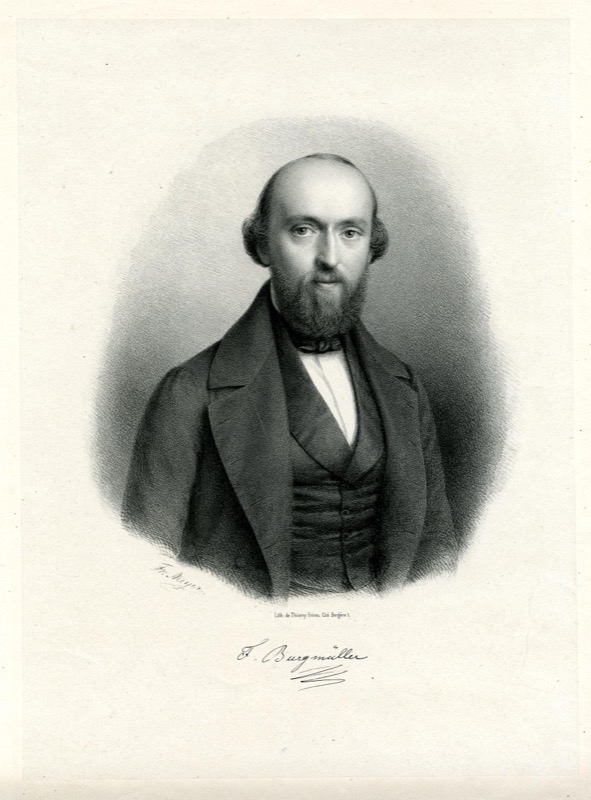
Burgmüller's 25 Études faciles Op. 100, published in Paris around 1838, are the most-assigned beginner étude set in piano teaching history - each one a character piece built around a single technical lesson. By No. 3 in the collection, Burgmüller introduces the compound time signature that shapes so much Romantic piano music: 6/8.
Pastorale evokes the pastoral tradition of French and Italian music - the gentle, idealized countryside that composers returned to again and again in the 18th and 19th centuries. In G major with a rocking 6/8 rhythm, the piece swings naturally between two broad beats per bar, each containing three eighth notes. That swing - felt rather than counted - is the entire lesson. A student who can feel 6/8 naturally has unlocked the door to nocturnes, barcarolles, and dozens of Romantic miniatures.

Practice path
Feel the two-beat rock before reading the notes.
Before sitting at the piano, tap both knees alternately - left, right, left, right - at a moderate tempo and feel two steady beats. Then count '1-and-a 2-and-a' silently and map the six eighth notes onto those two beats. When that rocking feeling is natural in your body, open the score: the notes will slot into the rhythm you already feel. Once you can play the right-hand melody comfortably, add the left-hand accompaniment at the same rocking pulse.
Score basis: Generated MusicXML from Mutopia MIDI. Public domain composition; Public Domain (CC0) - Mutopia; MusicXML generated for Pianodemy. Attribution: Mutopia Project (https://www.mutopiaproject.org/cgibin/piece-info.cgi?id=218).
MIDI source: Mutopia Project (https://www.mutopiaproject.org/cgibin/piece-info.cgi?id=218). Public Domain (CC0) - Mutopia.
Questions
Before you practice.
Short answers for learners and for searchers deciding whether this is the right version to start with.
01What is a 6/8 time signature on piano?
In 6/8 the bar has six eighth notes, but you usually feel two strong beats per measure - each beat containing three eighth notes. It gives music a gentle, swinging quality.
02How difficult is Burgmüller Pastorale?
It is a beginner piece, typically taught in the first or second year. The main challenge is feeling the compound meter naturally rather than mechanically counting six.
How to use this V1
Swing, don't count.
Set the tempo slider to 60% and aim for a lilting, flowing feel rather than mechanical precision on every eighth note. The phrase rises gently over four bars, then falls back - follow that shape with a small dynamic swell and release. The étude is 24 measures long; once the 6/8 swing feels natural, you will find that the melody almost plays itself.
Keep going