Interactive piano piece
Learn Gigue in G major KV 574
A sparkling 38-bar Gigue in G major that Mozart dashed off in Leipzig in 1789 - a tongue-in-cheek nod to Baroque counterpoint from one of the masters of Classical style. The interactive score and loop tool let you trace the chromatic voice-leading that makes this tiny G-major gigue so harmonically alive - the tempo slider reveals the counterpoint hiding in the fingerwork.
Browser MIDI check pending
Loading score...
Press Play for the full piece, or choose Opening and switch to Wait for note for guided right-hand practice.
About the piece
The gigue Mozart wrote in a Leipzig collector's album - a Baroque form seen through Classical eyes.
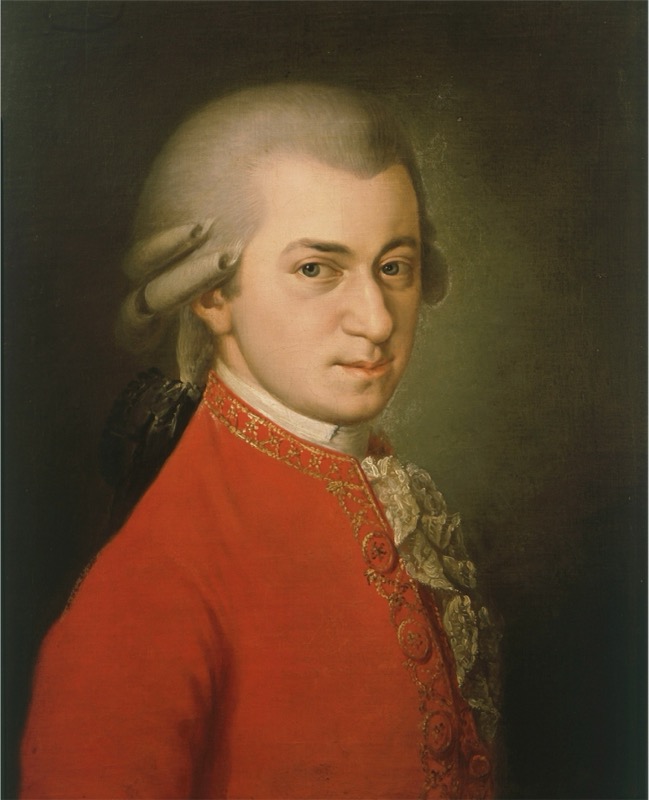
The Gigue in G major, KV 574, was composed in May 1789 during Mozart's visit to Leipzig, where he played on the very organ that Johann Sebastian Bach had used at the Thomaskirche. The piece was written as an entry in the album of the court musician Karl Immanuel Engel - a short, densely chromatic gigue in the Baroque style that clearly reflects Mozart's recent immersion in Bach's counterpoint.
Mozart had been studying Bach's fugues seriously in the years before his death, introduced to them by Baron van Swieten, and KV 574 shows the effect: the chromaticism is un-Mozartian in its intensity, the voice-leading more thorny than anything in the piano sonatas. At barely a minute long it is easy to underestimate, but it rewards slow analysis and rewards pianists who have worked through Bach's Well-Tempered Clavier.

Practice path
Trace the chromatic lines before playing the notes.
Identify the main contrapuntal voices - at least two, sometimes three - and play each one alone before combining them. The chromatic passing notes make more sense as voice-leading than as arbitrary ornament; once the inner logic is clear, the fingers find their way naturally.
Score basis: Generated MusicXML from Mutopia MIDI. Public domain composition; Public Domain; MusicXML generated for Pianodemy. Attribution: Mutopia Project (https://www.mutopiaproject.org/ftp/MozartWA/KV574/k574/).
MIDI source: Mutopia Project (https://www.mutopiaproject.org/ftp/MozartWA/KV574/k574/). Public Domain.
Questions
Before you practice.
Short answers for learners and for searchers deciding whether this is the right version to start with.
01Why did Mozart write a Baroque-style Gigue in 1789?
Mozart was visiting Leipzig, the city of Johann Sebastian Bach, and likely played the Thomaskirche organ there. The Gigue is thought to be a playful tribute to Bach's style, showing Mozart's deep knowledge of counterpoint despite his Classical idiom.
02How long is Mozart's KV 574 Gigue?
The piece is just 38 bars in 6/8 time. At a lively tempo it lasts under two minutes, making it an ideal concert encore or study piece.
How to use this V1
Each voice must have its own dynamic and weight.
At 50% tempo, play the piece as if each hand were an independent instrument in a small ensemble - give the left hand its own phrase shape and the right hand its own. At 80%, use wait-for-note mode to keep the contrapuntal entries from blurring. The gigue should feel playful and intellectually sharp rather than mechanical - the chromatic notes are the joke Mozart is playing on the Baroque style.
Keep going