Interactive piano piece
Learn Piano Sonata No. 16 in C major, K. 545: II. Andante
A singing G major Andante from Mozart's most-taught sonata - elegant phrasing in 74 unhurried bars. The practice desk streams the full Andante score with playback, tempo control, and per-phrase loops - ideal for working out the cantabile melody and its three-part rondo return.
Browser MIDI check pending
Loading score...
Press Play for the full piece, or choose Opening and switch to Wait for note for guided right-hand practice.
About the piece
A rondo in G that turns a simple scale into a sustained song.
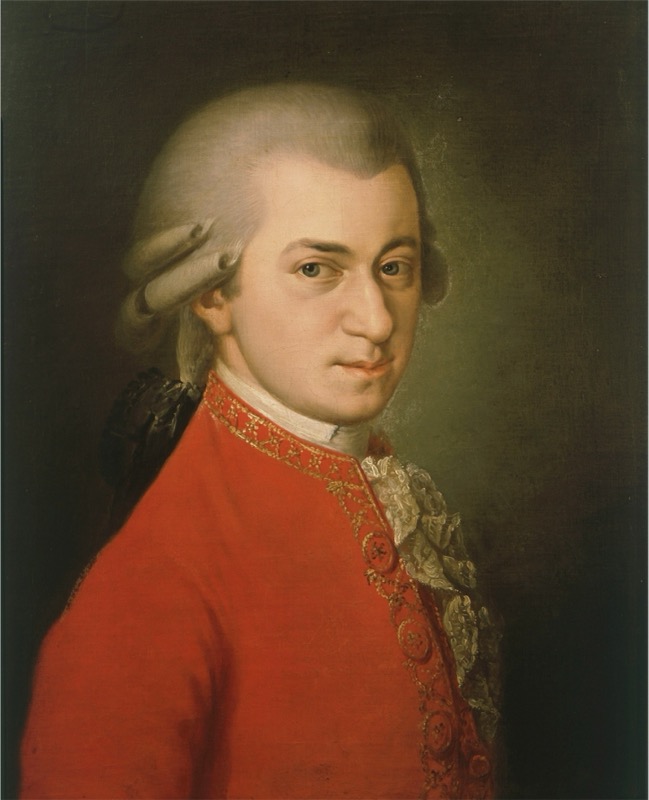
Mozart entered the Sonata in C major, K. 545, into his personal catalogue on 26 June 1788 with the note 'for beginners' ('für Anfänger'). The second movement, marked Andante in G major, is a rondo built from a single opening phrase - a descending scale harmonized with just enough counterpoint to feel inevitable rather than mechanical. It was part of a set of keyboard pieces Mozart assembled for teaching, though students at the time would have needed more than elementary skills to manage the ornamental middle sections cleanly.
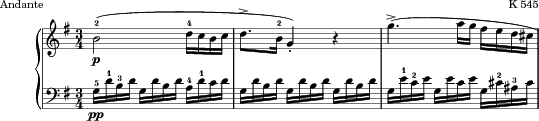
The rondo's A section returns twice, framing two contrasting episodes. The first episode moves to D major and introduces a slightly more active left-hand texture; the second touches D minor before the final return. What makes the movement distinctive is its self-restraint: Mozart never adds a note that is not necessary, and the long-line melody requires the player to sustain a singing quality across a range of dynamics without any dramatic outbursts to mask lapses in tone.
Practice path
Sing the rondo theme, contrast the episodes.
Establish the rondo theme first - the descending scale in the right hand should feel like a vocal phrase, not a finger exercise. Once the opening is settled, work the first episode in D major separately before connecting it to the rondo return. The second episode has the movement's only chromatic moment; loop the bars around the D minor passage at 65% to keep the intonation clean on the piano.
Score basis: Generated MusicXML from Mutopia MIDI. Public domain composition; CC BY-SA 3.0; MusicXML generated for Pianodemy. Attribution: Mutopia Project (https://www.mutopiaproject.org/cgibin/piece-info.cgi?id=1007).
MIDI source: Mutopia Project (https://www.mutopiaproject.org/cgibin/piece-info.cgi?id=1007). CC BY-SA 3.0.
Questions
Before you practice.
Short answers for learners and for searchers deciding whether this is the right version to start with.
01Is the K. 545 Andante easier than the first movement?
In some ways, yes - the note density is lower and there are no fast scale runs. But the challenge shifts to tone, phrasing, and evenness of touch, which requires a different kind of focus.
02What key is the Andante in?
The movement is in G major, the dominant of the home key C major. This was a standard Classical-era choice to provide contrast while staying closely related to the overall key.
03Can I learn this movement independently of the first?
Yes. Each movement of K. 545 stands on its own as a learning piece. The Andante is particularly good for students working on melodic tone and phrasing.
How to use this V1
Balance melody over the Alberti bass at all times.
The left hand's Alberti bass must stay soft enough that the right-hand melody projects above it. Practice each hand alone at 55% tempo, then combine at 70% and immediately listen for balance. Wait-for-note mode is useful for the ornamental turn at the return of the rondo theme - that is the one moment where rushing is tempting. Loop the final bars at full tempo to ensure the quiet ending arrives with intention rather than trailing off.
Keep going