Interactive piano piece
Learn Rondo alla Turca
Mozart's Turkish March is one of the most recognised finales in all of piano music - a driving A-minor march that pivots to a triumphant A-major coda. An interactive score with full playback, section loops, tempo scaling, a clickable on-screen piano, and wait-for-note mode lets you drill the march pattern and the contrasting lyrical episodes at exactly the speed where your hands stay in control.
Browser MIDI check pending
Loading score...
Press Play for the full piece, or choose Opening and switch to Wait for note for guided right-hand practice.
About the piece
The march that arrived at the end of a set of variations.
Mozart composed the Piano Sonata in A major, K. 331, most likely in Vienna around 1783, though an earlier date cannot be ruled out entirely. The sonata is unusual in its form: instead of opening with the expected fast sonata-allegro movement, it begins with a theme and six variations in A major, follows them with a minuet and trio, and closes with the Rondo alla Turca - the Turkish March - in A minor moving to A major. The march is the finale, not an isolated piece, and hearing it in the context of the complete sonata changes how it lands: the steady variations and the graceful minuet have been preparing the listener for something more decisive.
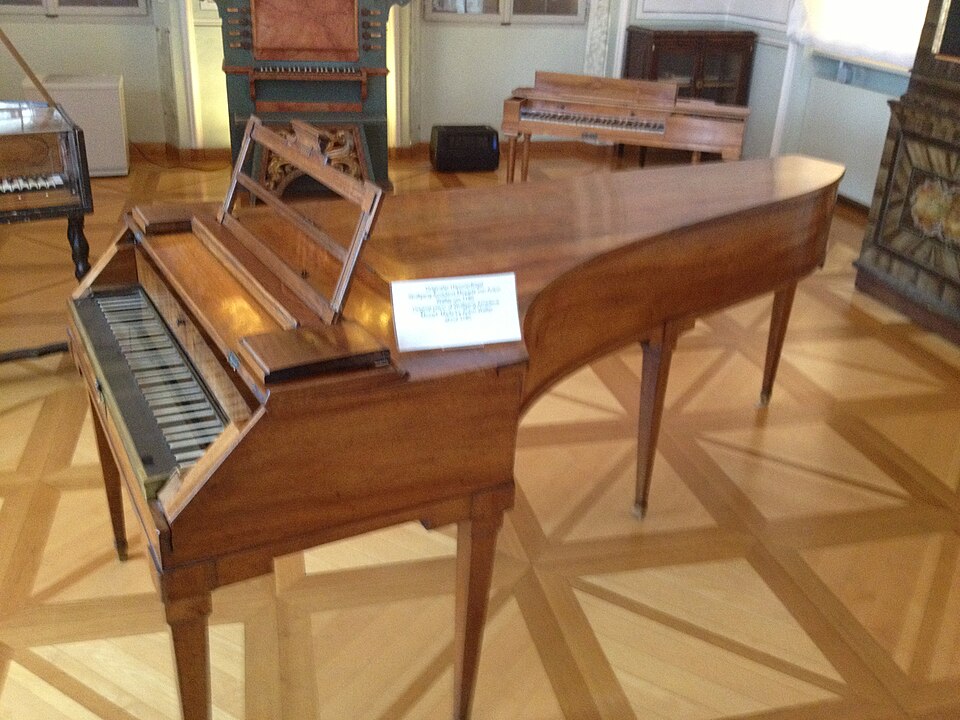
The alla turca style - Turkish style - was a fashionable exoticism in late eighteenth-century European music. Composers imitated the sound of the Janissary military bands that had accompanied the Ottoman armies in their campaigns into central Europe: loud bass drums, cymbals, triangles, and a driving, dotted march rhythm. Mozart uses a light piano texture to suggest this sound, with the repeated-note patterns in the right hand mimicking percussion and the low octave passages evoking a bass drum's thud. The effect on a fortepiano of the 1780s, with its lighter, more percussive tone, was considerably more striking than it sounds on a modern concert grand.
The Turkish March became one of Mozart's most performed pieces almost immediately after publication, and it has never slipped from the repertoire. Its march character and clear phrase structure make it legible at first hearing; its internal variety - the lyrical B section contrasting with the rattling main theme, the coda that suddenly opens into A major - rewards closer attention. Mozart marked no tempo; most performers choose an allegretto or vivace, fast enough to feel like a march without losing the ornamental precision the right hand requires.
Practice path
The march first, the contrasting episode second.
The rondo divides into three recurring sections: the main A minor march theme (A), a lyrical episode in A major (B), and a short transition passage. The march theme dominates and always returns. Begin with the right hand alone on the main theme, keeping the repeated-note groups absolutely even and the ornaments clean before adding speed.
The B section is the expressive counterweight: longer phrases, a more singing tone, and a different touch. Loop it separately to establish the contrast, then practice the transition back to the march at tempo so the character shift is instant. The coda - the final A major section - needs a slightly fuller sound to signal the ending without becoming heavy.
Score basis: Generated MusicXML from Mutopia MIDI. Public domain composition; Public Domain (CC0) - Mutopia; MusicXML generated for Pianodemy. Attribution: Mutopia Project (https://www.mutopiaproject.org/cgibin/piece-info.cgi?id=108).
MIDI source: Mutopia Project (https://www.mutopiaproject.org/cgibin/piece-info.cgi?id=108). Public Domain (CC0) - Mutopia.
Questions
Before you practice.
Short answers for learners and for searchers deciding whether this is the right version to start with.
01Is Rondo alla Turca the same as the Turkish March?
Yes - 'Rondo alla Turca' is the Italian title Mozart gave to the third movement of his Piano Sonata K. 331; it has been nicknamed the Turkish March ever since.
02How hard is the Turkish March for piano?
It sits solidly at the intermediate level. The main challenge is keeping the repeated-note march figures clean at tempo while voicing the melodic line above them.
03What key is the Turkish March in?
The march sections are in A minor, but the piece opens and closes in A major, giving it a bright, celebratory finish.
How to use this V1
Evenness in the march, singing in the episode.
Loop the main march theme at 50% tempo, right hand only, until every repeated note group is perfectly even. At 75%, add the left hand and check that the bass octaves arrive on the beat without heaviness. Wait-for-note mode is useful for nailing the ornaments in the opening bars; Play-along mode at 80% restores the forward momentum the march needs. Drill the B section at its own tempo separately - the lyrical quality is lost if it is practiced too slowly for too long.
Keep going