Interactive piano piece
Learn L'Adieu, Op. 100 No. 12
A dramatic Allegro molto agitato in C major with a broken-chord texture that conveys the urgency and emotion of a farewell. The interactive desk streams the agitato score with full highlight and lets you loop the arpeggiated left-hand pattern in isolation - essential for mastering the broken-chord texture before adding the melody.
Browser MIDI check pending
Loading score...
Press Play for the full piece, or choose Opening and switch to Wait for note for guided right-hand practice.
About the piece
The most emotionally intense étude in Op. 100 - and the most demanding left hand.
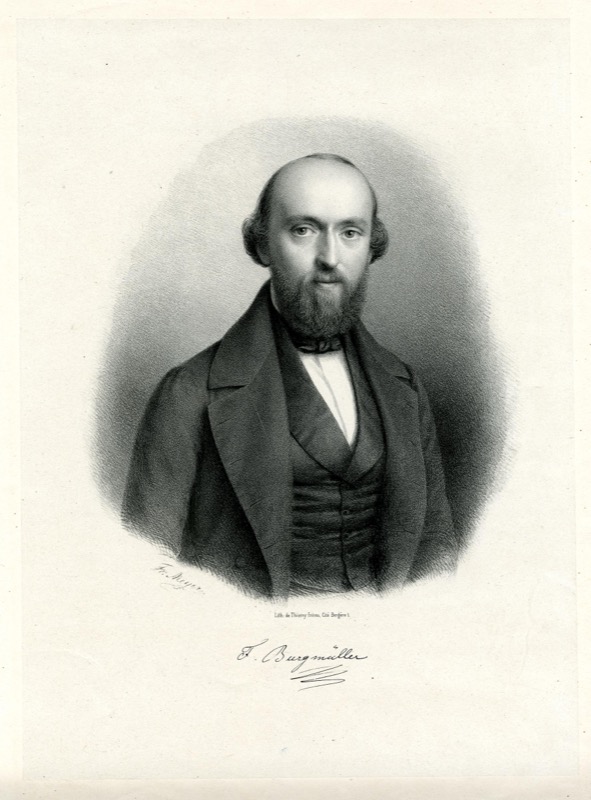
Burgmüller's 25 Études faciles Op. 100, published in Paris around 1838, are the world's most-assigned beginner étude collection. Each piece teaches a specific technique through a named character. By No. 12, Burgmüller introduces the full dramatic range of the Romantic piano: L'Adieu - 'The Farewell' - is marked Allegro molto agitato, calling for genuine passion and urgency, not just competent note-playing.
The technical focus is the left-hand arpeggiated pattern - a broken-chord texture in which the bass note and the chord tones are spread across the beat rather than struck together. This texture, which Burgmüller deploys throughout L'Adieu's C major texture with dramatic fortissimo and piano contrasts, is the foundation of Romantic piano accompaniment. It appears in Chopin nocturnes, Schubert songs, and virtually every 19th-century piano piece that aims to evoke feeling. Learning it here, in C major at a manageable length, builds the muscle memory that unlocks that entire repertoire.

Practice path
Tame the left hand first - it carries the drama.
Before adding the right hand, learn the arpeggiated left-hand pattern at a very slow tempo until the arm movement from bass note to chord is smooth and automatic. The left wrist should rotate slightly toward the bass on beat one and release back for the chord - not a rigid two-position switch but a fluid rocking motion. Only when the left-hand pattern feels easy at 60% tempo should you add the singing right-hand melody above it.
Score basis: Generated MusicXML from Mutopia MIDI. Public domain composition; Public Domain (CC0) - Mutopia; MusicXML generated for Pianodemy. Attribution: Mutopia Project (https://www.mutopiaproject.org/cgibin/piece-info.cgi?id=223).
MIDI source: Mutopia Project (https://www.mutopiaproject.org/cgibin/piece-info.cgi?id=223). Public Domain (CC0) - Mutopia.
Questions
Before you practice.
Short answers for learners and for searchers deciding whether this is the right version to start with.
01Is Burgmüller L'Adieu difficult for beginners?
It is on the harder end of the beginner range within Op. 100 - the arpeggiated texture and Allegro molto agitato tempo demand reliable left-hand coordination. Most students encounter it after the calmer early études in the set.
02What does L'Adieu train technically?
It develops broken-chord (arpeggiated) left-hand technique and the ability to project a singing melody over a busy accompaniment, while responding to dynamic contrasts from piano to fortissimo.
How to use this V1
Urgency comes from rhythm, not speed.
Set the tempo slider to 55% and confirm the left-hand arpeggiated pattern is absolutely even before adding the right hand. The agitato character comes from rhythmic precision and sharp forte-piano contrasts - do not rush the tempo to create drama. The contrasts marked in the score (piano suddenly after a forte) are the emotional story of the farewell; honor them even at slow tempo and they will carry through at performance speed.
Keep going