Interactive piano piece
Learn La Bergeronnette, Op. 100 No. 11
A sprightly Allegretto in C major and 2/4 time that captures the quick, darting movements of the wagtail bird. The interactive desk loads both staves at the Allegretto and lets you slow it to see the constant eighth-note exchange between hands - the ideal way to spot where the handoff is uneven before drilling it.
Browser MIDI check pending
Loading score...
Press Play for the full piece, or choose Opening and switch to Wait for note for guided right-hand practice.
About the piece
30 measures of darting, bobbing, finger-independence training.
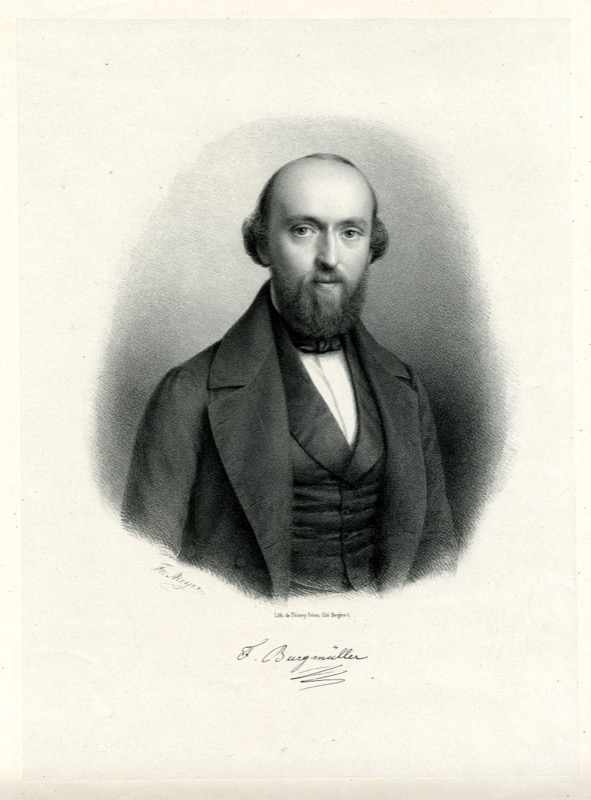
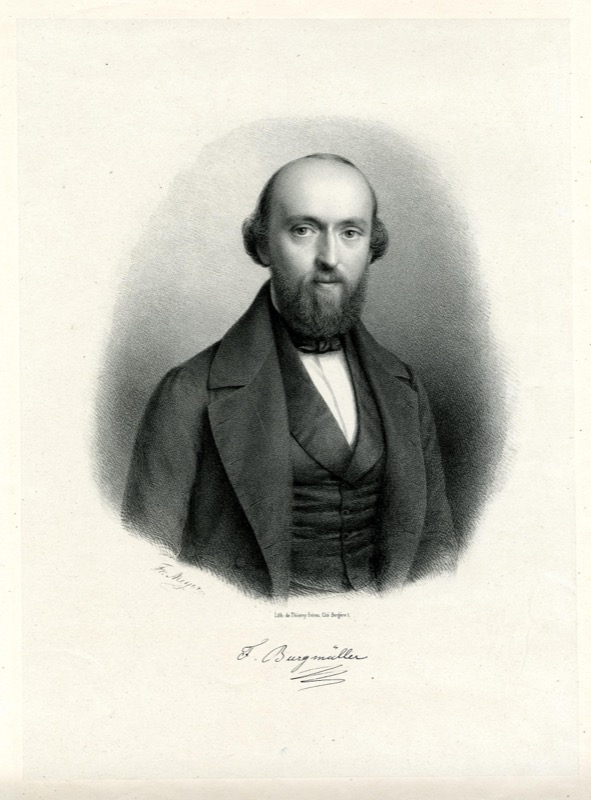
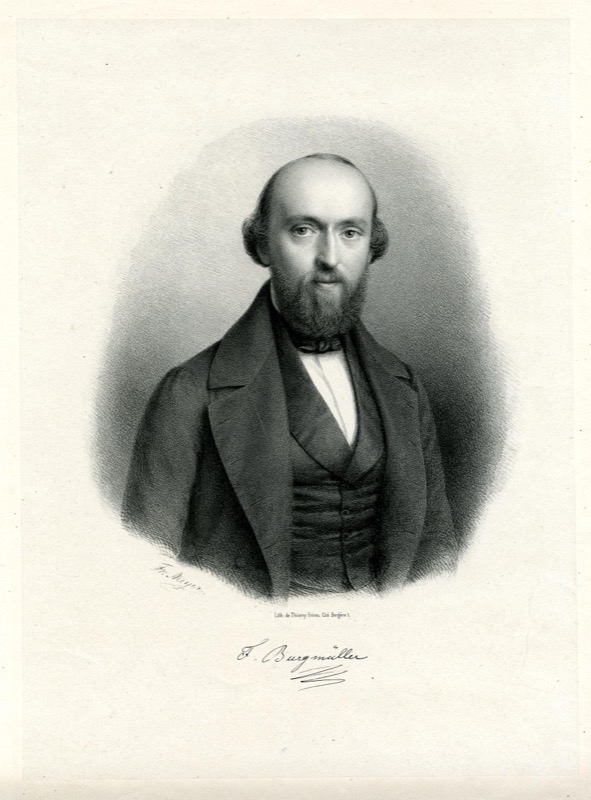
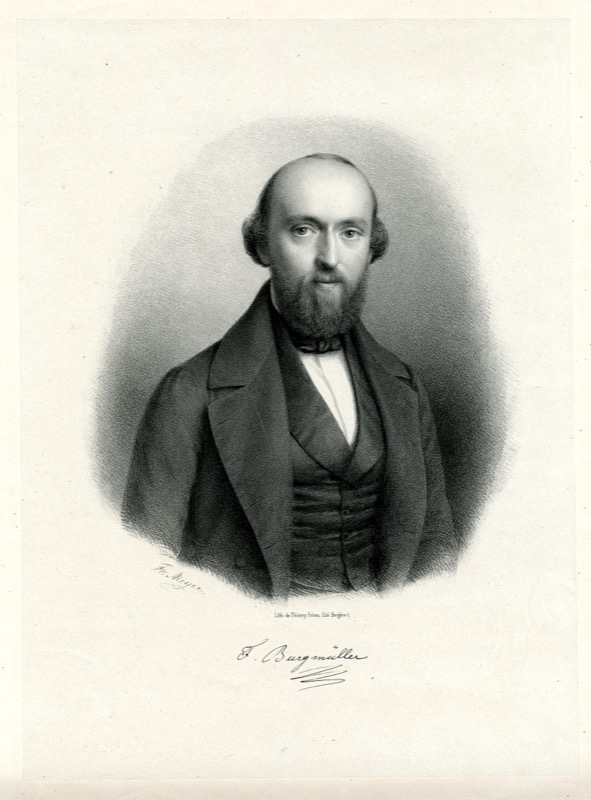
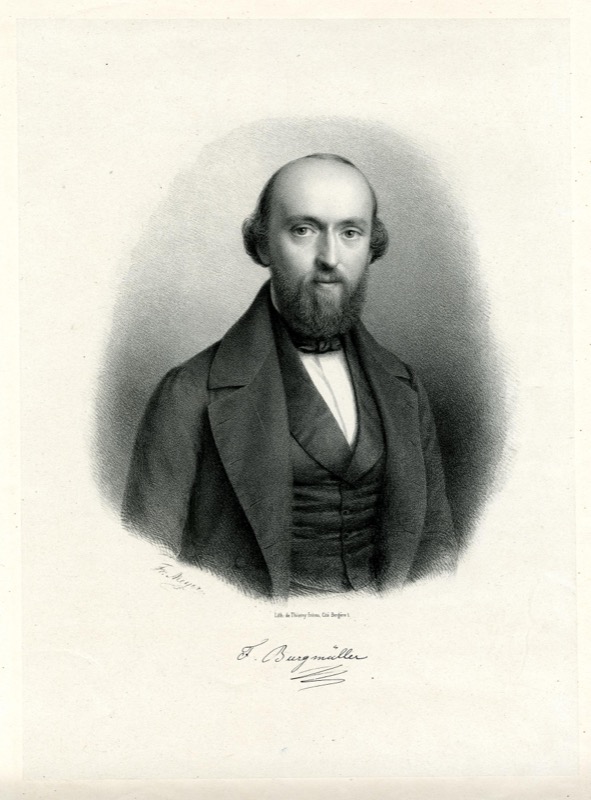
Burgmüller's 25 Études faciles Op. 100, published in Paris around 1838, remain the most widely taught beginner piano collection in the world. Each piece teaches a distinct technique while painting a vivid character picture through its French title. La Bergeronnette - 'The Wagtail' - belongs to Burgmüller's gallery of nature miniatures.
The wagtail is a small, quick bird known for the constant up-and-down bobbing of its tail - a motion that gives the bird its English name and its French one alike. Burgmüller captures that characteristic restlessness in C major and 2/4 time: constant eighth-note motion in both hands simultaneously, at a brisk Allegretto, with the melodic interest shifting between right and left. The lesson is finger independence: keeping both hands active at the same time, at the same tempo, without one dragging or rushing the other. That independence - learned here on simple C major notes - transfers directly to Baroque two-voice counterpoint and beyond.

Practice path
Listen for the weaker hand and drill it first.
Most students have a dominant hand that rushes and a weaker hand that lags. Identify which is which by playing each hand alone at Allegretto tempo. The hand that sounds uneven or less confident is the hand to drill first. Once both hands can run the full 30 measures alone at 80% tempo, combine them slowly and listen for any point where one hand pulls ahead of or falls behind the other - those transition points need isolated looping.
Score basis: Generated MusicXML from Mutopia MIDI. Public domain composition; Public Domain (CC0) - Mutopia; MusicXML generated for Pianodemy. Attribution: Mutopia Project (https://www.mutopiaproject.org/cgibin/piece-info.cgi?id=222).
MIDI source: Mutopia Project (https://www.mutopiaproject.org/cgibin/piece-info.cgi?id=222). Public Domain (CC0) - Mutopia.
Questions
Before you practice.
Short answers for learners and for searchers deciding whether this is the right version to start with.
01What is La Bergeronnette by Burgmüller?
It is No. 11 from his 25 Easy Studies Op. 100 and depicts the wagtail - a small, lively bird. The étude is 30 measures in C major, light and quick in character.
02What technical skill does La Bergeronnette develop?
It develops nimble finger independence and the ability to keep both hands active simultaneously at a brisk tempo, while maintaining clarity between the melodic and accompaniment roles.
How to use this V1
Both hands share the pulse - neither leads.
Set the tempo slider to 60% and practice hands together, counting a steady '1-and 2-and' in 2/4. The eighth notes in both hands must arrive on the beat together, not in sequence. Loop the first eight bars until the hands feel like a single mechanism. At 80% tempo the bobbing character appears naturally - do not try to add it consciously, just keep both hands even and the étude does the rest.
Keep going