Interactive piano piece
Learn La Gracieuse, Op. 100 No. 8
A delicate Grazioso étude in F major with a 3/4 waltz feel that cultivates a shaped, singing melodic line. The interactive desk lets you isolate the right hand and the left hand waltz pattern separately, then combine them - use the section loop to work the four-bar phrase until the melody floats naturally above the bass.
Browser MIDI check pending
Loading score...
Press Play for the full piece, or choose Opening and switch to Wait for note for guided right-hand practice.
About the piece
A waltz étude that teaches the most important sound in Romantic piano.
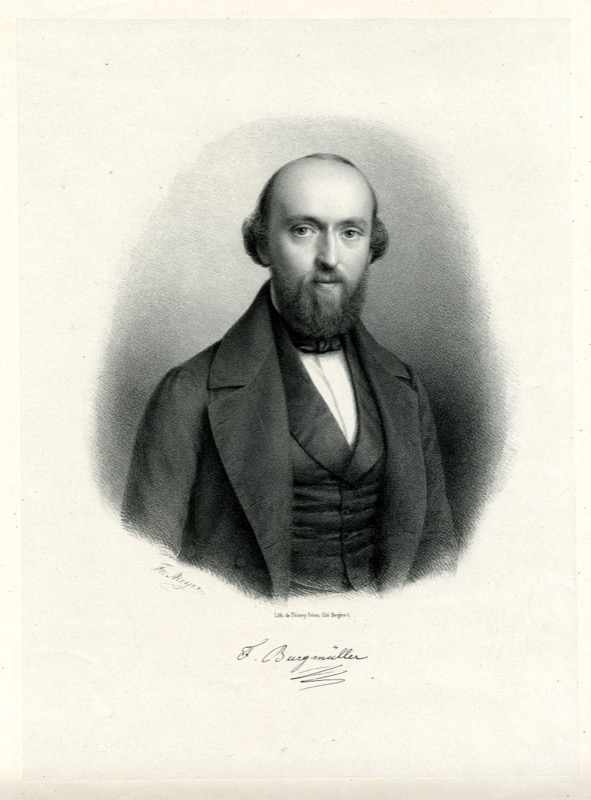
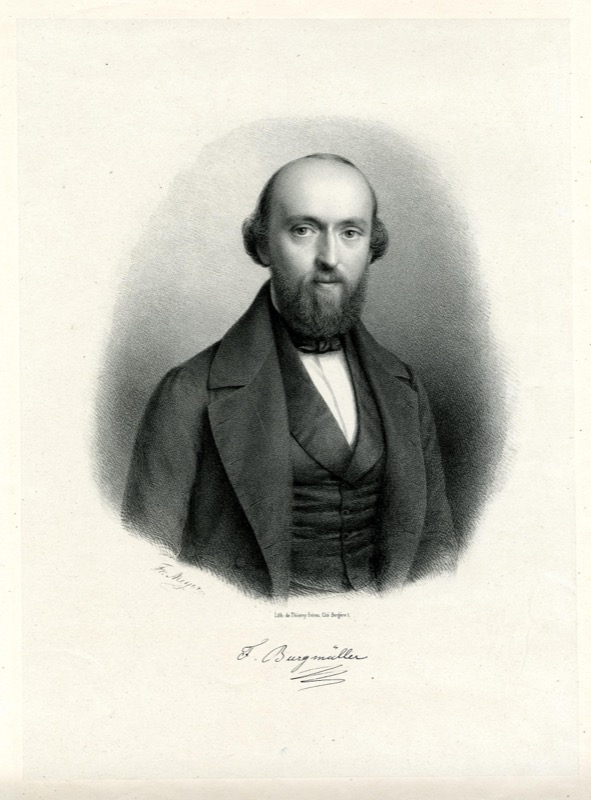
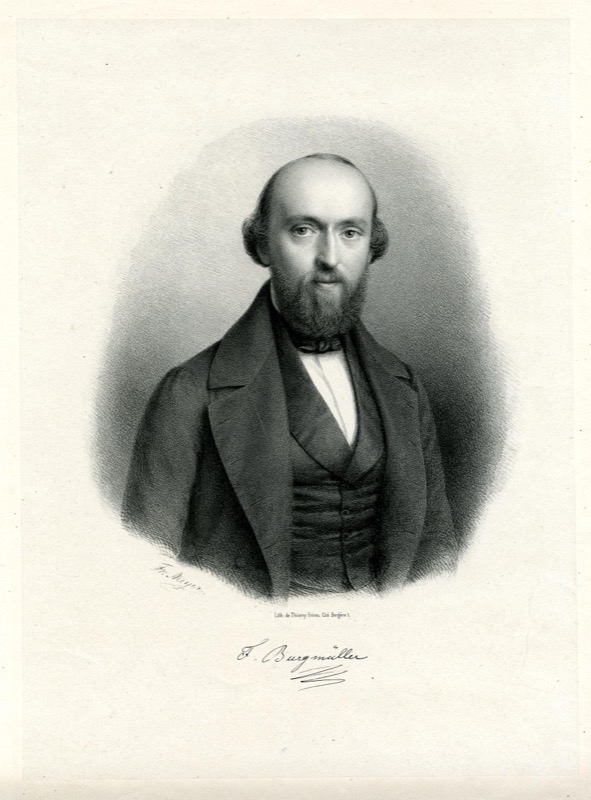
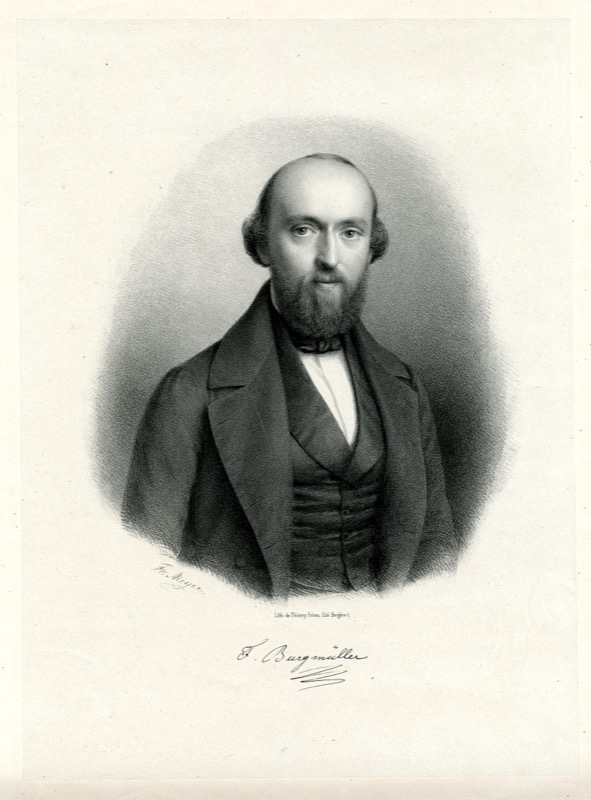
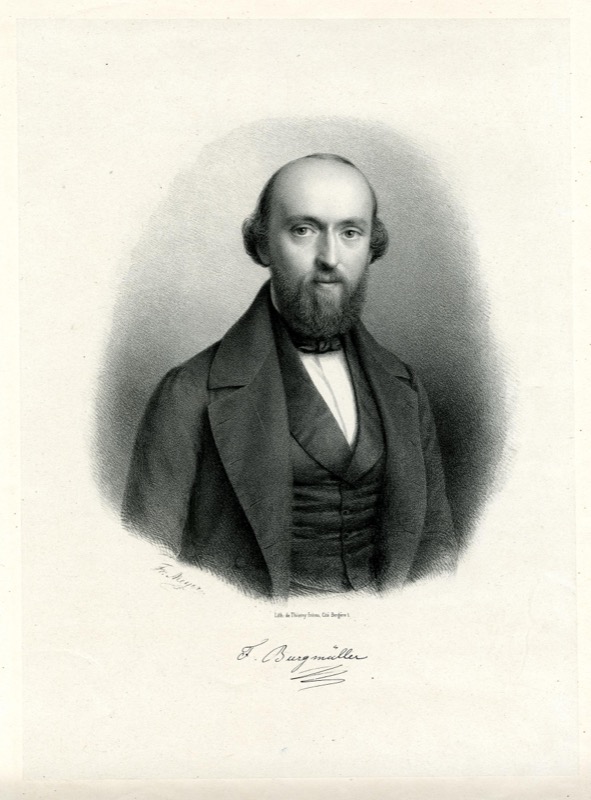
Burgmüller's 25 Études faciles Op. 100 - published in Paris around 1838 - remain the world's most-assigned beginner étude set. Each of its 25 pieces introduces one cornerstone technique through a short character piece with a French title. La Gracieuse - 'The Graceful One' - appears at No. 8 because by this point the student is ready to learn the single most useful texture in Romantic piano music: melody over waltz accompaniment.
The étude is in F major and 3/4 time, 16 measures long. The left hand plays a simple bass-chord waltz pattern: bass note on beat one, chord on beats two and three. The right hand sings a cantabile melody above it. The entire lesson is balance: the melody must ring clearly while the accompaniment stays subordinate but alive. Every nocturne, waltz, and song-without-words in the Romantic repertoire uses this texture - La Gracieuse is where beginners first feel how it works.

Practice path
Learn to hear which hand leads.
Practise the left-hand waltz pattern alone until it runs quietly and evenly - the three-beat bounce should feel light, never heavy on beat two or three. Then add the right-hand melody and confirm that the top note of each right-hand group sounds noticeably louder than anything the left hand plays. If the two hands sound equal, the accompaniment is too loud. Shape the four-bar phrases with a small crescendo to the high point and a gentle release - that arc is the 'graceful' quality the title names.
Score basis: Generated MusicXML from Mutopia MIDI. Public domain composition; Public Domain (CC0) - Mutopia; MusicXML generated for Pianodemy. Attribution: Mutopia Project (https://www.mutopiaproject.org/cgibin/piece-info.cgi?id=217).
MIDI source: Mutopia Project (https://www.mutopiaproject.org/cgibin/piece-info.cgi?id=217). Public Domain (CC0) - Mutopia.
Questions
Before you practice.
Short answers for learners and for searchers deciding whether this is the right version to start with.
01Is Burgmüller La Gracieuse suitable for beginners?
Yes - at 16 measures in a comfortable F major, it is designed for early beginners. The main task is producing a singing melody with the right hand while keeping the waltz accompaniment subordinate.
02What does La Gracieuse teach?
It develops cantabile touch, basic dynamic shaping, and the ability to balance melody against accompaniment - skills that underpin virtually all Romantic piano playing.
How to use this V1
Balance is not static - it shifts phrase by phrase.
Use the tempo slider at 65% and listen from the perspective of an audience: can you hear a singing melody, or two equal layers of sound? The melody should always be on top. Loop the opening eight bars until the balance is automatic, then run the full 16 measures. The ornamented ending (if present in your edition) can be simplified until the basic balance is solid.
Keep going