Interactive piano piece
Learn La Petite Réunion, Op. 100 No. 4
A gentle Allegro non troppo étude in C major that teaches smooth two-voice dialogue between the hands. The interactive desk streams both staves with synchronized highlighting, so you can watch the two-voice conversation unfold in real time before trying it yourself - use the hand-mute controls to practice each voice alone.
Browser MIDI check pending
Loading score...
Press Play for the full piece, or choose Opening and switch to Wait for note for guided right-hand practice.
About the piece
Two hands, two friends, one conversation.
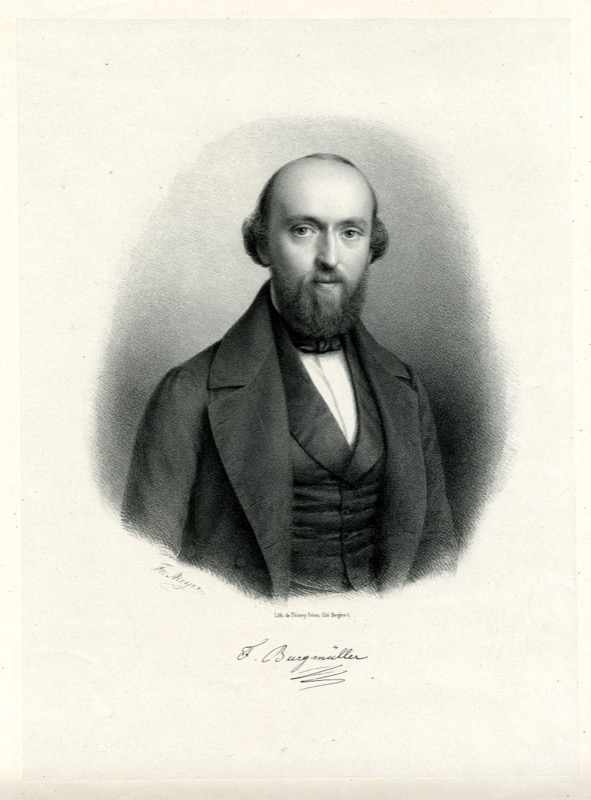
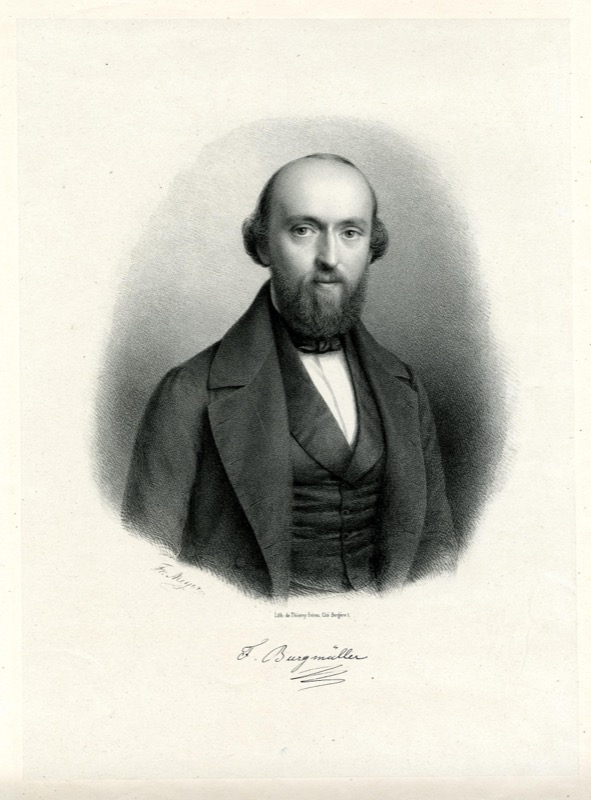
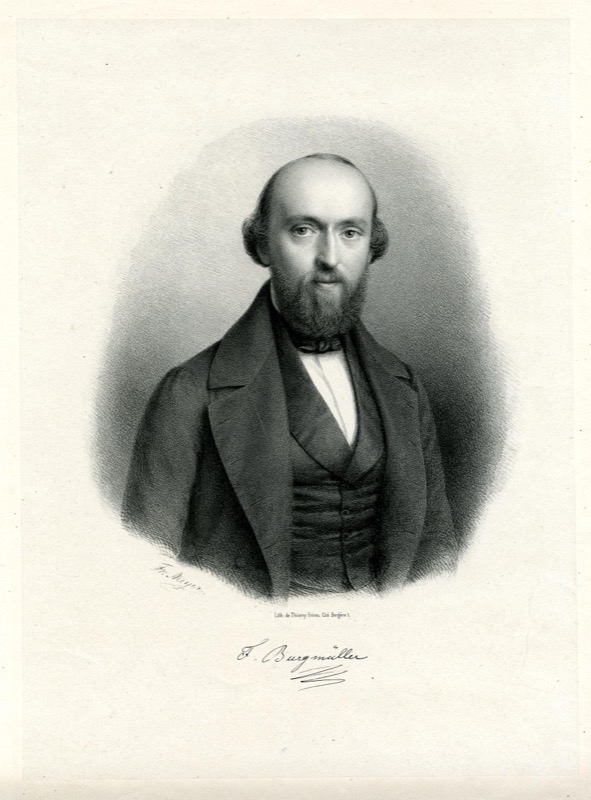
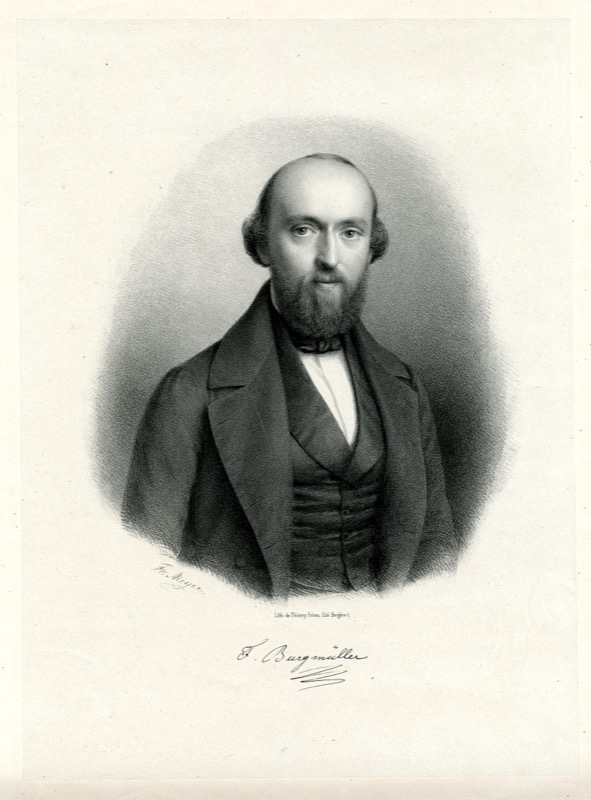
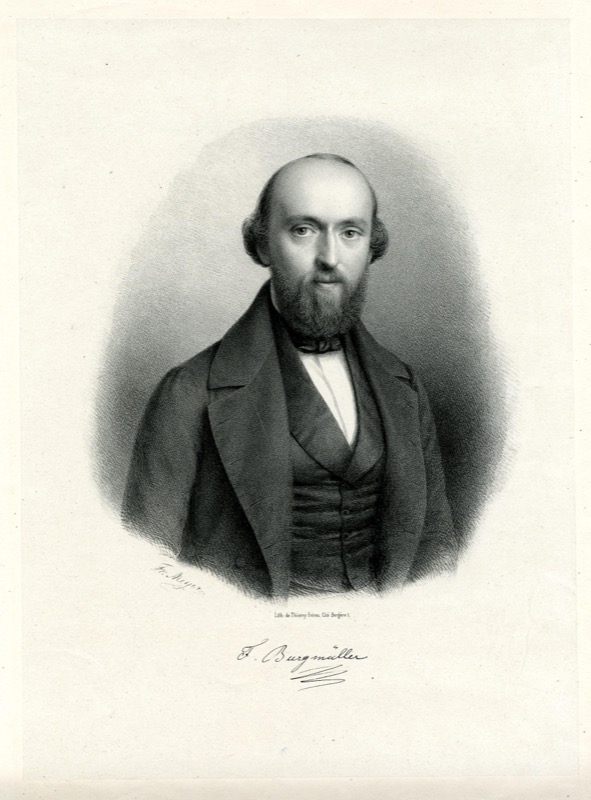
Burgmüller's 25 Études faciles Op. 100 - published in Paris around 1838 and still the world's most-used beginner étude collection - gave each piece a title that described its emotional character, not its technical content. By doing so, Burgmüller taught students to think musically before they thought mechanically.
La Petite Réunion means 'The Little Gathering' - a small social occasion where people meet and exchange pleasantries. In C major and 4/4 time, the étude gives both hands an equal, conversational role: the right hand states a phrase, the left hand echoes or completes it. This musical dialogue is the lesson. Learning to balance two independent voices - neither dominating, both necessary - is a skill that underpins ensemble playing, choral writing, and virtually all keyboard music beyond the first beginner stage.

Practice path
Listen for who is speaking.
Play through the right hand alone and notice where it pauses or trails off; those are the moments where the left hand is meant to answer. Then reverse: play the left hand alone and hear its own phrase shapes. When you combine hands, focus on keeping the speaking voice always marginally louder than the listening one - the balance shifts mid-bar, so the listening takes active attention at full tempo.
Score basis: Generated MusicXML from Mutopia MIDI. Public domain composition; Public Domain (CC0) - Mutopia; MusicXML generated for Pianodemy. Attribution: Mutopia Project (https://www.mutopiaproject.org/cgibin/piece-info.cgi?id=219).
MIDI source: Mutopia Project (https://www.mutopiaproject.org/cgibin/piece-info.cgi?id=219). Public Domain (CC0) - Mutopia.
Questions
Before you practice.
Short answers for learners and for searchers deciding whether this is the right version to start with.
01How long is Burgmüller La Petite Réunion Op. 100 No. 4?
The piece is 30 measures, making it one of the shorter études in Op. 100 - ideal for a practice session of 10-15 minutes.
02What does La Petite Réunion teach piano students?
It develops independent hand coordination and a singing legato touch, introducing students to the concept of melody-over-accompaniment balance at an easy level.
How to use this V1
Balance shifts every few beats.
Set the tempo slider to 65% and play hands together, letting the accompaniment voice drop one notch in volume whenever the melody voice enters. The étude is 30 measures - short enough to practice as a complete loop - so repeat it four or five times, listening each time for a more natural-sounding handoff between the two voices. Only raise the tempo when the balance feels automatic.
Keep going