Interactive piano piece
Learn La Styrienne, Op. 100 No. 14
A lilting 3/4 Allegretto in G major that evokes the folk dances of the Styrian Alps through a simple, swinging melody. The interactive desk streams the 3/4 Ländler in G major with bar-by-bar highlighting - slow the tempo to feel the one-big-beat-per-measure swing that is the whole point of this folk-dance étude.
Browser MIDI check pending
Loading score...
Press Play for the full piece, or choose Opening and switch to Wait for note for guided right-hand practice.
About the piece
A folk dance from the Alps - and a deeper way to feel 3/4.
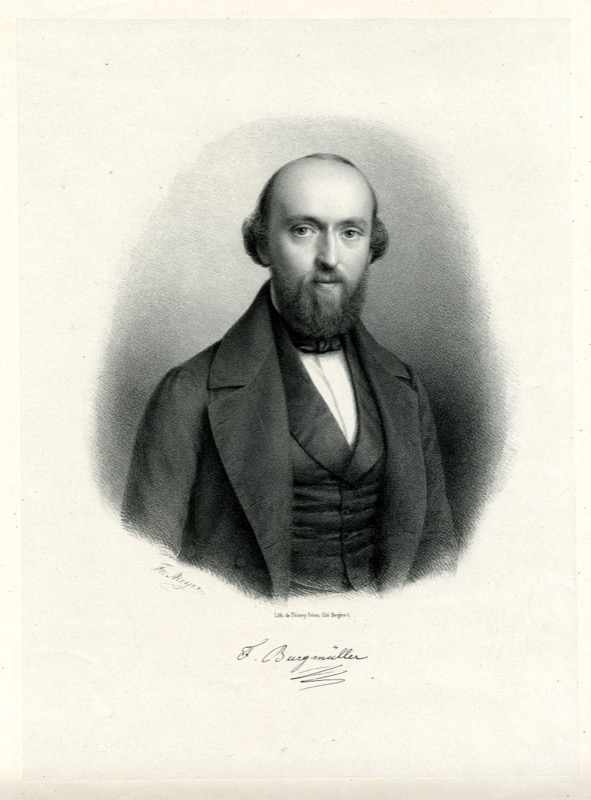
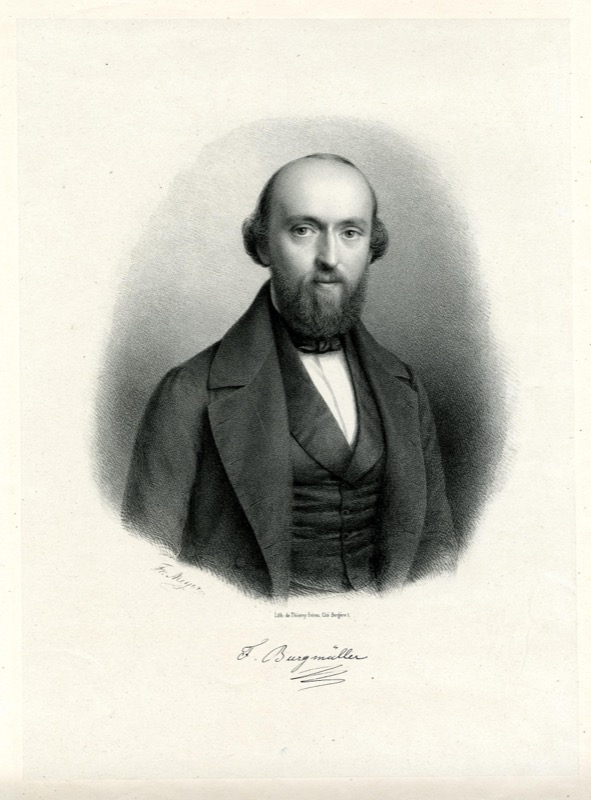
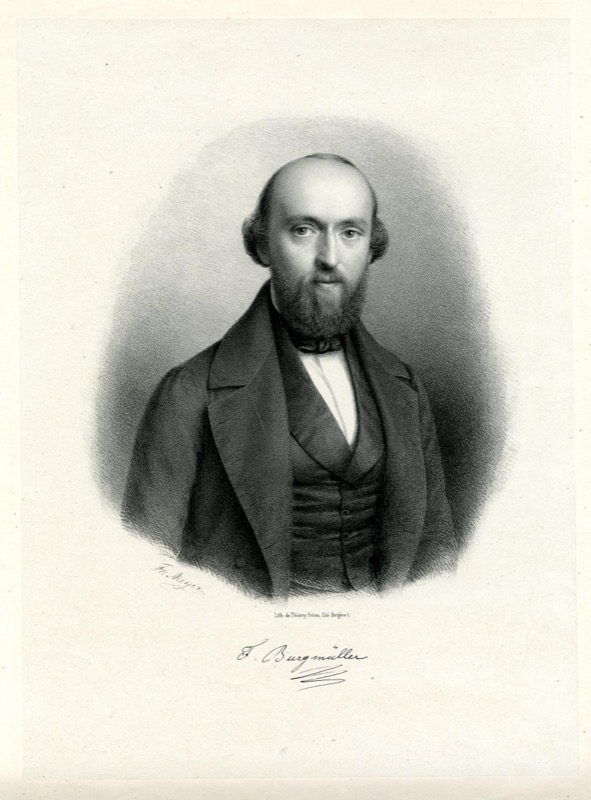
Burgmüller's 25 Études faciles Op. 100, published in Paris around 1838, gave beginner piano students the most popular étude set in history. Each piece teaches a skill through a character picture. By No. 14, Burgmüller reaches beyond the salon into the Alpine countryside: La Styrienne is a Styrian dance, modelled on the Ländler - the Austrian folk waltz that influenced Schubert, Brahms, and Mahler alike.
The étude is in G major and 3/4 time, but unlike La Gracieuse (No. 8), which is a polished Paris ballroom waltz, La Styrienne has a rougher, more rustic swing: it should feel like one broad beat per measure, not three counted ones. That distinction - feeling a bar as one gesture rather than subdividing it - is the étude's lesson. A student who can switch between counting three beats and feeling one larger pulse has developed the inner rhythmic flexibility that underlies all sophisticated tempo control.

Practice path
Conduct one beat per bar before you play.
Stand beside the piano and conduct in 3/4 - the standard triangular pattern - while humming the melody. Then switch to conducting in one: just a single downward arm drop per measure, letting the other two beats follow passively. When the melody fits comfortably into that one-gesture bar, sit down and play. The left-hand bass-chord pattern will feel lighter and more dance-like once the one-beat pulse is in your body rather than your counting.
Score basis: Generated MusicXML from Mutopia MIDI. Public domain composition; Public Domain (CC0) - Mutopia; MusicXML generated for Pianodemy. Attribution: Mutopia Project (https://www.mutopiaproject.org/cgibin/piece-info.cgi?id=225).
MIDI source: Mutopia Project (https://www.mutopiaproject.org/cgibin/piece-info.cgi?id=225). Public Domain (CC0) - Mutopia.
Questions
Before you practice.
Short answers for learners and for searchers deciding whether this is the right version to start with.
01What is La Styrienne by Burgmüller?
It is No. 14 from his 25 Easy Studies Op. 100 - a 37-measure waltz étude in G major modelled on the folk dances of Styria (a region in Austria), combining an accessible melody with a neat waltz accompaniment.
02What technique does La Styrienne develop?
It reinforces 3/4 waltz rhythm, teaching students to feel the dance lilt rather than count mechanically, and develops the coordination of a melodic right hand over a bass-chord left-hand pattern.
How to use this V1
The swing lives in beat one - let it carry the bar.
Set the tempo slider to 65% and emphasize beat one of each measure with a very slight lean - not a heavy accent, just a weight that lets the rest of the bar swing freely off it. The étude is 37 measures with a repeat, giving plenty of material for the dance lilt to settle into the hands. Once the Ländler feel is natural, raising the tempo sounds effortless because the rhythm is already doing the work.
Keep going