Interactive piano piece
Learn Tendre Fleur, Op. 100 No. 10
A tender Moderato in D major that develops a smooth, expressive legato touch through gently shaped melodic phrases. The interactive desk lets you loop any two-bar phrase at half speed and listen to how the melody rises and settles - use that feature to shape each phrase before combining it with the next.
Browser MIDI check pending
Loading score...
Press Play for the full piece, or choose Opening and switch to Wait for note for guided right-hand practice.
About the piece
Phrase shaping in D major - the bloom and fade of a tender flower.
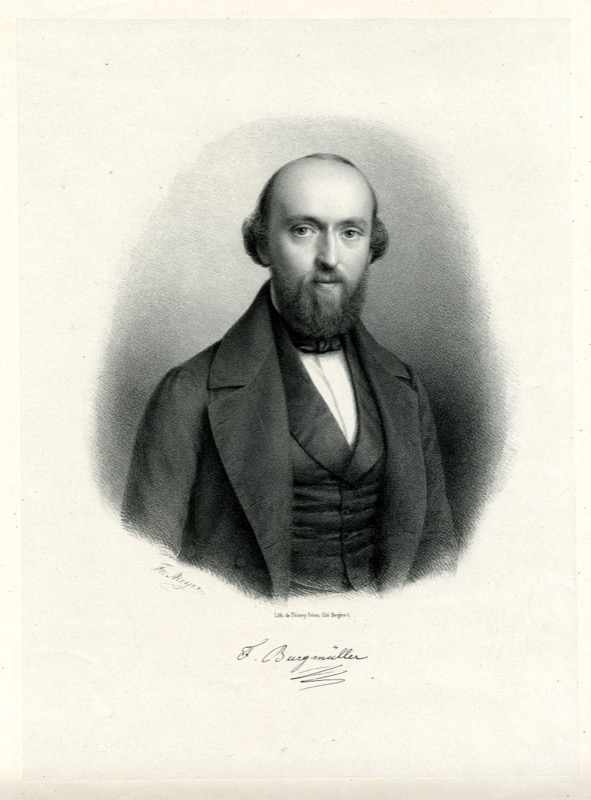
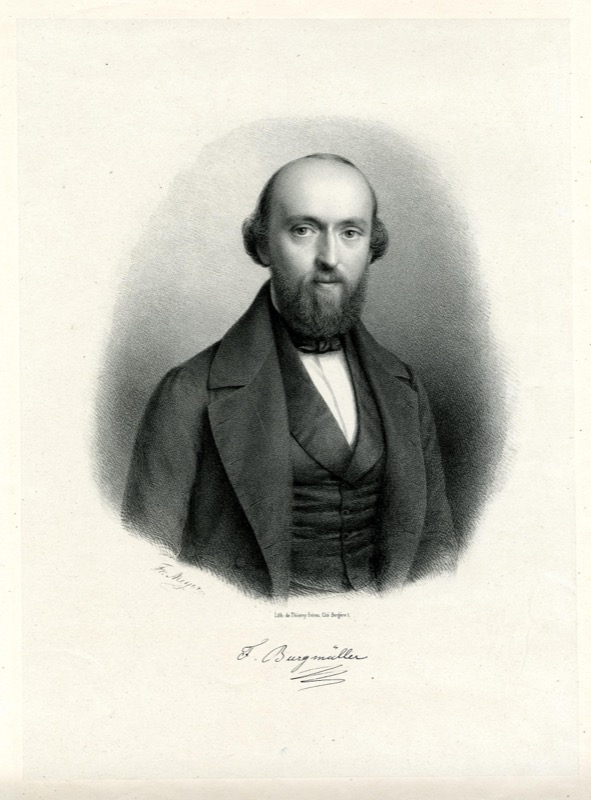
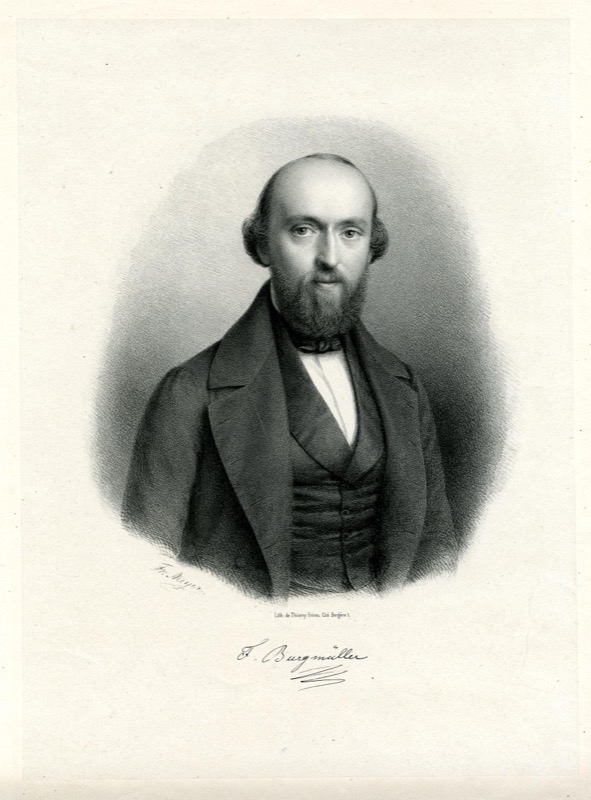
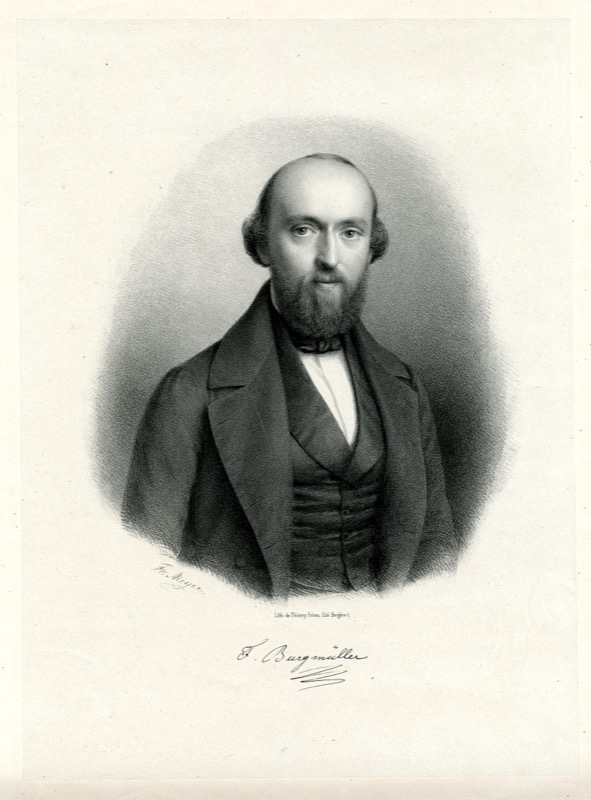
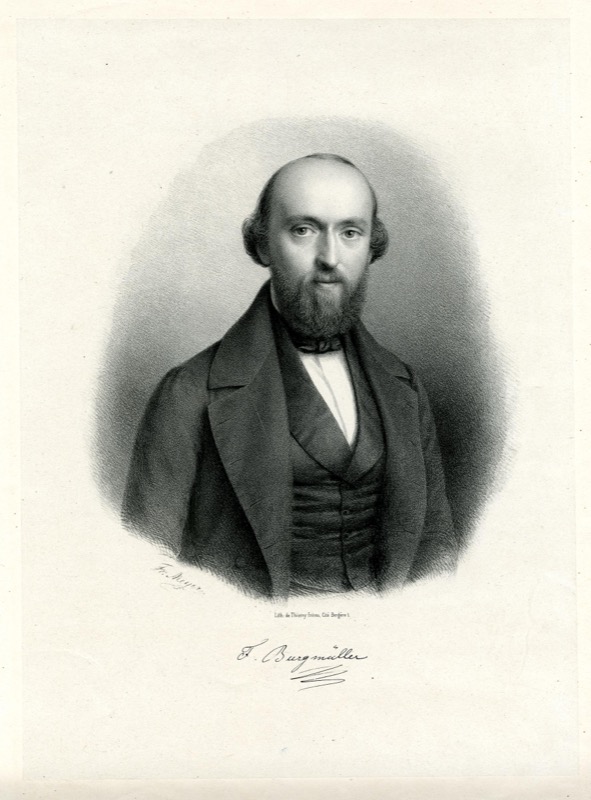
Burgmüller's 25 Études faciles Op. 100, published in Paris around 1838, changed beginner piano teaching by making every étude a musical experience rather than a technical drill. Each of the 25 pieces carries a French title that is not a description but a listening target - a sound the student must chase.
Tendre Fleur - 'Tender Flower' - is in D major and 4/4 time, Moderato, 24 measures. Technically it is among the gentlest études in the set. The lesson is entirely about phrase shaping: each two-bar group must bloom from its opening note, rise toward a small peak, and then settle back like a petal falling. This rising-and-falling arc is not written in the score with explicit crescendo and diminuendo markings - the student must hear the shape from the title and impose it. That act of musical imagination, applied to simple notes, is the étude's real teaching.

Practice path
Name the peak note of each phrase before you play.
Before learning any fingering, play through the right-hand melody slowly and mark - on paper or mentally - the highest note in each two-bar phrase. That note is the bloom point: slightly louder, slightly longer in feeling, even if the score shows no explicit accent. Let the notes leading up to it grow gently, and the notes falling away from it soften. Repeat this shaping exercise until it happens without conscious thought, then add the left-hand accompaniment at a quiet, even volume.
Score basis: Generated MusicXML from Mutopia MIDI. Public domain composition; Public Domain (CC0) - Mutopia; MusicXML generated for Pianodemy. Attribution: Mutopia Project (https://www.mutopiaproject.org/cgibin/piece-info.cgi?id=221).
MIDI source: Mutopia Project (https://www.mutopiaproject.org/cgibin/piece-info.cgi?id=221). Public Domain (CC0) - Mutopia.
Questions
Before you practice.
Short answers for learners and for searchers deciding whether this is the right version to start with.
01What level is Burgmüller Tendre Fleur Op. 100 No. 10?
Beginner level. At 24 measures in D major, it is technically straightforward, but it demands real attention to tone quality and phrase shaping - making it a rewarding expressive challenge for early students.
02What does Tendre Fleur teach piano students?
It focuses on producing a warm legato tone and shaping musical phrases through subtle dynamic variation - foundational expressive skills often introduced early in the Burgmüller set.
How to use this V1
Every phrase has a midpoint - find it.
Use the tempo slider at 70% and loop four-bar sections. Listen for whether the melody sings or merely plays - a singing melody has a shape, a playing melody has notes. If you cannot hear the bloom-and-fade arc, try exaggerating it ten times in practice, then pull it back to a natural degree. The 24-measure étude is short enough to repeat from the beginning four or five times in a single session, refining the phrase shaping each pass.
Keep going